Test

Japan Nuclear Watch, May 19: Critical Safety Vent Failures Could Happen Here Too

By: Scarecrow, Firedog Lake

Thursday May 19, 2011 7:19 am

As we’ve explained in previous Japan Watch posts, that sequence led inexorably to near total meltdown of the fuel core inside the reactor vessels at Units 1-3. (All of Unit 4’s fuel was in the storage pool, which presents problems.) TEPCO now concedes these meltdowns were likely total.

…

Although earlier expert analyses and TEPCO announcements suggested only partial meltdowns and varying levels of water covering parts of each reactor’s core, it now appears the cores were completely uncovered for some period early on - within the first hours or days - resulting in near total meltdown at each unit. That means the melted fuel is now puddled at the bottom of each reactor vessel, though it is thought (because of low temperatures) to be covered with whatever cooling water can be injected into each reactor vessel.

Test

Japan Nuclear Watch, May 19: Critical Safety Vent Failures Could Happen Here Too

By: Scarecrow, Firedog Lake

Thursday May 19, 2011 7:19 am

Dithering and Explosions and Venting- Oh My!

Fukushima Update- Part 1

First of all let’s survey the damage.  Reactors 1, 2, and 3 suffered core meltdowns that breached the steel containment vessels leaving leaks that have been releasing highly radioactive cooling water AND molten nuclear fuel into the concrete basement below the vessel.

This is kind of a containment vessel too and while there are no current indications that nuclear reactions are continuing in the escaped fuel slag that would burn through this floor and into the uncontained earth foundation of the plants, they’re not waterproof and there is no doubt at all that millions of gallons of highly radioactive water and perhaps some fine particulates are leaking into the environment uncontrolled.

This has led to a re-evaluation of cooling and clean-up strategies that continues because there are no really good answers.  Several radiation peaks indicating continued nuclear reactions in the melted and puddled fuel mean you can’t stop pumping water and the leaking makes it difficult to maintain a sufficient amount in the containment vessel to moderate the reaction (that’s why you get the peaks when the level dips too low).

There’s a continued risk of hydrogen explosions too and one of the reasons I mention that is because the one bit of good news is that it does not look as if the large spent fuel pond at the non working (at the time of the accident) Reactor 4 is having uncontrolled reactions.

At the moment.

A lot of the damage was caused by hydrogen explosions which in turn was caused by malfunctioning vents of the same type currently in use at many U.S. Nuclear Power Plants.

(note: There is something wacky going on with my quote from Scarecrow that I am attempting to correct)

The Times report to which Scarecrow refers is this one-

In Japan Reactor Failings, Danger Signs for the U.S.

By HIROKO TABUCHI, KEITH BRADSHER and MATTHEW L. WALD, The New York Times

Published: May 17, 2011

TOKYO – Emergency vents that American officials have said would prevent devastating hydrogen explosions at nuclear plants in the United States were put to the test in Japan – and failed to work, according to experts and officials with the company that operates the crippled Fukushima Daiichi plant.

The failure of the vents calls into question the safety of similar nuclear power plants in the United States and Japan. After the venting failed at the Fukushima plant, the hydrogen gas fueled explosions that spewed radioactive materials into the atmosphere, reaching levels about 10 percent of estimated emissions at Chernobyl, according to Japan’s nuclear regulatory agency.

…

Tokyo Electric in recent days has acknowledged that damage at the plant was worse than previously thought, with fuel rods most likely melting completely at Reactors 1, 2 and 3 in the early hours of the crisis, raising the danger of more catastrophic releases of radioactive materials. The company also said new evidence seemed to confirm that at Reactor No. 1, the pressure vessel, the last layer of protection, was broken and leaking radioactive water.

The improved venting system at the Fukushima plant was first mandated for use in the United States in the late 1980s as part of a “safety enhancement program” for boiling-water reactors that used the Mark I containment system, which had been designed by General Electric in the 1960s. Between 1998 and 2001, Tokyo Electric followed suit at Fukushima Daiichi, where five of six reactors use the Mark I design.

Most the damage at Reactor 4 was cased by an explosion in the vents that it SHARED with Reactor 3.

But there is also this follow up report, also from the Times–

NRC Finds Many U.S. Nuclear Plants Ill-Prepared to Handle Simultaneous Threats

By PETER BEHR of ClimateWire, The New York Times

Published: May 19, 2011

Something under one-third of the 104 U.S. reactors were found to have some vulnerabilities to extreme emergencies, according to the NRC, which is preparing a summary of its post-Fukushima findings.

…

At a time when the NRC and industry leaders are calling for a rigorous safety culture within the U.S. nuclear industry, the inspection findings raise questions about whether some plants were following the letter of requirements but not prepared for “unthinkable” events.

…

The plant owners’ responses to beyond design basis threats are usually voluntary. “We keep saying, ‘Oh, these are beyond basis events therefore we don’t’ get involved.’ We are happy that the industry responded. We look at it once. That’s it. In the future it’s up to them. I am really bothered by that.”

This piece contains details safety issues at a number of U.S. Nuclear Plants including Indian Point (NYC) and Millstone (Connecticut).

Coming next- The Big TEPCO Bailout.  

Dithering and Explosions and Venting- Oh My!

Fukushima Update- Part 1

First of all let’s survey the damage.  Reactors 1, 2, and 3 suffered core meltdowns that breached the steel containment vessels leaving leaks that have been releasing highly radioactive cooling water AND molten nuclear fuel into the concrete basement below the vessel.

This is kind of a containment vessel too and while there are no current indications that nuclear reactions are continuing in the escaped fuel slag that would burn through this floor and into the uncontained earth foundation of the plants, they’re not waterproof and there is no doubt at all that millions of gallons of highly radioactive water and perhaps some fine particulates are leaking into the environment uncontrolled.

This has led to a re-evaluation of cooling and clean-up strategies that continues because there are no really good answers.  Several radiation peaks indicating continued nuclear reactions in the melted and puddled fuel mean you can’t stop pumping water and the leaking makes it difficult to maintain a sufficient amount in the containment vessel to moderate the reaction (that’s why you get the peaks when the level dips too low).

There’s a continued risk of hydrogen explosions too and one of the reasons I mention that is because the one bit of good news is that it does not look as if the large spent fuel pond at the non working (at the time of the accident) Reactor 4 is having uncontrolled reactions.

At the moment.

A lot of the damage was caused by hydrogen explosions which in turn was caused by malfunctioning vents of the same type currently in use at many U.S. Nuclear Power Plants.

Japan Nuclear Watch, May 19: Critical Safety Vent Failures Could Happen Here Too

By: Scarecrow, Firedog Lake

Thursday May 19, 2011 7:19 am

Dithering and Explosions and Venting- Oh My!

Fukushima Update- Part 1

First of all let’s survey the damage.  Reactors 1, 2, and 3 suffered core meltdowns that breached the steel containment vessels leaving leaks that have been releasing highly radioactive cooling water AND molten nuclear fuel into the concrete basement below the vessel.

This is kind of a containment vessel too and while there are no current indications that nuclear reactions are continuing in the escaped fuel slag that would burn through this floor and into the uncontained earth foundation of the plants, they’re not waterproof and there is no doubt at all that millions of gallons of highly radioactive water and perhaps some fine particulates are leaking into the environment uncontrolled.

This has led to a re-evaluation of cooling and clean-up strategies that continues because there are no really good answers.  Several radiation peaks indicating continued nuclear reactions in the melted and puddled fuel mean you can’t stop pumping water and the leaking makes it difficult to maintain a sufficient amount in the containment vessel to moderate the reaction (that’s why you get the peaks when the level dips too low).

There’s a continued risk of hydrogen explosions too and one of the reasons I mention that is because the one bit of good news is that it does not look as if the large spent fuel pond at the non working (at the time of the accident) Reactor 4 is having uncontrolled reactions.

At the moment.

A lot of the damage was caused by hydrogen explosions which in turn was caused by malfunctioning vents of the same type currently in use at many U.S. Nuclear Power Plants.

Japan Nuclear Watch, May 19: Critical Safety Vent Failures Could Happen Here Too

By: Scarecrow, Firedog Lake

Thursday May 19, 2011 7:19 am

As we’ve explained in previous Japan Watch posts, that sequence led inexorably to near total meltdown of the fuel core inside the reactor vessels at Units 1-3. (All of Unit 4’s fuel was in the storage pool, which presents problems.) TEPCO now concedes these meltdowns were likely total.

…

Although earlier expert analyses and TEPCO announcements suggested only partial meltdowns and varying levels of water covering parts of each reactor’s core, it now appears the cores were completely uncovered for some period early on - within the first hours or days - resulting in near total meltdown at each unit. That means the melted fuel is now puddled at the bottom of each reactor vessel, though it is thought (because of low temperatures) to be covered with whatever cooling water can be injected into each reactor vessel.

Earlier this week, they realized Unit 1’s vessel has one or more holes, leaks, allowing water and possibly melted fuel to leak out of the vessel onto the containment structure floor. The reports vary, but they suggest that tons of water, which they’ve been injecting into the core in desperate efforts to keep the core covered, have now found its way into the reactor building’s basement. Water from other units has leaked from other places, including adjacent turbine buildings and some has reached the ocean.

…

As we know, there were hydrogen-related explosions in all four units – that is, they waited too long, or, as they’re now discovering, the venting systems failed.

…

The Times report very helpfully reminds readers that all of the US reactors with the same GE design have essentially the same (new! improved!) venting systems as the ones that failed at Fukushima Daiichi. GE didn’t comment on the story.

So the next time someone tells you that, unlike those careless Japanese utilities and not too diligent regulators, we have much safer systems and our safety measures are “safer,” just remember this story, because it ain’t so.

The Times report to which Scarecrow refers is this one-

In Japan Reactor Failings, Danger Signs for the U.S.

By HIROKO TABUCHI, KEITH BRADSHER and MATTHEW L. WALD, The New York Times

Published: May 17, 2011

TOKYO – Emergency vents that American officials have said would prevent devastating hydrogen explosions at nuclear plants in the United States were put to the test in Japan – and failed to work, according to experts and officials with the company that operates the crippled Fukushima Daiichi plant.

The failure of the vents calls into question the safety of similar nuclear power plants in the United States and Japan. After the venting failed at the Fukushima plant, the hydrogen gas fueled explosions that spewed radioactive materials into the atmosphere, reaching levels about 10 percent of estimated emissions at Chernobyl, according to Japan’s nuclear regulatory agency.

…

Tokyo Electric in recent days has acknowledged that damage at the plant was worse than previously thought, with fuel rods most likely melting completely at Reactors 1, 2 and 3 in the early hours of the crisis, raising the danger of more catastrophic releases of radioactive materials. The company also said new evidence seemed to confirm that at Reactor No. 1, the pressure vessel, the last layer of protection, was broken and leaking radioactive water.

The improved venting system at the Fukushima plant was first mandated for use in the United States in the late 1980s as part of a “safety enhancement program” for boiling-water reactors that used the Mark I containment system, which had been designed by General Electric in the 1960s. Between 1998 and 2001, Tokyo Electric followed suit at Fukushima Daiichi, where five of six reactors use the Mark I design.

Most the damage at Reactor 4 was cased by an explosion in the vents that it SHARED with Reactor 3.

But there is also this follow up report, also from the Times–

NRC Finds Many U.S. Nuclear Plants Ill-Prepared to Handle Simultaneous Threats

By PETER BEHR of ClimateWire, The New York Times

Published: May 19, 2011

Something under one-third of the 104 U.S. reactors were found to have some vulnerabilities to extreme emergencies, according to the NRC, which is preparing a summary of its post-Fukushima findings.

…

At a time when the NRC and industry leaders are calling for a rigorous safety culture within the U.S. nuclear industry, the inspection findings raise questions about whether some plants were following the letter of requirements but not prepared for “unthinkable” events.

…

The plant owners’ responses to beyond design basis threats are usually voluntary. “We keep saying, ‘Oh, these are beyond basis events therefore we don’t’ get involved.’ We are happy that the industry responded. We look at it once. That’s it. In the future it’s up to them. I am really bothered by that.”

This piece contains details safety issues at a number of U.S. Nuclear Plants including Indian Point (NYC) and Millstone (Connecticut).

Coming next- The Big TEPCO Bailout.

Punting the Pundits

“Punting the Pundits” is an Open Thread. It is a selection of editorials and opinions from around the news medium and the internet blogs. The intent is to provide a forum for your reactions and opinions, not just to the opinions presented, but to what ever you find important.

Thanks to ek hornbeck, click on the link and you can access all the past “Punting the Pundits”.

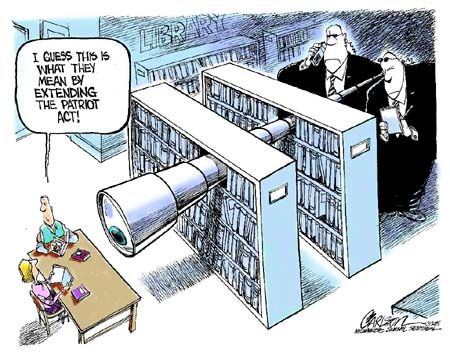
Juan Cole: Protest Backroom Deal to Extend Un-Patriot Act til 2015

There’s an action alert by a supporter of Rand Paul over at Firedoglake saying that an attempt will be made at 5 pm on Monday in the Senate to extend the misnamed ‘PATRIOT Act’ for four years. There will be an attempt to get unanimous consent for the extension, with just a motion to which there should be no objections.

Rand’s alert says,

   “The surveillance state’s ability to snoop through your business records, pry into your library book checkouts, monitor so-called “lone wolfs,” and spy on your personal communications through roving wiretaps will be extended until 2015, which “coincidentally” is not an election year.”

Here is a similarly urgent ACLU alert.

The vote is part of a deal between majority leader Harry Reid and his Republican colleagues to sidestep debate and rush the legislation through, which is becoming a worrisomely common procedure as the Democrats continue to abdicate their responsibilities to the Constitution, as Glenn Greenwald has elegantly explained.

Robert Kuttner: Beware Greeks Bearing Banks Beware Greeks Bearing Banks

After every financial debacle or war, there is a huge political struggle over whether creditors and financial speculators get to stand in the way of an economic recovery. When the creditors win, ordinary people who had nothing to do with the crisis are typically the victims. Today, the entire political elite is in the austerity camp, and those who argue that creditors should take some losses so that the rest of the economy can grow are mostly ignored.

This is the common theme to the issue of mortgage relief to spare American homeowners millions of foreclosures, the question of whether the US should sacrifice Medicare and Social Security on the altar of deficit reduction, and the punishment being visited upon small European economies such as Greece, Portugal and Ireland.

Eugene Robinson: Meltdown On the Launch Pad

Washington – “I want to make sure every House Republican is protected from some kind of dishonest Democratic ad. So let me say on the record, any ad which quotes what I said on Sunday is a falsehood, because I have publicly said those words were inaccurate and unfortunate.”

A grateful nation thanks you, Newt Gingrich. The presidential campaign is just starting, and already you’ve given us a passage that will live in infamy — forever — in the annals of American political speech. Your delightful quotation shall be filed under “fiascos” and flagged with a cross-reference to “utter nonsense.”

Mark Weisbrot: The IMF after DSK

Now that Dominique Strauss-Kahn has resigned from his position as managing director of the International Monetary Fund (IMF), it is worth taking an objective look at his legacy there. Until his arrest last week on charges of attempted rape and sexual assault, he was widely praised as having changed the IMF, increased its influence and moved it away from the policies that – according to the fund’s critics – had caused so many problems for developing countries in the past. How much of this is true?

Strauss-Kahn took the helm of the IMF in November of 2007, when the IMF’s influence was at a low point. Total outstanding loans at that time were just $10bn, down from $91bn just four years earlier. By the time he left this week, that number had bounced back to $84bn, with agreed-upon loans three times larger. The IMF’s total capital had quadrupled, from about $250bn to an unprecedented $1tn. Clearly, the IMF had resources that it had never had before, mostly as a result of the financial crisis and world recession of 2008-2009.

E. J. Dionne, Jr: Lessons for the media, the bishops and John Boehner

It’s likely you didn’t hear much about the controversy over House Speaker John Boehner’s recent commencement speech at Catholic University. There are many reasons for this, but one of them is that Boehner’s critics were civil and respectful. The media, it turns out, don’t cover you much if you are civil and respectful. This would be the same media that regularly disparage incivility and divisiveness in politics.

And the story broke from the stereotypical narrative the media like to impose on Christians in general, and Catholics in particular. If the headline is “Conservative Catholics Denounce Liberal Politician on Abortion,” all the boilerplate is at the ready. But when the headline is “Catholic Progressives Challenge Conservative Politician on Social Justice,” this is something new and complicated. It’s far easier to write the 10th story of the week about Newt Gingrich.

Oh yes, and there is also a problem for those bishops who barely murmur when a Catholic politician departs from the church’s teachings on social justice but think that even the mildest deviation on abortion is enough to keep a public figure off a Catholic campus. As a result, they feed the distorted media narrative about what the church believes.

New York Times Editorial: Chilling Echoes From Sept. 11

As the 10th anniversary of the terrorist attacks in New York, Washington and Pennsylvania draws near, one of the main recommendations of the 9/11 Commission remains unfulfilled: the creation of a common communications system that lets emergency responders talk to one another across jurisdictions.

The problem was laid bare in the tragic cacophony at the World Trade Center, where scores of firefighters perished as police and fire officials couldn’t communicate on antiquated radio systems before the second tower fell.

Four years later during Hurricane Katrina, emergency workers from across the nation faced the same dangerous problem. They had to resort to running handwritten notes to warn of shifting conditions.

Brian Moench: America Becoming an Idiocracy

In the 2006 satirical science fiction comedy, Idiocracy, the protagonist Joe Bauers, “Mr. Average American”, is selected by the Pentagon for a top-secret hibernation program. Forgotten, he awakens 500 years in the future, to discover a society so incredibly dumbed-down that he’s easily the most intelligent person alive and their only hope for survival.

With the Republicans bullying their way through state and federal legislation, the movie has become prophetic to the point where the only thing that isn’t believable is that this devolution will take another 500 years. Idiocracy already has its living, fire-breathing poster child, Rep. Joe Barton (R-Texas), the ranking Republican and former chair of the House Energy and Commerce Committee.

Monday Business Edition

Monday Business Edition is an Open Thread

From Yahoo News Business

1 Spain’s Socialists suffer local election thumping

by Daniel Silva, AFP

Sun May 22, 6:01 pm ET

MADRID, Spain (AFP) – Spain’s ruling Socialists reeled from spectacular local election losses Sunday as protesters vented outrage over the highest jobless rate in the industrialized world.

Support for the government collapsed in the face of the beleaguered economy, soaring unemployment and massive street protests, a grim omen for 2012 general elections.

With 98.21 percent of the municipal ballots counted, the Socialists had just 27.81 percent of the total vote compared to 37.58 percent for their conservative Popular Party opponents.

AFP

2 Defiant Spanish protesters warn ‘we’re here to stay’

by Denholm Barnetson, AFP

Sat May 21, 4:59 pm ET

MADRID (AFP) – Tens of thousands of Spanish protesters furious over soaring unemployment kept up their week-long movement on the eve of Sunday’s local elections expected to hand the ruling Socialists a crushing defeat.

“In theory, we are going to continue” the protests after the elections, said Angela Cartagena, a spokeswoman for the organisers at the ramshackle protest ‘village’ that has sprung up in Madrid’s Puerta del Sol square.

A “general assembly” of the organisers would be held on Sunday morning to confirm the decision, she said.

3 Spaniards vote in local polls amid mass protests

by Denholm Barnetson, AFP

Sun May 22, 3:50 am ET

MADRID (AFP) – Spaniards voted Sunday in local elections forecast to inflict a crushing defeat on the ruling Socialists as anger over mass unemployment boiled over into popular protests.

Protesters, who blame politicians for bleak economic prospects and jobless rate of more than 21 percent, remained camped under plastic covers in central Madrid’s Puerta del Sol square on election day.

The electoral impact of the swelling protests, which have brought tens of thousands into the streets since last weekend, including an estimated 60,000 on the eve of the election, was difficult to gauge.

4 Italy confident despite S&P’s downgrade to negative

by Eleanor Ide, AFP

Sun May 22, 7:47 am ET

ROME (AFP) – Italy on Sunday sought to allay fears it could join its fellow southern Europeans Greece and Portugal in the financial mire, questioning Standard & Poor’s downgrade of its forecast to negative.

Finance Minister Giulio Tremonti described S&P’s decision as “strange” and said the ruling lacked “even one example of a decline in the economy or public finances to justify downgrading the forecast,” according to the Corriere della Sera.

The Treasury issued a statement Saturday saying Italy would “respect its commitments,” adding: “Economic growth and public accounts have been constantly better than expected.”

5 Greek PM rules out restructuring ahead of cabinet plan

by Will Vassilopoulos, AFP

Sun May 22, 11:08 am ET

PARIS (AFP) – Prime Minister George Papandreou will chair a cabinet meeting Monday to discuss a new fiscal plan which he says is guaranteed to overcome Greece’s debt crisis without resorting to major structural change.

“We are discussing a four-year programme that guarantees our exit from the crisis and other serious changes, structural. We are talking about a serious and systematic negotiation,” Papandreou said in an interview to Sunday newspaper Ethnos.

The prime minister ruled out a restructuring of Greece’s mountain of sovereign debt which has rocketed to 340 billion euros ($484 billion).

6 Greek debt restructuring no longer taboo

by Roddy Thomson, AFP

Sat May 21, 11:47 pm ET

BRUSSELS (AFP) – Once taboo, a restructuring of Greece’s massive debt no longer presents a red line for some eurozone governments intent on preventing the sort of messy defaults that once rocked Latin America.

After months of warning that chaos would follow a restructuring, a “soft” version is now being presented by some within the eurozone as a lesser evil to save Greece once more from potential devastation.

European finance ministers crossed a line this past week by indicating a willingness to reschedule repayments on Greece’s 110-billion-euro EU-IMF bailout, provided private investors agree to share the pain.

7 Sarkozy’s G8 marks chance to turn political tide

by Nadege Puljak, AFP

Sun May 22, 10:58 pm ET

PARIS (AFP) – With less than a year to go before he seeks re-election, France’s President Nicolas Sarkozy is counting on a good run as chairman of the G8 powers to revive his flagging political fortunes.

Despite the spectacular fall of his chief rival Dominique Strauss-Kahn, arrested in New York on sex assault charges, Sarkozy’s domestic approval rating is — according to several polls — stuck at less than a third.

But the ambitious campaigner remains confident, his allies say, pointing to stronger than expected growth figures, a slight bump in his popularity and disarray in the opposition camp. Now he is counting on international glory.

8 Fears of more flight chaos as Iceland sees new eruption

by Agnes Valdimarsdottir, AFP

Sun May 22, 6:41 am ET

REYKJAVIK (AFP) – A new volcanic eruption in Iceland shut down the country’s airspace on Sunday, a year after the eruption of nearby Eyjafjoell caused aviation chaos across Europe.

Experts and aviation authorities said however that the impact of the Grimsvoetn eruption should not be as far-reaching.

Grimsvoetn, Iceland’s most active volcano located at the heart of its biggest glacier Vatnajoekull, began erupting late Saturday, sending a plume of smoke and ash as high as 20 kilometres (12 miles) into the sky.

9 Internet bosses woo world leaders at ‘e-G8’

by Roland Lloyd Parry, AFP

Sun May 22, 6:08 pm ET

PARIS (AFP) – The world’s most powerful Internet and media barons gather in Paris on Tuesday in a show of strength to leaders at the G8 summit, amid international rows over online access, copyright and regulation.

Top executives from online giants like Google, Facebook and Microsoft will tout the economic potential of the Internet, which their host, French President Nicolas Sarkozy, has put on the agenda of the G8 summit two days later.

After Tuesday and Wednesday’s “e-G8” bash, some of the biggest names will then meet with G8 leaders at the summit in Deauville, northwestern France, on May 26 and 27, a French presidential official said.

10 China, S.Korea offer support to Japan

by Yuka Ito, AFP

Sun May 22, 6:08 am ET

TOKYO (AFP) – China and South Korea Sunday offered to help Japan recover from the March 11 quake and tsunami as Beijing lifted bans on some food imports imposed after the disasters triggered a nuclear emergency.

Leaders of the three countries met in Tokyo to discuss Japan’s handling of world’s worst atomic crisis since Chernobyl 25 years ago.

They also said they would aim this year to finish research into a wide-ranging free trade deal between the three nations.

11 Despite price scare, a free market push on food

by Shaun Tandon, AFP

Sun May 22, 6:06 pm ET

BIG SKY, Montana (AFP) – As high food prices push millions of people into poverty, major farming nations are resisting calls to impose trade restrictions and are committing to keep global markets open.

APEC — a 21-member Asia-Pacific bloc that encompasses more than half of the world economy and includes the United States, China, Japan and Australia — called Friday for “open and transparent” food markets.

In a joint statement after talks in the ski resort of Big Sky, Montana, APEC trade officials said that open markets would ensure food security by increasing reliability of supply and reducing price volatility.

12 Indian drug firms use S.Africa to access continent

by Joshua Howat Berger, AFP

Sun May 22, 1:12 am ET

JOHANNESBURG (AFP) – A white South African woman runs the local operations of India’s largest drug company, Ranbaxy, and the second largest, Cipla, is listed on the Johannesburg Stock Exchange.

India’s pharmaceutical industry has rolled out a strong local presence in South Africa, cornering a large share of the market and using the country as a base to gush a flood of cheap generic drugs into Africa.

Unlike most multinational companies, India’s “big three” pharmaceuticals — Ranbaxy, Cipla and Dr Reddy’s — have carefully cultivated their local credentials by bringing South Africans into the top corporate echelons.

13 Swaziland must cut spending: World Bank

by Jinty Jackson, AFP

Sun May 22, 12:08 am ET

MBABANE (AFP) – Swaziland may be forced to devalue its currency unless the crisis-hit southern African kingdom can urgently cut government spending, a World Bank economist warned.

“It is getting to the point of reckoning — when Swaziland will no longer be able to sustain its deficit,” visiting World Bank economist Jean van Houtte told AFP, ahead of a meeting here Monday organised by the lender on the crisis.

“We have said if you need a little time to get your house in order you can re-peg at a different level.”

14 EBRD shareholders aim for Arab expansion

by Frederic Pouchot, AFP

Sat May 21, 7:11 am ET

ASTANA (AFP) – The European Bank of Reconstruction and Development, which funds projects in eastern Europe and the former Soviet states, on Saturday launched the process to expand to North Africa and the Middle East.

“EBRD shareholders have made significant progress towards a decision on extending the bank’s investment to countries in the Middle East and North Africa,” the bank said in a statement.

Political decisions about the major expansion of the bank’s role after the uprisings that swept through Arab North Africa in the past months will come in “the weeks and months ahead”, it said.

Reuters

15 Greece discusses fiscal plan, lenders’ pressure up

By George Georgiopoulos, Reuters

14 mins ago

ATHENS (Reuters) – Greek Prime Minister George Papandreou discussed new emergency measures with his cabinet on Monday to cut the deficit, keen to convince lenders Athens can deal with a debt crisis without a restructuring.

A raft of new austerity measures being studied include deeper cuts in public sector wages, more consumer tax increases, and even the taboo issue of dismissing full-time civil servants.

At stake is a 12-billion euro aid tranche under the EU/IMF bailout agreed last year, as well as additional loans needed to plug a funding gap next year as the overborrowed country is unlikely to return to bond markets in 2012.

16 Greek PM, ECB officials reject debt restructuring

By Harry Papachristou, Reuters

Sun May 22, 7:44 am ET

ATHENS (Reuters) – Greece must avoid debt restructuring and push on with budget cuts and privatisations to overcome its debt crisis, the country’s Prime Minister George Papandreou and senior ECB officials said on Saturday.

Papandreou must present a fiscal plan next week that is credible enough for the European Union and the International Monetary Fund to continue bankrolling his debt-laden country.

But a large majority of Greeks reject more austerity, according to a poll published on Saturday, which also shows the ruling socialists losing their lead versus the conservative opposition for the first time since their 2009 election victory.

17 Fitch cuts Greek rating, warns over restructuring

By Harry Papachristou, Reuters

Fri May 20, 8:10 pm ET

ATHENS (Reuters) – Fitch cut Greece’s credit rating by three notches on Friday, pushing the country deeper into junk territory, and warned that any kind of debt restructuring would amount to default.

Fitch was the second rating agency to warn that it would consider any loss imposed on bondholders as a default after Standard and Poor’s said the same earlier this month.

“An extension of the maturity of existing bonds would be considered by Fitch to be a default event and Greece and its obligations would be rated accordingly,” the rating agency said.

18 S&P cuts credit outlook for Italy to negative

By Silvia Aloisi, Reuters

Sat May 21, 11:17 am ET

ROME (Reuters) – Standard & Poor’s cut its rating outlook for Italy to negative from stable, citing weak growth prospects and increased risks it would fail to slash its debt mountain.

The downward revision, which raises the risk of a downgrade of Italy’s sovereign rating, may heighten fears that contagion from Greece’s and other European countries’ debt crisis could be spreading to the euro zone’s third-largest economy.

“In our view Italy’s current growth prospects are weak, and the political commitment for productivity-enhancing reforms appears to be faltering,” Standard & Poor’s said in a statement released early on Saturday.

19 Moody’s warns Japan recession is negative for rating

By Leika Kihara, Reuters

2 hrs 48 mins ago

TOKYO (Reuters) – Japan’s return to recession and a bigger-than-expected slump in first-quarter economic growth are negative for its credit rating, Moody’s Investors Service said, warning that a delay in recovery could warrant additional fiscal and monetary stimulus.

The triple blow of the March earthquake, tsunami and nuclear crisis has nudged Japan into recession and led to a surprisingly deep 0.9 percent contraction in January-March, which Moody’s said was negative for Japan’s rating and made it increasingly urgent for Prime Minister Naoto Kan to compile a second extra budget.

“Reconstruction and relief expenditures will eventually lead to a rebound in economic growth later this year and in 2012,” Moody’s said in a statement on Monday.

20 Sony to post $3.2 billion annual loss on tax write-offs

By Isabel Reynolds, Reuters

59 mins ago

TOKYO (Reuters) – Sony Corp said it expected to post a $3.2 billion net loss for the year that ended on March 31 due to a write off on tax credits, the latest in a string of grim headlines for the consumer electronics giant.

The maker of PlayStation video games, Vaio computers and Bravia TVs has been battling to recover from the devastating Japan earthquake in March, and more recently, a series of computing hacking attacks that affected more than 100 million user accounts.

“I have been skeptical about Sony for a long time. Sony has been overtaken by Apple and other companies,” said Yuuki Sakurai, CEO and president of Fukoku Capital Management in Tokyo. “The management is not able to show shareholders the future of the company.”

21 Tepco chief quits after $15 billion loss on nuclear crisis

By Nathan Layne and Taiga Uranaka, Reuters

Fri May 20, 7:16 am ET

TOKYO (Reuters) – Tokyo Electric Power Co reported a $15 billion net loss on Friday to account for the disaster at its Fukushima nuclear plant, marking the biggest loss in Japan by a non-financial company and prompting the firm to warn its future was uncertain.

Much-criticized president, Masataka Shimizu, 66, resigned to take responsibility for the worst nuclear crisis since Chernobyl in 1986, making way for an insider, managing director Toshio Nishizawa, 60.

Engineers are battling to plug radiation leaks and bring the plant northeast of Tokyo under control more than two months after a 9.0 magnitude earthquake and deadly tsunami that devastated a swathe of Japan’s coastline and tipped the economy into recession.

22 Toyota has 45 days supply in U.S.: executive

By Deepa Seetharaman and Bernie Woodall, Reuters

Fri May 20, 8:42 pm ET

DETROIT (Reuters) – Toyota Motor Corp told its U.S. dealers this week that the company had 45 days of inventory and was working hard to get the word out that it was “open for business.”

In a letter obtained by Reuters, U.S. Toyota brand sales chief Bob Carter told dealers the company was in a “healthy position” as it moved toward a full production schedule.

The company recently announced that eight of its North American-built models, including the Camry and Corolla, would return to 100 percent production in June.

23 Recovery takes a breather

By Pedro Nicolaci da Costa, Reuters

Sun May 22, 3:05 pm ET

WASHINGTON (Reuters) – It was fun while it lasted.

After several strong quarters, the global economic recovery appears to be sputtering. In particular, the industrial sector, a key driver of the bounce-back from a historic worldwide recession, looks to be fraying.

“People need to seriously consider the scenario where global industrial growth, once again, starts to throttle back — because it’s not that far away,” said Lakshman Achuthan, managing director of the Economic Cycle Research Institute.

24 Rising dollar threatens stocks’ gains

By Walter Brandimarte, Reuters

Sat May 21, 7:10 am ET

NEW YORK (Reuters) – Signs of a Wall Street sell-off are all over the place, but U.S. stocks might well survive another week relatively unscathed if investors keep betting on sectors less vulnerable to an economic downturn.

Pressure for a correction in the stock market has been building up in the past few weeks as the euro and oil prices fell in tandem, knocking down shares of energy companies and dollar-sensitive multinationals.

Still, investors have averted a broad sell-off by diving into shares of companies that are less vulnerable to the economic cycle, including well-known defensive sectors such as utilities and household products, but also large-cap companies with steady earnings performance.

25 BP cuts oil spill burden with $1.1 billion Mitsui deal

By Tom Bergin, Reuters

Fri May 20, 5:38 pm ET

LONDON (Reuters) – BP (BP.L) (BP.N) struck a key victory in its battle to share the cost of the Gulf of Mexico oil spill when partner Mitsui & Co agreed on Friday to pay $1.1 billion toward the clean-up bill and possibly billions more in fines.

Japanese trading house Mitsui’s (8031.T) exploration unit MOEX owned 10 percent of the Macondo well but had sought to avoid paying its share of the costs, claiming BP was negligent and MOEX should be exempted from this obligation.

The settlement is likely the first of a series of settlements between BP and its partners before the February 2012 trial date set for hundreds of spill-related lawsuits, said David A. Logan, dean of Roger Williams University School of Law in Bristol, Rhode Island.

AP

26 Europe debt woes hit markets, euro

By PAN PYLAS, AP Business Writer

1 hr 2 mins ago

LONDON – Heightened tensions over Europe’s debt crisis combined with weak economic surveys to send world stock markets sliding on Monday, with the euro dropping below $1.40 for the first time in two months.

Investors fretted that the debt crisis was turning more acute due to mounting speculation Greece will have to restructure its debts, a heavy defeat for Spain’s governing Socialists in regional elections and a warning from a leading credit ratings agency over Italy’s public finances.

The renewed jitters were particularly visible in stock markets, where most leading indexes around the world shed over 1 percent of their value. The euro was also in the firing line, dropping 2 cents on the day to $1.3976, the first time since March it traded below $1.40.

27 Spain’s Socialists trounced amid economic woes

By DANIEL WOOLLS, Associated Press

Sun May 22, 7:04 pm ET

MADRID – Spain’s ruling Socialists suffered a crushing defeat to conservatives in local and regional elections Sunday, yielding power even in traditional strongholds against a backdrop of staggering unemployment and unprecedented sit-ins by Spaniards furious with what they see as politicians who don’t care about their plight.

Prime Minister Jose Luis Rodriguez Zapatero said the result was due punishment of his government for the state of the economy – the jobless rate is a eurozone high of 21.3 percent. But he said he had no plans to move up general elections, which must be held by March of next year, and pledged to press on with job-creating reforms despite the loud outcry of opposition to his party.

The win for the conservative opposition Popular Party puts it in even a stronger position to win the general elections and return to power after eight years of Socialist rule.

28 Greece: return to bond markets in 2012 unlikely

By JUERGEN BAETZ and DEMETRIS NELLAS, Associated Press

Sun May 22, 6:44 pm ET

BERLIN – Greece’s prime minister admitted for the first that his country might not be able to tap the markets for its borrowing needs next year as the head of the eurogroup urged the debt-ridden country to set up an independent privatization body overseen by the European Union to bring down its ballooning debt level.

George Papandreou said in an interview to daily Ethnos published Sunday that “it does not appear at present that Greece will be able to cover its borrowing requirements in 2012 normally, from the markets.”

As part of its euro110 billion bailout deal with the European Union and the International Monetary Fund, Greece was expected to raise euro27 billion to help pay its bills in 2012.

29 Greek markets jolted after another Fitch downgrade

By ELENA BECATOROS, Associated Press

Fri May 20, 1:00 pm ET

ATHENS, Greece – The Fitch ratings agency downgraded Greece’s debt grade by three notches further into junk status on Friday, another blow to the debt-ridden country that saw its borrowing rates spike to new record highs.

Fitch cited problems with Greece’s implementation of essential reforms to its economy, which European officials have said are behind schedule and need to be broadened.

The downgrade “reflects the scale of the challenge facing Greece in implementing a radical fiscal and structural reform program necessary to secure solvency of the state and the foundations for sustained economic recovery,” the agency said.

30 Spanish markets fall on govt election losses

By DANIEL WOOLLS, Associated Press

48 mins ago

MADRID – Spanish financial markets slumped Monday after voters angry about austerity measures dealt the ruling Socialist party a painful loss in local elections, raising doubts over the country’s ability to enforce debt cuts.

Investors worried that the government of Prime Minister Jose Luis Rodriguez Zapatero had lost support in its drive to heal public finances and faced a period of political uncertainty. Daily protests against both the Socialists and the opposition conservatives, meanwhile, were spreading to cities across the country and expected to last for days.

The Ibex 35 index on the Madrid stock market was down nearly 2 percent in mid-day trading and the yield on Spanish 10-year bonds on the secondary market was up sharply at 5.6 percent. That indicates investors are more cautious about the country’s ability to repay its debts.

31 AP-GfK Poll: Medicare doesn’t have to be cut

By RICARDO ALONSO-ZALDIVAR and STEPHEN OHLEMACHER, Associated Press

1 hr 15 mins ago

WASHINGTON – They’re not buying it. Most Americans say they don’t believe Medicare has to be cut to balance the federal budget, and ditto for Social Security, a new poll shows.

The Associated Press-GfK poll suggests that arguments for overhauling the massive benefit programs to pare government debt have failed to sway the public. The debate is unlikely to be resolved before next year’s elections for president and Congress.

Americans worry about the future of the retirement safety net, the poll found, and 3 out of 5 say the two programs are vital to their basic financial security as they age. That helps explain why the Republican Medicare privatization plan flopped, and why President Barack Obama’s Medicare cuts to finance his health care law contributed to Democrats losing control of the House in last year’s elections.

32 Explosion at China iPad factory shows supply risks

By JOE McDONALD, AP Business Writer

10 mins ago

BEIJING – An explosion at one of two factories that make Apple’s new iPad 2 highlights the risks of a global manufacturing strategy that has cut costs but concentrates production in a few locations.

Foxconn Technology Group, the contractor that manufactures Apple’s iPhones and iPads, said Friday’s blast in the western city of Chengdu killed three employees and injured 15. The Taiwanese company said production was suspended but did not respond to questions Monday about how supplies of iPads might be affected.

Foxconn said the blast was caused by combustible dust in a workshop that polished products. It said operations in workshops that do similar work at its other factories in China would be suspended pending an investigation.

33 Deal sites appeal shoppers and businesses alike

By ELLEN GIBSON, AP Retail Writer

1 hr 28 mins ago

Groupon is adding 150 employees a month at its U.S. headquarters and trains them in a church because the conference rooms at its headquarters aren’t big enough. Ideeli has crammed so much electronic equipment into its New York office that the power goes out every day.

And at LivingSocial, well, the living is a little too social. Its third office in Washington, open just two months, ran out of room so fast that employees have to work at narrow desks in the hallway.

Deal-a-day websites blast email offers for deep discounts, sometimes good for only a few hours. And they’re becoming so popular that their offices are starting to look as crowded as their subscribers’ inboxes.

34 Toyota to set up social networking service

By YURI KAGEYAMA, AP Business Writer

Mon May 23, 4:49 am ET

TOKYO – Toyota is setting up a social networking service with the help of a U.S. Internet company and Microsoft so drivers can interact with their cars in ways similar to Twitter and Facebook.

Japanese automaker Toyota Motor Corp. and Salesforce.com, based in San Francisco, announced their alliance Monday to launch “Toyota Friend,” a private social network for Toyota owners that works similar to tweets on Twitter.

In a demonstration at a Tokyo showroom, an owner of a plug-in Prius hybrid found out through a cell phone message from his Prius called “Pre-boy” that he should remember to recharge his car overnight.

35 Prepaid cards attract money launderers

By FRANK BAJAK, Associated Press

Mon May 23, 12:00 am ET

BOGOTA, Colombia – Forget bulk cash. Heavy and hard to hide, it’s simply not the most convenient cross-border conveyance for a 21st-century money launderer.

A safer and increasingly attractive alternative for today’s criminal is electronic cash loaded on what are called stored-value or prepaid cards. Getting them doesn’t require a bank account, and many types can be used anonymously.

U.S. crimefighters consider the cards a burgeoning threat that regulators haven’t adequately addressed.

36 Service members grapple with housing market

By CRISTINA SILVA, Associated Press

Sun May 22, 6:52 pm ET

LAS VEGAS – Air Force Lt. Col. Michael Ballek thought the four-bedroom house bordered by sage bushes and mountain roads on the edge of Las Vegas was a good deal when he purchased it for his growing family in 2007. Nevada’s skyrocketing home prices had dipped slightly that year, and the so-called experts all assured him he was getting in at the bottom of the market.

Property values continued to fall, however, and next month Ballek expects to sell his family’s home for less than what he owes on it. He doesn’t have much of a choice. Like thousands of service members, Ballek is moving across the nation this summer per the military’s order.

“How can you feel?” Ballek said. “It’s frustrating.”

37 States shorten duration for unemployment benefits

By KEVIN FREKING, Associated Press

Sun May 22, 6:31 pm ET

WASHINGTON – Some of the states that have drained their unemployment insurance funds are cutting the number of weeks that a laid-off worker can count on those benefits. Legislators are trying to limit tax increases for businesses to replenish the pool and are hoping the federal government keeps stepping in when the economy slumps.

Michigan, Missouri and Arkansas recently reduced the maximum number of weeks that the jobless can get state unemployment benefits. Florida is on the verge of doing so. Unemployment in those states ranges from 7.8 percent in Arkansas to 11.1 percent in Florida.

The benefit cuts come as legislatures deal with the damage that the recession inflicted on state unemployment insurance programs. The sharp increase in the number of people who lost their jobs drained the reservoir of money dedicated to paying out benefits.

38 Stench from waste facility overwhelms Calif. town

By GILLIAN FLACCUS, Associated Press

Mon May 23, 5:02 am ET

MECCA, Calif. – Students at Saul Martinez Elementary School had just piled in from recess when the principal began to field alarming calls: a powerful, propane-like stench had swept over the school grounds and was bringing children and teachers alike to their knees.

By the time it was over, as many as 40 people had been treated by paramedics for headaches, nausea, dizziness and asthma attacks.

During the coming months, state air quality regulators would field more than 200 additional complaints about the “rotten egg” fumes overtaking this dusty agricultural community at the northern tip of the Salton Sea and tracked the smell to a soil recycling facility that leases tribal land less than two miles from the school.

39 Many in France see ex-IMF chief as setup victim

By ELAINE GANLEY, Associated Press

Sun May 22, 8:32 am ET

PARIS – Forget what the New York prosecutor says about Dominique Strauss-Kahn. The doubters in France are legion and the country is abuzz with conspiracy theories.

Did Strauss-Kahn bring on his own ruin at a luxury Manhattan hotel? Or did his political enemies in France set him up in a sinister plot to undo the known womanizer who was a top contender to become France’s next president?

From the moment that Strauss-Kahn’s arrest for the alleged sexual assault of a chambermaid flashed around the world, doubts emerged in France. A week later, with evidence still under wraps and the accused and the accuser silent, speculation abounds.

40 India woos Africa to boost trade

By NIRMALA GEORGE, Associated Press

Sun May 22, 6:49 pm ET

NEW DELHI – India is setting up a diamond processing facility in Botswana. In Uganda, it’s building a center to train businesses about global markets. In four of Africa’s poorest countries, Indians are helping cotton farmers improve their yields.

Across Africa, India is reaching out with a generous mix of aid, education and technology transfers it hopes will pay rich dividends in the global scramble for natural resources.

Over the weekend, Indian Prime Minister Manmohan Singh and scores of business leaders flew to Ethiopia for a meeting with African leaders aimed at prying open doors for greater business opportunities.

41 Gold, silver coins to be legal currency in Utah

By JOSH LOFTIN, Associated Press

Sun May 22, 3:23 pm ET

SALT LAKE CITY – Utah legislators want to see the dollar regain its former glory, back to the days when one could literally bank on it being “as good as gold.”

To make that point, they’ve turned it around, and made gold as good as cash. Utah became the first state in the country this month to legalize gold and silver coins as currency. The law also will exempt the sale of the coins from state capital gains taxes.

Craig Franco hopes to cash in on it with his Utah Gold and Silver Depository, and he thinks others will soon follow.

42 Smartphone app lets workers track wages

By SAM HANANEL, Associated Press

Sat May 21, 11:49 pm ET

WASHINGTON – Workers who don’t trust the boss to keep track of their wages can now do it themselves with a new smartphone application from the Department of Labor. But employers worry that the time sheet app, along with other new initiatives, could encourage even more wage and hour lawsuits.

The app, called DOL-Timesheet, lets workers calculate regular work hours, break time and overtime pay to create their own wage records. Department officials say the information could prove valuable in a dispute over pay or during a government investigation when an employer has failed to keep accurate records.

“This app will help empower workers to understand and stand up for their rights when employers have denied their hard-earned pay,” Labor Secretary Hilda Solis said.

43 Bigger Icelandic eruption, but less airline angst

By JILL LAWLESS and GUDJON HELGASON, Associated Press

Sun May 22, 6:53 pm ET

REYKJAVIK, Iceland – An Icelandic volcano was flinging ash, smoke and steam miles (kilometers) into the air Sunday, dropping a thick layer of gray soot in an eruption far more forceful – but likely far less impactful – than the one that grounded planes across Europe last year.

The country’s main airport was closed and pilots were warned to steer clear of Iceland as areas close to the Grimsvotn (GREEMSH-votn) volcano were plunged into darkness. But scientists said another widespread aviation shutdown is unlikely, in part because the ash from this eruption is coarser and falling to Earth more quickly.

The volcano, which lies beneath the ice of the uninhabited Vatnajokull glacier in southeast Iceland, began erupting Saturday for the first time since 2004. It was the volcano’s largest eruption in 100 years.

44 Germany voices support for Lagarde’s IMF bid

By JUERGEN BAETZ, Associated Press

Sat May 21, 2:52 pm ET

BERLIN – Germany’s finance minister on Saturday added to a chorus of calls for France’s Christine Lagarde to become a new leader of the International Monetary Fund.

Lagarde has emerged as a front-runner to replace Dominique Strauss-Kahn, also of France, who resigned this week to face charges in New York that he tried to rape a hotel maid. He denies the charges.

Germany’s Finance Minister Wolfgang Schaeuble said Lagarde would give Europe its best chance to again lead the fund. Chancellor Angela Merkel called her a “distinguished” and “very experienced” personality.

45 Most German nuclear power plants off the grid

By JUERGEN BAETZ, Associated Press

Sat May 21, 1:55 pm ET

BERLIN – More than three-quarters of Germany’s nuclear power plants were offline Saturday due to maintenance work or shutdowns ordered by the government after Japan’s Fukushima nuclear power plant disaster, utility companies said.

Only four of the country’s 17 nuclear power plants were online after the energy utility RWE AG took its Emsland plant off the grid Saturday.

Environmentalists accused the utilities of staging simultaneous maintenance shutdowns while threatening blackouts to put pressure on Chancellor Angela Merkel’s government, which appears determined in the wake of the Fukushima Dai-ichi catastrophe to phase out nuclear power within a good decade.

46 Once bullish, contrarian Jim Grant likes cash now

By BERNARD CONDON, AP Business Writer

Fri May 20, 5:05 pm ET

NEW YORK – Jim Grant quotes obscure dead economists at length. He pines for an earlier time of gas lights and top hats when the dollar was convertible to gold. He wears bowties.

Prolific author, gold bug, droll chronicler of Wall Street folly, Grant would be easy to dismiss as an entertaining but irrelevant throwback if he hadn’t been proven so right so often. Now, as small investors are putting more money into markets, the publisher of the biweekly Grant’s Interest Rate Observer is warning of new dangers. He says prices are too high for nearly every asset you can think of – stocks, junk bonds, Treasury bonds, British gilts, even Iowa corn fields.

With its wry observations about investor self-delusion, Grant’s newsletter ($910 for an annual subscription) has become a sort of bible among the bold and bearish alike. Though detractors say he’s far too negative, he’s been praised for some timely calls. In the 1980s, he warned of an overheated junk bond market before it collapsed. He foretold of the bursting of the tech bubble in the late 1990s, and revealed the false alchemy of Wall Street’s mortgage packaging business before housing crashed four years ago.

47 In free market, seeds of Africa’s food solution

By DONNA BRYSON, Associated Press

Mon May 23, 1:39 am ET

CATANDICA, Mozambique – Peter Waziweyi is bouncing around the lush countryside of Mozambique in his 30-year-old truck, visiting his customers’ maize fields and relishing the sight of their rich, ripening crops.

In an East African country that tried and failed to run its economy on Marxist lines, it is now the turn of small-time businessmen like Waziweyi to step forward. Waziweyi is a seed salesman and part of a chain linking scientists and farmers that experts hope will help Mozambique and other African countries solve their chronic food crises.

Waziweyi has gone from aid worker to entrepreneur, producing high-yield, drought-resistant hybrid seeds and selling them through the company he and his wife founded last year, called “Nzara Yapera” – “an end to hunger.”

48 AFL-CIO may reduce support to Democrats

By SAM HANANEL, Associated Press

Fri May 20, 9:29 pm ET

WASHINGTON – Prominent labor leaders, frustrated that Democrats in Washington aren’t aggressively pursuing the union agenda, are threatening to limit their campaign support for Democrats, an act that would hamper the party’s bid to regain control of the House next year and keep a majority in the Senate.

AFL-CIO President Richard Trumka’s threat of a pullback Friday was the latest warning to a party that has long relied on labor’s cash and grass-roots support. If it makes good on its threat, labor probably would spend more time and money combating union-busting efforts by state officials.

“We will change the way we spend, the way we do things and the way we function that creates power for workers,” Trumka said.

On This Day In History May 23

This is your morning Open Thread. Pour your favorite beverage and review the past and comment on the future.

Find the past “On This Day in History” here.

May 23 is the 143rd day of the year (144th in leap years) in the Gregorian calendar. There are 222 days remaining until the end of the year.

Click on images to enlarge

On this day in 1873, the Canadian Parliament establishes the North West Mounted Police, the forerunner of the Royal Canadian Mounted Police.

North-West Mounted Police

The RCMP has its beginnings in the North-West Mounted Police (NWMP). The police was established by an act of legislation from the Temporary North-West Council the first territorial government of the Northwest Territories. The Act was approved by the Government of Canada and established on May 23, 1873, by Queen Victoria, on the advice of her Canadian Prime Minister, John A. Macdonald, with the intent of bringing law and order to, and asserting sovereignty over, the Northwest Territories. The need was particularly urgent given reports of American whiskey traders, in particular those of Fort Whoop-Up, causing trouble in the region, culminating in the Cypress Hills Massacre. The new force was initially to be called the North West Mounted Rifles, but this proposal was rejected as sounding too militaristic in nature, which Macdonald feared would antagonize both aboriginals and Americans; however, the force was organized along the lines of a cavalry regiment in the British Army, and was to wear red uniforms.

The NWMP was modelled directly on the Royal Irish Constabulary, a civilian paramilitary armed police force with both mounted and foot elements under the authority of what was then the United Kingdom of Great Britain and Ireland. First NWMP commissioner, Colonel George Arthur French visited Ireland to learn its methods.

The initial force, commanded by Commissioner French, was assembled at Fort Dufferin, Manitoba. They departed on July 8, 1874, on a march to what is now Alberta.

The group comprised 22 officers, 287 men – called constables and sub-constables – 310 horses, 67 wagons, 114 ox-carts, 18 yoke of oxen, 50 cows and 40 calves. A pictorial account of the journey was recorded in the diary of Henri Julien, an artist from the Canadian Illustrated News, who accompanied the expedition.

Their destination was Fort Whoop-Up, a notorious whiskey trading post located at the junction of the Belly and Oldman Rivers. Upon arrival at Whoop-Up and finding it abandoned the troop continued a few miles west and established headquarters on an island in the Oldman, naming it Fort MacLeod.

Historians have theorized that failure of the 1874 March West would not have completely ended the Canadian federal government’s vision of settling the country’s western plains, but could have delayed it for many years. It could also have encouraged the Canadian Pacific Railway to seek a more northerly route for its transcontinental railway that went through the well-mapped and partially settled valley of the North Saskatchewan River, touching on Prince Albert, Battleford and Edmonton, and through the Yellowhead Pass, as originally proposed by Sandford Fleming. This would have offered no economic justification for the existence of cities like Brandon, Regina, Moose Jaw, Swift Current, Medicine Hat, and Calgary, which could, in turn, have tempted American expansionists to make a play for the flat, empty southern regions of the Canadian prairies.

The NWMP’s early activities included containing the whiskey trade and enforcing agreements with the First Nations peoples; to that end, the commanding officer of the force arranged to be sworn in as a justice of the peace, which allowed for magisterial authority within the Mounties’ jurisdiction. In the early years, the force’s dedication to enforcing the law on behalf of the First Nations peoples impressed the latter enough to encourage good relations between them and the Crown. In the summer of 1876, Sitting Bull and thousands of Sioux fled from the US Army towards what is now southern Saskatchewan, and James Morrow Walsh of the NWMP was charged with maintaining control in the large Sioux settlement at Wood Mountain. Walsh and Sitting Bull became good friends, and the peace at Wood Mountain was maintained. In 1885, the NWMP helped to quell the North-West Rebellion led by Louis Riel. They suffered particularly heavy losses during the Battle of Duck Lake, but saw little other active combat.

 1430 – Siege of Compiègne: Joan of Arc is captured by the Burgundians while leading an army to relieve Compiègne.

1498 – Girolamo Savonarola is burned at the stake in Florence, Italy, on the orders of Pope Alexander VI.

1533 – The marriage of King Henry VIII to Catherine of Aragon is declared null and void.

1568 – The Netherlands declare their independence from Spain.

1568 – Dutch rebels led by Louis of Nassau, brother of William I of Orange, defeat Jean de Ligne, Duke of Aremberg and his loyalist troops in the Battle of Heiligerlee, opening the Eighty Years’ War.

1609 – Official ratification of the Second Charter of Virginia takes place.

1618 – The Second Defenestration of Prague precipitates the Thirty Years’ War.

1701 – After being convicted of piracy and of murdering William Moore, Captain William Kidd is hanged in London.

1706 – Battle of Ramillies: John Churchill, the 1st Duke of Marlborough, defeats a French army under Marshal Villeroi.

1788 – South Carolina ratifies the Constitution as the 8th American state.

1805 – Napoleon Bonaparte is crowned King of Italy with the Iron Crown of Lombardy in the Cathedral of Milan.

1813 – South American independence leader Simon Bolivar enters Mérida, leading the invasion of Venezuela, and is proclaimed El Libertador (“The Liberator”).

1829 – Accordion patent granted to Cyrill Demian in Vienna.

1846 – Mexican-American War: President Mariano Paredes of Mexico unofficially declares war on the United States.

1873 – The Canadian Parliament establishes the North West Mounted Police, the forerunner of the Royal Canadian Mounted Police.

1900 – American Civil War: Sergeant William Harvey Carney becomes the first African American to be awarded the Medal of Honor, for his heroism in the Assault on the Battery Wagner in 1863.

1907 – The unicameral Parliament of Finland gathers for its first plenary session.

1911 – The New York Public Library is dedicated.

1915 – World War I: Italy joins the Allies after they declare war on Austria-Hungary.

1934 – American bank robbers Bonnie and Clyde are ambushed by police and killed in Black Lake, Louisina.

1934 – The Auto-Lite Strike culminates in the “Battle of Toledo”, a five-day melée between 1,300 troops of the Ohio National Guard and 6,000 picketers.

1939 – The U.S. Navy submarine USS Squalus sinks off the coast of New Hampshire during a test dive, causing the death of 24 sailors and two civilian technicians. The remaining 32 sailors and one civilian naval architect are rescued the following day.

1945 – World War II: Heinrich Himmler, the head of the SS, commits suicide while in Allied custody.

1945 – World War II: The Flensburg government under Reichspräsident Karl Donitz is dissolved when its members are captured and arrested by British forces at Flensburg in Northern Germany.

1948 – Thomas C. Wasson, US Consul-General assassinated in Jerusalem.

1949 – The Federal Republic of Germany is established and the Basic Law for the Federal Republic of Germany is proclaimed.

1951 – Tibetans sign the Seventeen Point Agreement for the Peaceful Liberation of Tibet with the People’s Republic of China.

1958 – Explorer 1 ceases transmission.

1967 – Egypt closes the Straits of Tiran and blockades the port of Eilat at the northern end of the Gulf of Aqaba to Israeli shipping, laying the foundations for the Six Day War.

1995 – Oklahoma City bombing: In Oklahoma City, Oklahoma, the remains of the Alfred P. Murrah Federal Building are imploded.

1995 – The first version of the Java programming language is released.

1998 – The Good Friday Agreement is accepted in a referendum in Northern Ireland with 75% voting yes.

2002 – The “55 parties” clause of the Kyoto protocol is reached after its ratification by Iceland.

2004 – Part of Paris-Charles de Gaulle Airport’s Terminal 2E collapses, killing four people and injuring three others.

2006 – Alaskan stratovolcano Mount Cleveland erupts.

2008 – The International Court of Justice (ICJ) awards Middle Rocks to Malaysia and Pedra Branca (Pulau Batu Puteh) to Singapore, ending a 29-year territorial dispute between the two countries.

Holidays and observances

   * Birthday of Guru Amar Das (Sikhism)

   * Christian Feast Day:

       Aaron the Illustrious (Syriac Orthodox Church)

       Desiderius of Vienne

       Quintian, Lucius and Julian

       May 23 (Eastern Orthodox liturgics)

   * Declaration of the Bab (Baha’i Faith)

   * Labour Day (Jamaica)

   * Students Day (Mexico)

   * World Turtle Day

Six In The Morning

Justice Department, SEC investigations often rely on companies’ internal probes


By David S. Hilzenrath, Monday, May 23

As the U.S. government steps up investigations of companies suspected of paying bribes overseas, law enforcement officials are leaving much of the detective work to the very corporations under suspicion.

The probes are so costly and wide-ranging that the Justice Department and Securities and Exchange Commission often let the companies investigate themselves and then share the results.

The strategy is especially common in cases of foreign corruption but also extends to domestic investigations involving issues as varied as health-care fraud and shady accounting.

Spain’s socialists routed in elections

The opposition People’s party hopes to turn local and regional poll momentum into a victory at a national level

Reuters in Madrid

guardian.co.uk, Monday 23 May 2011  


Spain’s ruling Socialists have suffered a stinging losses in local elections and now face a balancing act between voter anger over high unemployment and investor demands for strict austerity measures.

A week of protests by Spaniards fed up with the stagnant economy and the EU’s highest jobless rate preceded Sunday’s elections, which left the Socialists out of power in most of the country’s cities and almost all the 17 autonomous regions.

Yasmin Alibhai-Brown: Is this President still worthy of the hope we pinned on him?

Obama was meant to give black neighbourhoods fair chances and dignity. Now they are experiencing unemployment at almost Great Depression levels

Monday, 23 May 2011

President Obama arrives for a state visit to Britain this week, and there is much excitement at my gym where I am wearing my Obama T-shirt, his face on my chest as I wheeze and walk and sweat on the treadmill. Several other exercisers say the man is “cool”, “some dude”, “one special guy”. The most enthusiastic are black men. Tony, for example – a sweet man and a big bouncer who would pay a thousand pounds just to see the face of the President when he comes to London: “He shows we are not born to be slaves, but to be top man. He gave us back pride, man, real pride.” Tony’s emotions stir mine.

How can one not be moved by the story? Obama is a natural outsider, the son of a Kenyan man and a white American woman, stepson of a Muslim Indonesian.

Yemen transition deal collapses

Gulf nations suspend mediation efforts after Saleh fails to sign exit pact and warns of civil war.

Akl Jazeera

The Gulf Co-operation  Council (GCC) has halted its efforts to end the political crisis in Yemen after the country’s president, Ali Abdullah Saleh, refused to sign a transition deal that would have seen him step down.

In a statement issued on Sunday, the GCC said it had suspended the initiative because of a failure to agree on suitable conditions.

Saleh attended a signing ceremony, in which the transition deal was ratified by members of his ruling party, but failed to add his signature to the document, saying he would not sign the deal unless opposition leaders were present.

Diplomats who had gathered for the ceremony in Sanaa, the Yemeni capital, were earlier evacuated from an embassy by helicopter after the building was surrounded by armed pro-government supporters.

China finally admits massive dam problems

The Irish Times – Monday, May 23, 2011

CLIFFORD COONAN in Beijing

CHINA HAS finally conceded that there are massive problems with the colossal Three Gorges Dam, the world’s largest hydroelectric project.

The ruling state council has issued a statement acknowledging serious flaws in the dam across the Yangtze River, as the rate of water release was increased to ease a severe drought devastating downstream rice-growing areas. Environmentalists have been highlighting the problems for years.

“The government will properly handle the negative effects brought by the project to the middle and lower reaches of the Yangtze River and improve the long-term mechanisms for geological disaster prevention,” ran a statement carried on the Xinhua news agency.

Taliban leader reported killed


By Syed Saleem Shahzad    

ISLAMABAD – The Taliban on Monday denied a report in the Afghan media that Taliban leader Mullah Omar had been killed in Pakistan.

“Reports regarding the killing of Amir-ul-Moemineen [Mullah Omar] are false. He is safe and sound,” spokesman Qari Muhamad Yousaf told the Pakistan-based Afghan Islamic Press news agency.

Earlier in the day, privately owned Afghan Tolo TV reported, “Mullah Omar was killed on way from Quetta to North Waziristan.” Several other Afghan TV channels including Shamshad, Ariana and Noor also reported his death. Quetta is the provincial capital of Balochistan province in Pakistan and lends its name to the Quetta shura – the Afghan Taliban’s inner council. The North Waziristan tribal area on the border with Afghanistan is a militant stronghold.

NY AG Puts US AG to Shame on Corruption

(2 pm. – promoted by ek hornbeck)

If only the US Attorney General had this agenda.

Accord With Comptroller Will Help Attorney General Pursue Corruption Cases

By Nicholas Confessore

Attorney General Eric T. Schneiderman and Thomas P. DiNapoli, the state comptroller, have entered into an agreement that will grant Mr. Schneiderman powers to criminally prosecute corruption involving taxpayer money, significantly expanding the attorney general’s authority to pursue public integrity cases.

Under the agreement, the comptroller and the attorney general will establish a joint task force on public integrity. Mr. Schneiderman’s prosecutors will work with Mr. DiNapoli’s investigators and auditors looking into legislative earmarks, state pensions and government contracts.

But in a twist, Mr. DiNapoli has also agreed to employ a little-known provision of state law to refer any findings from joint investigations to Mr. Schneiderman for criminal prosecution.

“We’ll coordinate our respective roles to uncover and prosecute government waste, fraud and abuse,” Mr. DiNapoli said in a statement. “This is a powerful message: New York’s two independently elected oversight officials are partnering together to ensure integrity and accountability to every level of government in New York State.

snip

“It could be a very effective approach,” said Eric R. Dinallo, who headed the securities bureau in the attorney general’s office under Eliot Spitzer and was later superintendent of the State Insurance Department. “If you can’t get legislative relief around ethics issues in government and you’re trying to get jurisdiction, sometimes the law has all the jurisdiction you need – if you look at it in a creative way.”

Good work, gentlemen, and much success.

Load more