
This is your morning Open Thread. Pour your favorite beverage and review the past and comment on the future.
Find the past “On This Day in History” here.
October 20 is the 293rd day of the year (294th in leap years) in the Gregorian calendar. There are 72 days remaining until the end of the year.
On this day in 1973, Solicitor General Robert Bork dismisses Watergate special prosecutor Archibald Cox; Attorney General Richardson and Deputy Attorney General Ruckelshaus resign in protest. Cox had conducted a detailed investigation of the Watergate break-in that revealed that the burglary was just one of many possible abuses of power by the Nixon White House. Nixon had ordered Richardson to fire Cox, but he refused and resigned, as did Ruckelshaus when Nixon then asked him to dismiss the special prosecutor. Bork agreed to fire Cox and an immediate uproar ensued. This series of resignations and firings became known as the Saturday Night Massacre and outraged the public and the media. Two days later, the House Judiciary Committee began to look into the possible impeachment of Nixon.
The Saturday Night Massacre was the term given by political commentators to U.S. President Richard Nixon‘s executive dismissal of independent special prosecutor Archibald Cox, and the resignations of Attorney General Elliot Richardson and Deputy Attorney General William Ruckelshaus on October 20, 1973 during the Watergate scandal
Richardson appointed Cox in May of that year, after having given assurances to the Senate Judiciary Committee that he would appoint an independent counsel to investigate the events surrounding the Watergate break-in of June 17, 1972. Cox subsequently issued a subpoena to President Nixon, asking for copies of taped conversations recorded in the Oval Office and authorized by Nixon as evidence. The president initially refused to comply with the subpoena, but on October 19, 1973, he offered what was later known as the Stennis Compromise-asking U.S. Senator John C. Stennis to review and summarize the tapes for the special prosecutor’s office.
Mindful that Stennis was famously hard-of-hearing, Cox refused the compromise that same evening, and it was believed that there would be a short rest in the legal maneuvering while government offices were closed for the weekend. However, President Nixon acted to dismiss Cox from his office the next night-a Saturday. He contacted Attorney General Richardson and ordered him to fire the special prosecutor. Richardson refused, and instead resigned in protest. Nixon then ordered Deputy Attorney General Ruckelshaus to fire Cox; he also refused and resigned in protest.
Nixon then contacted the Solicitor General, Robert Bork, and ordered him as acting head of the Justice Department to fire Cox. Richardson and Ruckelshaus had both personally assured the congressional committee overseeing the special prosecutor investigation that they would not interfere-Bork had made no such assurance to the committee. Though Bork believed Nixon’s order to be valid and appropriate, he considered resigning to avoid being “perceived as a man who did the President’s bidding to save my job.” Never the less, Bork complied with Nixon’s order and fired Cox. Initially, the White House claimed to have fired Ruckelshaus, but as The Washington Post article written the next day pointed out, “The letter from the President to Bork also said Ruckelshaus resigned.”
Congress was infuriated by the act, which was seen as a gross abuse of presidential power. In the days that followed, numerous resolutions of impeachment against the president were introduced in Congress. Nixon defended his actions in a famous press conference on November 17, 1973, in which he stated,
“…[I]n all of my years of public life, I have never obstructed justice. And I think, too, that I can say that in my years of public life that I’ve welcomed this kind of examination, because people have got to know whether or not their President’s a crook. Well, I’m not a crook! I’ve earned everything I’ve got.“

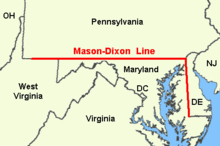 Charles Mason and Jeremiah Dixon complete their survey of the boundary between the colonies of Pennsylvania and Maryland as well as areas that would eventually become the states of Delaware and West Virginia. The Penn and Calvert families had hired Mason and Dixon, English surveyors, to settle their dispute over the boundary between their two proprietary colonies, Pennsylvania and Maryland.
 Congress, and a majority of the American public, had not been supportive of the Reagan administration’s efforts to topple the Sandinista government in Nicaragua. Reagan began a “secret war” to bring down the Nicaraguan government soon after taking office in 1981. Millions of dollars, training, and arms were funneled to the Contras (an armed force of Nicaraguan exiles intent on removing the leftist Nicaraguan regime) through the CIA. American involvement in the Contra movement soon became public, however, as did disturbing reports about the behavior of the Contra force. Charges were leveled in newspapers and in Congress that the Contras were little more than murderers and drug runners; rumors of corruption and payoffs were common. Congress steadily reduced U.S. assistance to the Contras, and in 1984 passed the second Boland Amendment prohibiting U.S. agencies from giving any aid to the group.
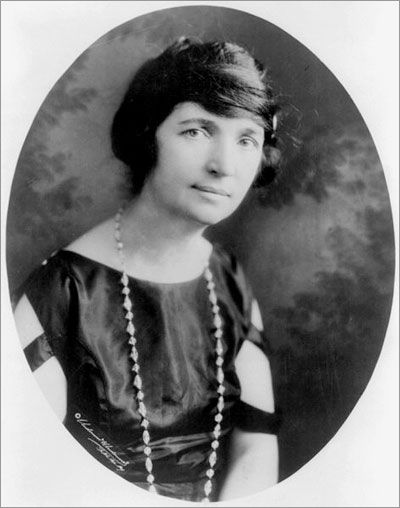 It was raided 9 days later by the police. She served 30 days in prison. An initial appeal was rejected but in 1918 an opinion written by Judge Frederick E. Crane of the New York Court of Appeals allowed doctors to prescribe contraception.
 On this day in 1815,
 The Bavarian royalty invited the citizens of Munich to attend the festivities, held on the fields in front of the city gates. These famous public fields were named Theresienwiese-“Therese’s fields”-in honor of the crown princess; although locals have since abbreviated the name simply to the “Wies’n.” Horse races in the presence of the royal family concluded the popular event, celebrated in varying forms all across Bavaria.
 The Mary Rose was a carrack-type warship of the English Tudor navy of King Henry VIII. After serving for 33 years in several wars against France, Scotland, and Brittany and after being substantially rebuilt in 1536, she saw her last action on 19 July 1545. While leading the attack on the galleys of a French invasion fleet, she sank in the Solent, the straits north of the Isle of Wight. The wreck of the Mary Rose was rediscovered in 1971 and salvaged in 1982 by the Mary Rose Trust in one of the most complex and expensive projects in the history of maritime archaeology. The surviving section of the ship and thousands of recovered artefacts are of immeasurable value as a Tudor-era time capsule.
Recent Comments