
This is your morning Open Thread. Pour your favorite beverage and review the past and comment on the future.
Find the past “On This Day in History” here.
Click on image to enlarge
June 2 is the 153rd day of the year (154th in leap years) in the Gregorian calendar. There are 212 days remaining until the end of the year.
On this day in 1962, Ray Charles takes country music to the top of the pop charts.
Ray Charles was one of the founding fathers of soul music-a style he helped create and popularize with a string of early 1950s hits on Atlantic Records like “I Got A Woman” and “What’d I Say.” This fact is well known to almost anyone who has ever heard of the man they called “the Genius,” but what is less well known-to younger fans especially-is the pivotal role that Charles played in shaping the course of a seemingly very different genre of popular music. In the words of his good friend and sometime collaborator, Willie Nelson, speaking before Charles’ death in 2004, Ray Charles the R&B legend “did more for country music than any other living human being.” The landmark album that earned Ray Charles that praise was Modern Sounds in Country and Western Music, which gave him his third #1 hit in “I Can’t Stop Loving You,” which topped the U.S. pop charts on this day in 1962
Executives at ABC Records-the label that wooed Ray Charles from Atlantic with one of the richest deals of the era-were adamantly opposed to the idea that Charles brought to them in 1962: to re-record some of the best country songs of the previous 20 years in new arrangements that suited his style. As Charles told Rolling Stone magazine a decade later, ABC executives said, “You can’t do no country-western things….You’re gonna lose all your fans!” But Charles recognized the quality of songs like “I Can’t Stop Loving You” by Don Gibson and “You Don’t Know Me,” by Eddy Arnold and Cindy Walker, and the fact that his version of both of those country songs landed in the Top 5 on both the pop and R&B charts was vindication of Charles’s long-held belief that “There’s only two kinds of music as far as I’m concerned: good and bad.”
Ray Charles Robinson (September 23, 1930 – June 10, 2004), known by his shortened stage name Ray Charles, was an American musician. He was a pioneer in the genre of soul music during the 1950s by fusing rhythm and blues, gospel, and blues styles into his early recordings with Atlantic Records. He also helped racially integrate country and pop music during the 1960s with his crossover success on ABC Records, most notably with his Modern Sounds albums. While with ABC, Charles became one of the first African-American musicians to be given artistic control by a mainstream record company. Frank Sinatra called Charles “the only true genius in show business.”
Rolling Stone ranked Charles number 10 on their list of “100 Greatest Artists of All Time” in 2004, and number two on their November 2008 list of “100 Greatest Singers of All Time”. In honoring Charles, Billy Joel noted: “This may sound like sacrilege, but I think Ray Charles was more important than Elvis Presley. I don’t know if Ray was the architect of rock & roll, but he was certainly the first guy to do a lot of things . . . Who the hell ever put so many styles together and made it work?”
 On this day in 1980,
  The Cable News Network was launched at 5:00 p.m. EST on Sunday June 1, 1980. After an introduction by Ted Turner, the husband and wife team of David Walker and Lois Hart anchored the first newscast. Burt Reinhardt, the then executive vice president of CNN, hired most of CNN’s first 200 employees, including the network’s first news anchor, Bernard Shaw.
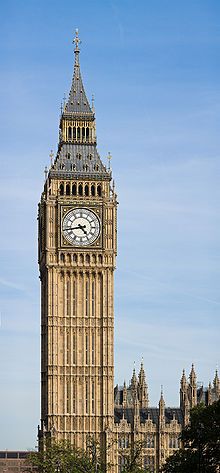 On this day in 1859,
  The main bell, officially known as the Great Bell, is the largest bell in the tower and part of the Great Clock of Westminster. The bell is better known by the nickname Big Ben.


 On this day in 1961,
  Born in London as Peter James Henry Solomon to a Jewish family, the only son of Harold Solomon and
  On this day in 1813,
 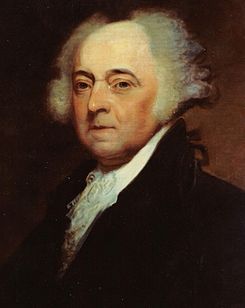 When Jefferson retired from the presidency in 1809, Dr. Benjamin Rush, a signer of the Declaration that Adams and Jefferson worked to create, took it upon himself to renew their suspended friendship. He had no success until 1811, when one of Jefferson’s neighbors visited Adams in Massachusetts. The neighbor returned to Virginia with the report that he had heard Adams say, “I always loved Jefferson, and still love him.” In response to these words, Jefferson wrote Dr. Rush: “This is enough for me. I only needed this knowledge to revive towards him all of the affections of the most cordial moments of our lives.” He asked Rush to persuade Adams to renew their correspondence. A letter from Adams was forthcoming, and they continued to write until their deaths.

 On this day in 1775,
 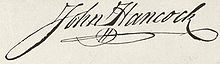 Hancock was president of Congress when the
Recent Comments