
This is your morning Open Thread. Pour your favorite beverage and review the past and comment on the future.
How ironic that on this very day, Congress and President Barack Obama are about to approve a bill that will essentially violate at least 5 of these amendments and more.
Find the past “On This Day in History” here.
December 15 is the 349th day of the year (350th in leap years) in the Gregorian calendar. There are 16 days remaining until the end of the year.
On this day 1791, Virginia becomes the last state to ratify the Bill of Rights, making the first ten amendments to the Constitution law and completing the revolutionary reforms begun by the Declaration of Independence. Before the Massachusetts ratifying convention would accept the Constitution, which they finally did in February 1788, the document’s Federalist supporters had to promise to create a Bill of Rights to be amended to the Constitution immediately upon the creation of a new government under the document.
After the Constitution was ratified in 1789, the 1st United States Congress met in Federal Hall in New York City. Most of the delegates agreed that a “bill of rights” was needed and most of them agreed on the rights they believed should be enumerated.
Madison, at the head of the Virginia delegation of the 1st Congress, had originally opposed a Bill of Rights but hoped to pre-empt a second Constitutional Convention that might have undone the difficult compromises of 1787: a second convention would open the entire Constitution to reconsideration and could undermine the work he and so many others had done in establishing the structure of the United States Government. Writing to Jefferson, he stated, “The friends of the Constitution…wish the revisal to be carried no farther than to supply additional guards for liberty…and are fixed in opposition to the risk of another Convention….It is equally certain that there are others who urge a second Convention with the insidious hope of throwing all things into Confusion, and of subverting the fabric just established, if not the Union itself.”
Madison based much of the Bill of Rights on George Mason’s Virginia Declaration of Rights (1776), which itself had been written with Madison’s input. He carefully considered the state amendment recommendations as well. He looked for recommendations shared by many states to avoid controversy and reduce opposition to the ratification of the future amendments. Additionally, Madison’s work on the Bill of Rights reflected centuries of English law and philosophy, further modified by the principles of the American Revolution.
 On this day in 1995,
  On this day in 1642,
  New Zealand is one of the most recently settled major landmasses. The first known settlers were Eastern Polynesians who, according to most researchers, arrived by canoe in about AD 1250-1300. Some researchers have suggested an earlier wave of arrivals dating to as early as AD 50-150; these people then either died out or left the islands. Over the following centuries these settlers developed into a distinct culture now known as Maori. The population was divided into iwi (tribes) and hapu (subtribes) which would cooperate, compete and sometimes fight with each other. At some point a group of Maori migrated to the Chatham Islands where they developed their distinct Moriori culture.
 On this day in 1946,
  In 1953,
  On this day in 1901,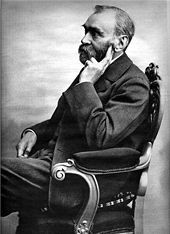
 The Joint Committee on the Conduct of the War was a
  John and I are in our Dakota kitchen in the middle of the night. Three cats – Sasha, Micha and Charo – are looking up at John, who is making tea for us two.


Recent Comments