
This is your morning Open Thread. Pour your favorite beverage and review the past and comment on the future.
Find the past “On This Day in History” here.
October 25 is the 298th day of the year (299th in leap years) in the Gregorian calendar. There are 67 days remaining until the end of the year.
On this day in 1774, the First Continental Congress sends a respectful petition to King George III to inform his majesty that if it had not been for the acts of oppression forced upon the colonies by the British Parliament, the American people would be standing behind British rule.
Despite the anger that the American public felt towards the United Kingdom after the British Parliament established the Coercive Acts, called the Intolerable Acts by the colonists, Congress was still willing to assert its loyalty to the king. In return for this loyalty, Congress asked the king to address and resolve the specific grievances of the colonies. The petition, written by Continental Congressman John Dickinson, laid out what Congress felt was undo oppression of the colonies by the British Parliament. Their grievances mainly had to do with the Coercive Acts, a series of four acts that were established to punish colonists and to restore order in Massachusetts following the Boston Tea Party..
In Boston, Massachusetts, the Sons of Liberty protested against Parliament’s passage of the Tea Act in 1773 by throwing tons of taxed tea into Boston Harbor, an act that came to be known as the Boston Tea Party. News of the event reached England in January 1774. Parliament responded with a series of acts that were intended to punish Boston for this illegal destruction of private property, restore British authority in Massachusetts, and otherwise reform colonial government in America.
On April 22, 1774, Prime Minister Lord North defended the program in the House of Commons, saying:
The Americans have tarred and feathered your subjects, plundered your merchants, burnt your ships, denied all obedience to your laws and authority; yet so clement and so long forbearing has our conduct been that it is incumbent on us now to take a different course. Whatever may be the consequences, we must risk something; if we do not, all is over.
The Boston Port Act, the first of the acts passed in response to the Boston Tea Party, closed the port of Boston until the East India Company had been repaid for the destroyed tea and until the king was satisfied that order had been restored. Colonists objected that the Port Act punished all of Boston rather than just the individuals who had destroyed the tea, and that they were being punished without having been given an opportunity to testify in their own defense.
The Massachusetts Government Act provoked even more outrage than the Port Act because it unilaterally altered the government of Massachusetts to bring it under control of the British government. Under the terms of the Government Act, almost all positions in the colonial government were to be appointed by the governor or the king. The act also severely limited the activities of town meetings in Massachusetts. Colonists outside Massachusetts feared that their governments could now also be changed by the legislative fiat of Parliament.
The Administration of Justice Act allowed the governor to move trials of accused royal officials to another colony or even to Great Britain if he believed the official could not get a fair trial in Massachusetts. Although the act stipulated that witnesses would be paid for their travel expenses, in practice few colonists could afford to leave their work and cross the ocean to testify in a trial. George Washington called this the “Murder Act” because he believed that it allowed British officials to harass Americans and then escape justice. Some colonists believed the act was unnecessary because British soldiers had been given a fair trial following the Boston Massacre in 1770, with future Founding Father John Adams representing the Defense.
The Quartering Act applied to all of the colonies, and sought to create a more effective method of housing British troops in America. In a previous act, the colonies had been required to provide housing for soldiers, but colonial legislatures had been uncooperative in doing so. The new Quartering Act allowed a governor to house soldiers in other buildings if suitable quarters were not provided. While many sources claim that the Quartering Act allowed troops to be billeted in occupied private homes, historian David Ammerman’s 1974 study claimed that this is a myth, and that the act only permitted troops to be quartered in unoccupied buildings. Although many colonists found the Quartering Act objectionable, it generated the least protest of the Coercive Acts.
The Quebec Act was a piece of legislation unrelated to the events in Boston, but the timing of its passage led colonists to believe that it was part of the program to punish them. The act enlarged the boundaries of what was then the colony of “Canada” (roughly consisting of today’s Canadian provinces of Quebec and Ontario as well as the Great Lakes’ American watershed), removed references to the Protestant faith in the oath of allegiance, and guaranteed free practice of the Roman Catholic faith. The Quebec Act offended a variety of interest groups in the British colonies. Land speculators and settlers objected to the transfer of western lands previously claimed by the colonies to a non-representative government. Many feared the establishment of Catholicism in Quebec, and that the French Canadians were being courted to help oppress British Americans.
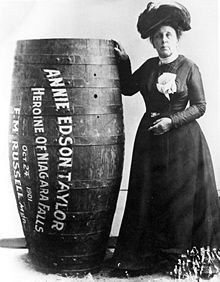 Desiring to secure her later years financially, she decided she would be the
  According to the official records of the Army Graves Registration Service deposited in the U.S. National Archives in Washington, four bodies were transported to Chalons from the cemeteries of Aisne-Marne, Somme, Meuse-Argonne and Saint-Mihiel. All were great battlegrounds, and the latter two regions were the sites of two offensive operations in which American troops took a leading role in the decisive summer and fall of 1918. As the service records stated, the identity of the bodies was completely unknown: “The original records showing the internment of these bodies were searched and the four bodies selected represented the remains of soldiers of which there was absolutely no indication as to name, rank, organization or date of death.”
 Bearing the inscription “An Unknown American who gave his life in the World War,” the chosen casket traveled to Paris and then to Le Havre, France, where it would board the cruiser Olympia for the voyage across the Atlantic. Once back in the United States, the Unknown Soldier was buried in Arlington National Cemetery, near Washington, D.C.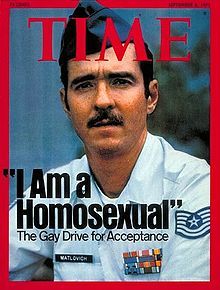
 On June 22, 1988, less than a month before his 45th birthday, Matlovich died of complications from HIV/AIDS beneath a large photo of Martin Luther King, Jr. His tombstone, meant to be a memorial to all gay veterans, does not bear his name. It reads, “When I was in the military, they gave me a medal for killing two men and a discharge for loving one.” Matlovich’s tombstone at Congressional Cemetery is on the same row as that of FBI Director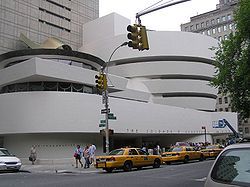
 In 1939, the Guggenheim Foundation’s first museum, “The Museum of Non-Objective Painting”, opened in rented quarters at 24 East Fifty-Fourth Street in New York and showcased art by early modernists such as
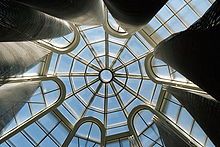
 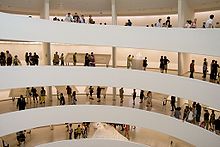 Internally, the viewing gallery forms a gentle helical spiral from the main level up to the top of the building. Paintings are displayed along the walls of the spiral and also in exhibition space found at annex levels along the way.

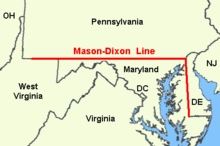 Charles Mason and Jeremiah Dixon complete their survey of the boundary between the colonies of Pennsylvania and Maryland as well as areas that would eventually become the states of Delaware and West Virginia. The Penn and Calvert families had hired Mason and Dixon, English surveyors, to settle their dispute over the boundary between their two proprietary colonies, Pennsylvania and Maryland.
 Congress, and a majority of the American public, had not been supportive of the Reagan administration’s efforts to topple the Sandinista government in Nicaragua. Reagan began a “secret war” to bring down the Nicaraguan government soon after taking office in 1981. Millions of dollars, training, and arms were funneled to the Contras (an armed force of Nicaraguan exiles intent on removing the leftist Nicaraguan regime) through the CIA. American involvement in the Contra movement soon became public, however, as did disturbing reports about the behavior of the Contra force. Charges were leveled in newspapers and in Congress that the Contras were little more than murderers and drug runners; rumors of corruption and payoffs were common. Congress steadily reduced U.S. assistance to the Contras, and in 1984 passed the second Boland Amendment prohibiting U.S. agencies from giving any aid to the group.
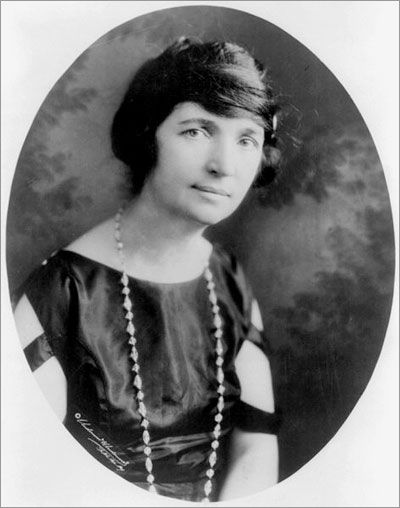 It was raided 9 days later by the police. She served 30 days in prison. An initial appeal was rejected but in 1918 an opinion written by Judge Frederick E. Crane of the New York Court of Appeals allowed doctors to prescribe contraception.
Recent Comments