
This is your morning Open Thread. Pour your favorite beverage and review the past and comment on the future.
Find the past “On This Day in History” here.
March 1 is the 60th day of the year (61st in leap years) in the Gregorian calendar. There are 305 days remaining until the end of the year.
On this day in 1961, President John F. Kennedy issues Executive Order #10924, establishing the Peace Corps as a new agency within the Department of State. The same day, he sent a message to Congress asking for permanent funding for the agency, which would send trained American men and women to foreign nations to assist in development efforts. The Peace Corps captured the imagination of the U.S. public, and during the week after its creation thousands of letters poured into Washington from young Americans hoping to volunteer.
The Peace Corps is an American volunteer program run by the United States Government, as well as a government agency of the same name. The mission of the Peace Corps includes three goals: providing technical assistance, helping people outside the United States to understand U.S. culture, and helping Americans understand the cultures of other countries. Generally, the work is related to social and economic development. Each program participant, (aka Peace Corps Volunteer), is an American citizen, typically with a college degree, who works abroad for a period of 24 months after three months of training. Volunteers work with governments, schools, non-profit organizations, non-government organizations, and entrepreneurs in education, hunger, business, information technology, agriculture, and the environment. After 24 months of service, volunteers can request an extension of service.
Kennedy appointed his brother-in-law Sargent Shriver to be the program’s first director. Shriver fleshed out the organization with the help of Warren Wiggins and others. Shriver and his think tank outlined the organization’s goals and set the initial number of volunteers. The program began recruiting in July, 1962.
Until about 1967, applicants had to pass a placement test that tested “general aptitude” (knowledge of various skills needed for Peace Corps assignments) and language aptitude. After an address from Kennedy, who was introduced by Rev. Russell Fuller of Memorial Christian Church, Disciples of Christ, on August 28, 1961, the first group of volunteers left for Ghana and Tanzania. The program was formally authorized by Congress on September 22, 1961, and within two years over 7,300 volunteers were serving in 44 countries. This number increased to 15,000 in June 1966, the largest number in the organization’s history.
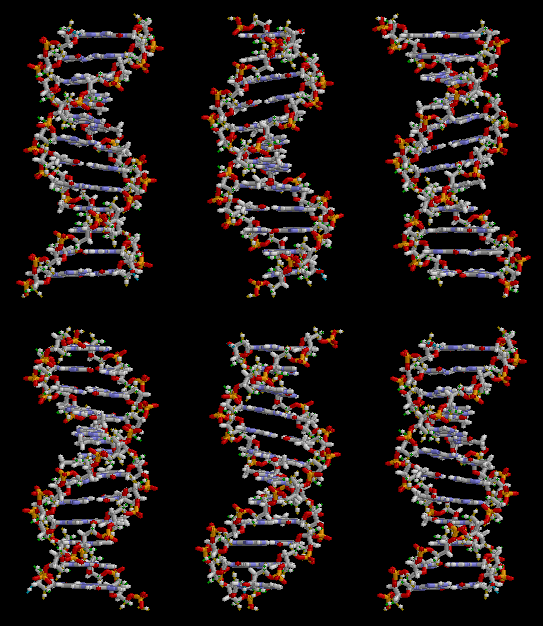 DNA was first isolated by the Swiss physician
  On this day in 1827,

 In 1897 acting Yellowstone superintendent Colonel S.B.M. Young proposed expanding that park’s borders south to encompass the northern extent of Jackson Hole in order to protect migrating herds of elk. Next year,
  In 1928, a Coordinating Commission on National Parks and Forests met with valley residents and reached an agreement for the establishment of a park. Wyoming Senator
  On this day in Japan, the Plum Blossom Festival is held. The Festival at the
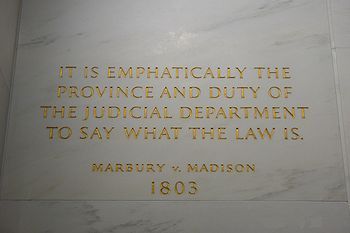 On this day in
  On this day in 1954, a group of
  By 1910, much of the world experienced a dramatic increase in polio cases and frequent epidemics became regular events, primarily in cities during the summer months. These epidemics-which left thousands of children and adults paralyzed-provided the impetus for a “Great Race” towards the development of a vaccine. Developed in the 1950s, polio vaccines are credited with reducing the global number of polio cases per year from many hundreds of thousands to around a thousand. Enhanced vaccination efforts led by the World Health Organization, UNICEF, and Rotary International could result in global eradication of the disease.
 On this day in 1965,
Recent Comments