
This is your morning Open Thread. Pour your favorite beverage and review the past and comment on the future.
Find the past “On This Day in History” here.
September 28 is the 271st day of the year (272nd in leap years) in the Gregorian calendar. There are 94 days remaining until the end of the year.
On this day in 1928, the antibiotic Penicillin was discovered. It’s discovery is attributed to Scottish scientist and Nobel laureate Alexander Fleming in 1928. He showed that, if Penicillium notatum was grown in the appropriate substrate, it would exude a substance with antibiotic properties, which he dubbed penicillin. This serendipitous observation began the modern era of antibiotic discovery. The development of penicillin for use as a medicine is attributed to the Australian Nobel laureate
Howard Walter Florey together with the German Nobel laureate Ernst Chain and the English biochemist Norman Heatley.
However, several others reported the bacteriostatic effects of Penicillium earlier than Fleming. The use of bread with a blue mould (presumably penicillium) as a means of treating suppurating wounds was a staple of folk medicine in Europe since the Middle Ages. The first published reference appears in the publication of the Royal Society in 1875, by John Tyndall. Ernest Duchesne documented it in an 1897 paper, which was not accepted by the Institut Pasteur because of his youth. In March 2000, doctors at the San Juan de Dios Hospital in San José, Costa Rica published the manuscripts of the Costa Rican scientist and medical doctor Clodomiro (Clorito) Picado Twight (1887-1944). They reported Picado’s observations on the inhibitory actions of fungi of the genus Penicillium between 1915 and 1927. Picado reported his discovery to the Paris Academy of Sciences, yet did not patent it, even though his investigations started years before Fleming’s. Joseph Lister was experimenting with penicillum in 1871 for his Aseptic surgery. He found that it weakened the microbes but then he dismissed the fungi.
Fleming recounted that the date of his discovery of penicillin was on the morning of Friday, September 28, 1928. It was a fortuitous accident: in his laboratory in the basement of St. Mary’s Hospital in London (now part of Imperial College), Fleming noticed a petri dish containing Staphylococcus plate culture he had mistakenly left open, which was contaminated by blue-green mould, which had formed a visible growth. There was a halo of inhibited bacterial growth around the mould. Fleming concluded that the mould was releasing a substance that was repressing the growth and lysing the bacteria. He grew a pure culture and discovered that it was a Penicillium mould, now known to be Penicillium notatum. Charles Thom, an American specialist working at the U.S. Department of Agriculture, was the acknowledged expert, and Fleming referred the matter to him. Fleming coined the term “penicillin” to describe the filtrate of a broth culture of the Penicillium mould. Even in these early stages, penicillin was found to be most effective against Gram-positive bacteria, and ineffective against Gram-negative organisms and fungi. He expressed initial optimism that penicillin would be a useful disinfectant, being highly potent with minimal toxicity compared to antiseptics of the day, and noted its laboratory value in the isolation of “Bacillus influenzae” (now Haemophilus influenzae). After further experiments, Fleming was convinced that penicillin could not last long enough in the human body to kill pathogenic bacteria, and stopped studying it after 1931. He restarted clinical trials in 1934, and continued to try to get someone to purify it until 1940.
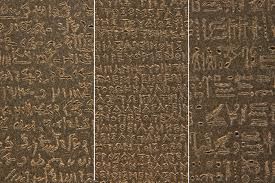 Thomas Young was one of the first to attempt decipherment of the Egyptian hieroglyphs, basing his own work on the investigations of Swedish diplomat Akerblad, who built up a demotic alphabet of 29 letters (15 turned out to be correct) and translated all personal names and other words in the Demotic part of the Rosetta Stone in 1802. Akerblad however, wrongly believed that demotic was entirely phonetic or alphabetic. Young thought the same, and by 1814 he had completely translated the enchorial (which Champollion labeled Demotic as it is called today) text of the Rosetta Stone (he had a list with 86 demotic words). Young then studied the hieroglyphic alphabet and made some progress but failed to recognise that demotic and hieroglyphic texts were paraphrases and not simple translations. In 1823 he published an Account of the Recent Discoveries in Hieroglyphic Literature and Egyptian Antiquities. Some of Young’s conclusions appeared in the famous article Egypt he wrote for the 1818 edition of the Encyclopædia Britannica.
 The first Congress of the United States approves 12 amendments to the U.S. Constitution, and sends them to the states for ratification. The amendments, known as the Bill of Rights, were designed to protect the basic rights of U.S. citizens, guaranteeing the freedom of speech, press, assembly, and exercise of religion; the right to fair legal procedure and to bear arms; and that powers not delegated to the federal government were reserved for the states and the people.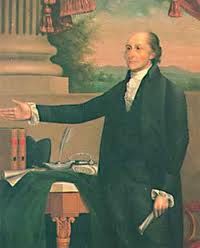
 . . . . Andre Malraux, the French minister of culture, commissioned him to design a new ceiling for the Paris Opera after seeing Chagall’s work in Daphnis et Chloe. Working with a surface of 560 square meters, Chagall divided the ceiling into color zones that he filled with landscapes and figures representing the luminaries of opera and ballet. The ceiling was unveiled on September 23, 1964, during a performance of the same Daphnis et Chloe. As usual, a few detractors condemned Chagall’s work as overly primitive, but this criticism was drowned out in the general acclaim for the work. In 1966, as a gift to the city that had sheltered him during World War II, he painted two vast murals for New York’s Metropolitan Opera House (1966).
 When the Civil War broke out in 1861, shortly after Lincoln’s inauguration as America’s 16th president, he maintained that the war was about restoring the Union and not about slavery. He avoided issuing an anti-slavery proclamation immediately, despite the urgings of abolitionists and radical Republicans, as well as his personal belief that slavery was morally repugnant. Instead, Lincoln chose to move cautiously until he could gain wide support from the public for such a measure.

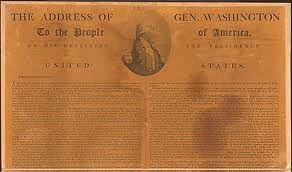 Originally published in David Claypoole’s American Daily Advertiser on September 19, 1796 under the title “The Address of General Washington To The People of The United States on his declining of the Presidency of the
Recent Comments