
This is your morning Open Thread. Pour your favorite beverage and review the past and comment on the future.
Find the past “On This Day in History” here.
November 24 is the 328th day of the year (329th in leap years) in the Gregorian calendar. There are 37 days remaining until the end of the year.
On this day in 1859, On the Origin of Species by Means of Natural Selection, a groundbreaking scientific work by British naturalist Charles Darwin, is published in England. Darwin’s theory argued that organisms gradually evolve through a process he called “natural selection.” In natural selection, organisms with genetic variations that suit their environment tend to propagate more descendants than organisms of the same species that lack the variation, thus influencing the overall genetic makeup of the species.
Charles Darwin’s On the Origin of Species, published on 24 November 1859, is a work of scientific literature which is considered to be the foundation of evolutionary biology. Its full title was On the Origin of Species by Means of Natural Selection, or the Preservation of Favoured Races in the Struggle for Life. For the sixth edition of 1872, the short title was changed to The Origin of Species. Darwin’s book introduced the scientific theory that populations evolve over the course of generations through a process of natural selection. It presented a body of evidence that the diversity of life arose by common descent through a branching pattern of evolution. Darwin included evidence that he had gathered on the Beagle expedition in the 1830s and his subsequent findings from research, correspondence, and experimentation.
Various evolutionary ideas had already been proposed to explain new findings in biology. There was growing support for such ideas among dissident anatomists and the general public, but during the first half of the 19th century the English scientific establishment was closely tied to the Church of England, while science was part of natural theology. Ideas about the transmutation of species were controversial as they conflicted with the beliefs that species were unchanging parts of a designed hierarchy and that humans were unique, unrelated to animals. The political and theological implications were intensely debated, but transmutation was not accepted by the scientific mainstream.
The book was written for non-specialist readers and attracted widespread interest upon its publication. As Darwin was an eminent scientist, his findings were taken seriously and the evidence he presented generated scientific, philosophical, and religious discussion. The debate over the book contributed to the campaign by T.H. Huxley and his fellow members of the X Club to secularise science by promoting scientific naturalism. Within two decades there was widespread scientific agreement that evolution, with a branching pattern of common descent, had occurred, but scientists were slow to give natural selection the significance that Darwin thought appropriate. During the “eclipse of Darwinism” from the 1880s to the 1930s, various other mechanisms of evolution were given more credit. With the development of the modern evolutionary synthesis in the 1930s and 1940s, Darwin’s concept of evolutionary adaptation through natural selection became central to modern evolutionary theory, now the unifying concept of the life sciences.
 Life actually had its start earlier in the 20th century as a different kind of magazine: a weekly humor publication, not unlike today’s The New Yorker in its use of tart cartoons, humorous pieces and cultural reporting. When the original Life folded during the Great Depression, the influential American publisher Henry Luce bought the name and re-launched the magazine as a picture-based periodical on this day in 1936. By this time, Luce had already enjoyed great success as the publisher of Time, a weekly news magazine.
 The Nuremberg Trials were conducted by an international tribunal made up of representatives from the United States, the Soviet Union, France, and Great Britain. It was the first trial of its kind in history, and the defendants faced charges ranging from crimes against peace, to crimes of war, to crimes against humanity. Lord Justice Geoffrey Lawrence, the British member, presided over the proceedings, which lasted 10 months and consisted of 216 court sessions.
 On November 19, 1863, at the dedication of a military cemetery at Gettysburg, Pennsylvania, during the American Civil War, President Abraham Lincoln delivers one of the most memorable speeches in American history. In just 272 words, Lincoln brilliantly and movingly reminded a war-weary public why the Union had to fight, and win, the Civil War.
 On this day in 1883,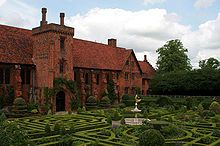

 Did the young Austrian nun named Maria really take to the hills surrounding Salzburg to sing spontaneously of her love of music? Did she comfort herself with thoughts of copper kettles, and did she swoon to her future husband’s song about an alpine flower while the creeping menace of Nazism spread across central Europe? No, the real-life Maria von Trapp did none of those things. She was indeed a former nun, and she did indeed marry Count Georg von Trapp and become stepmother to his large brood of children, but nearly all of the particulars she related in her 1949 book, The Story of the Trapp Family Singers, were ignored by the creators of the Broadway musical her memoir inspired. And while the liberties taken by the show’s writers, Howard Lindsay and Russel Crouse, and by its composer and lyricist, Richard Rodgers and Oscar Hammerstein II, caused some consternation to the real Maria von Trapp and to her stepchildren, according to many later reports, those liberties made The Sound of Music a smash success from the very night of its Broadway opening on this day in 1959.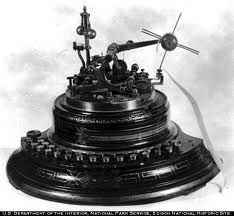
Recent Comments