Tag: Open Thread

On This Day In History November 21

This is your morning Open Thread. Pour your favorite beverage and review the past and comment on the future.

Find the past “On This Day in History” here.

November 21 is the 325th day of the year (326th in leap years) in the Gregorian calendar. There are 40 days remaining until the end of the year.

On this day in 1934, Ella Fitzgerald wins Amateur Night at Harlem’s Apollo Theater. A young and gangly would-be dancer took to the stage of Harlem’s Apollo Theater to participate in a harrowing tradition known as Amateur Night. Finding herself onstage as a result of pure chance after her name was drawn out of a hat, the aspiring dancer spontaneously decided to turn singer instead-a change of heart that would prove momentous not only for herself personally, but also for the future course of American popular music. The performer in question was a teenaged Ella Fitzgerald, whose decision to sing rather than dance on this day in 1934 set her on a course toward becoming a musical legend. It also led her to victory at Amateur Night at the Apollo, a weekly event that was then just a little more than a year old but still thrives today

Ella Jane Fitzgerald (April 25, 1917 – June 15, 1996), also known as the “First Lady of Song” and “Lady Ella,” was an American jazz and song vocalist. With a vocal range spanning three octaves (Db3 to Db6), she was noted for her purity of tone, impeccable diction, phrasing and intonation, and a “horn-like” improvisational ability, particularly in her scat singing.

She is considered to be a notable interpreter of the Great American Songbook. Over a recording career that lasted 59 years, she was the winner of 14 Grammy Awards and was awarded the National Medal of Art by Ronald Reagan and the Presidential Medal of Freedom by George H. W. Bush.

Punting the Pundits

“Punting the Pundits” is an Open Thread. It is a selection of editorials and opinions from around the news medium and the internet blogs. The intent is to provide a forum for your reactions and opinions, not just to the opinions presented, but to what ever you find important.

Thanks to ek hornbeck, click on the link and you can access all the past “Punting the Pundits”.

Wednesday is Ladies’ Day

Follow us on Twitter @StarsHollowGzt

Katrina vanden Heuvel: Oklahoma is schooling the nation on early education

In the richest country in the world, the poorest among us are children. [..]

What gets lost in the hype about K-12 education reform, and the unhealthy obsession with things like standardized tests and charter schools, are a child’s crucial early years. Research from Stanford University (pdf) shows that the gap in language proficiency between low-income and high-income children starts as early as 18 months and compounds over time as poorer children enter kindergarten less prepared than their wealthier peers and find it hard to catch up.

To stand idle in the face of these facts is to allow millions of children to fall behind in school before they even start. We can do better – and Oklahoma can show us how.

Heidi Moore: Reality check: Obamacare is not to blame for Walmart’s sluggish sales

Corporations love using Obamacare as a scapegoat for poor performance, even though the numbers don’t support that at all

The thing is, this search for a financial scapegoat is a pattern, the kind of fantasist imagining best dreamed up while the corporate jet – of which Walmart has 19 – sits idle on the tarmac.

Walmart, once a Wall Street darling, has spent all year exuding excuses for its disappointing financial performance in the same way that an isotope of uranium emits radiation. In January, Walmart’s bete noire was the payroll tax. In June, it was government uncertainty. In the fall, it was cuts to food stamps. This week, it’s Obamacare.

Two things Walmart has reliably avoided mentioning: that rivals like Costco and Family Dollar have been doing pretty well all year, which undermines all the conspiracy theories, and that Walmart has been struggling with its own divisive labor issues. One of those labor issues – its infamously low pay – has led some Walmart stories to start a food drive, asking workers to donate food to their own colleagues.

Zoë Carpenter: CEOs With Massive Retirement Fortunes Push Social Security Cuts

With budget negotiations on the horizon, a buzz is building around Social Security, from Elizabeth Warren and other Democrats calling for an expansion of benefits to The Washington Post arguing that seniors must be sacrificed for the good of the “poor young.”

Two of the biggest players in the debate are largely behind the scenes: Business Roundtable and Fix the Debt, corporate lobbies that use deficit fear-mongering to sell benefit cuts. These groups are made up of CEOs of America’s largest corporations-people with retirement accounts that are more than 1,000 times as large as those of the average Social Security beneficiary. [..]

Saving more is an increasingly unworkable solution for the millions of workers whose wages and benefits are being undercut by some of the same CEOs directing them to do so. As the report lays out, many of the most effective ways to strengthen Social Security involve asking more of executives, not employees. Eliminating the cap on wages subject to Social Security taxes (currently set at $113,700) would eliminate 95 percent of the projected shortfall for seventy-five years, according to the Congressional Research Service. That’s three times the deficit reduction achieved by raising the retirement age to 70. Subjecting stock-based compensation to Social Security taxes would raise billions more.

Michelle Chen: Chinatown: the next front in the gentrification war

Chinatowns across the US are being replaced by ‘development’. For those fighting back, it’s about civil rights not just culture

There will always be a little corner of the American public imagination reserved for Chinatown. Whether the word evokes for you the stereotypical mystique of opium dens and gambling halls, or the gritty restaurants and garment factories that fueled generations of working-class immigrant families, Chinatown, as a cultural idea, seems to endure through the generations as a place of wonder, chaos, and cultural hybridity. But the real, brick-and-mortar Chinatown is vanishing rapidly, as its people, traditions and cultural life are swept away by what some call “development”. [..]

While gentrification has invaded many low-income areas in New York, its impacts are perhaps most starkly apparent in this neighborhood, which began over a century ago as a ghetto for mostly male migrant laborers, and has over the past generation morphed into one of the city’s hottest real estate markets. That transformation has come at the expense of the people and institutions who have anchored generations of Chinese American heritage. As immigrant families are expelled through mass evictions and spiking rents, in their wake comes an onslaught of white young professionals, forming a hyper-commercialized cityscape that billionaire Mayor Michael Bloomberg has championed. Big property values, little character.

A recent study of three Chinatowns in Boston, New York City and Philadelphia starkly maps out gentrification’s effects in crowding out once tight-knit ethnic communities.

Ana Marie Cox: On healthcare, Obama is starting to sound like a misbehaving boyfriend

The GOP has popular opinion trending on on its side for the first time in years, and they will run this issue into the ground

Yesterday’s press conference saw Obama at his least compelling: the burdened genius mode, in which he shows clear frustration with others’ inability to follow his logic and shows little sympathy for those who don’t share his faith in his own vision.

In general, Obama’s personal reactions to the Affordable Care Act (ACA) rollout have resembled those of misbehaving boyfriend. “I’m sorry you feel that way” instead of a real apology and “I meant it when I said it” instead of an explanation.

Along those lines, the press conference was in many ways a master class in mansplaining. His arrogance peeled off another layer of cool, and he seemed genuinely surprised that the American people could seriously accused him of intentionally misleading the country:

Catherine Deveny: Sorry, but being a mother is not the most important job in the world

It’s time to drop the slogan. It encourages mothers to stay socially and financially hobbled, it alienates fathers and discourages other significant relationships between children and adults

Being a mother is not the most important job in the world. There, I said it. Nor is it the toughest job, despite what the 92% of people polled in Parents Magazine reckon.

For any woman who uses that line, consider this: if this is meant to exalt motherhood, then why is the line always used to sell toilet cleaner? And if being a mother is that important, why aren’t all the highly paid men with stellar careers not devoting their lives to raising children? After all, I never hear “being a father is the most important job in the world”.

The deification of mothers not only delegitimises the relationship fathers, neighbours, friends, grandparents, teachers and carers have with children, it also diminishes the immense worth and value of these relationships. How do gay dads feel about this line, I wonder? Or the single dads, stepdads or granddads? No matter how devoted and hard working you are, fellas, you’ll always be second best.


On This Day In History November 20

This is your morning Open Thread. Pour your favorite beverage and review the past and comment on the future.

Find the past “On This Day in History” here.

November 20 is the 324th day of the year (325th in leap years) in the Gregorian calendar. There are 41 days remaining until the end of the year.

On this day in 1945, Twenty-four high-ranking Nazis go on trial in Nuremberg, Germany, for atrocities committed during World War II.

The Nuremberg Trials were conducted by an international tribunal made up of representatives from the United States, the Soviet Union, France, and Great Britain. It was the first trial of its kind in history, and the defendants faced charges ranging from crimes against peace, to crimes of war, to crimes against humanity. Lord Justice Geoffrey Lawrence, the British member, presided over the proceedings, which lasted 10 months and consisted of 216 court sessions.

Origin

British War Cabinet documents, released on 2 January 2006, have shown that as early as December 1944, the Cabinet had discussed their policy for the punishment of the leading Nazis if captured. British Prime Minister Winston Churchill had then advocated a policy of summary execution in some circumstances, with the use of an Act of Attainder to circumvent legal obstacles, being dissuaded from this only by talks with US leaders later in the war. In late 1943, during the Tripartite Dinner Meeting at the Tehran Conference, the Soviet leader, Joseph Stalin, proposed executing 50,000-100,000 German staff officers. US President Franklin D. Roosevelt, joked that perhaps 49,000 would do. Churchill denounced the idea of “the cold blooded execution of soldiers who fought for their country.” However, he also stated that war criminals must pay for their crimes and that in accordance with the Moscow Document which he himself had written, they should be tried at the places where the crimes were committed. Churchill was vigorously opposed to executions “for political purposes.” According to the minutes of a Roosevelt-Stalin meeting during the Yalta Conference, on February 4, 1945, at the Livadia Palace, President Roosevelt “said that he had been very much struck by the extent of German destruction in the Crimea and therefore he was more bloodthirsty in regard to the Germans than he had been a year ago, and he hoped that Marshal Stalin would again propose a toast to the execution of 50,000 officers of the German Army.

US Treasury Secretary, Henry Morgenthau, Jr., suggested a plan for the total denazification of Germany; this was known as the Morgenthau Plan. The plan advocated the forced de-industrialisation of Germany. Roosevelt initially supported this plan, and managed to convince Churchill to support it in a less drastic form. Later, details were leaked to the public, generating widespread protest. Roosevelt, aware of strong public disapproval, abandoned the plan, but did not adopt an alternate position on the matter. The demise of the Morgenthau Plan created the need for an alternative method of dealing with the Nazi leadership. The plan for the “Trial of European War Criminals” was drafted by Secretary of War Henry L. Stimson and the War Department. Following Roosevelt’s death in April 1945, the new president, Harry S. Truman, gave strong approval for a judicial process. After a series of negotiations between Britain, the US, Soviet Union and France, details of the trial were worked out. The trials were set to commence on 20 November 1945, in the Bavarian city of Nuremberg.

Punting the Pundits

“Punting the Pundits” is an Open Thread. It is a selection of editorials and opinions from around the news medium and the internet blogs. The intent is to provide a forum for your reactions and opinions, not just to the opinions presented, but to what ever you find important.

Thanks to ek hornbeck, click on the link and you can access all the past “Punting the Pundits”.

Follow us on Twitter @StarsHollowGzt

New York Times Editorial Board: A New G.O.P. Excuse for Doing Nothing

With unrestrained glee, Republicans are using the calamitous debut of the Affordable Care Act as their latest justification for undermining all of health care reform. But they’re not stopping there. The Obama administration’s fumbling is apparently a good excuse for them to do nothing on immigration reform, on a budget agreement, and on any other initiative coming out of the White House. [..]

Their opportunistic theme is clear: If you can’t trust President Obama on this issue, how can you trust him on anything else? Unquestionably, the White House handed them this gift through two kinds of incompetence: the technical failure of the health-exchange website, and the political failure of the president in falsely promising that no one would lose an insurance policy they already had.

But just as these blunders are not the end of the health reform, they will also, in the end, not stop the long march to immigration reform, more jobs or desperately needed improvements to education, transportation and other fundamental functions.

Michael Klare: Are we witnessing the start of a global green revolution?

Mass environmental protests are gaining strength. If governments won’t take the lead on an imperiled planet, someone will

A week after the most powerful “super typhoon” ever recorded pummeled the Philippines, killing thousands in a single province, and three weeks after the northern Chinese city of Harbin suffered a devastating “airpocalypse“, suffocating the city with coal-plant pollution, government leaders beware!

Although individual events like these cannot be attributed with absolute certainty to increased fossil fuel use and climate change, they are the type of disasters that, scientists tell us, will become a pervasive part of life on a planet being transformed by the massive consumption of carbon-based fuels. If, as is now the case, governments across the planet back an extension of the carbon age and ever increasing reliance on “unconventional” fossil fuels like tar sands and shale gas, we should all expect trouble. In fact, we should expect mass upheavals leading to a green energy revolution.

Richard (RJ) Eskow: ‘Values, Not Just Math’: Why Elizabeth Warren’s Latest Speech Matters

This week Sen. Elizabeth Warren of Massachusetts gave an important speech on the floor of the United State Senate. Said Sen. Warren, “the conversation about retirement and Social Security benefits is not just a conversation about math. At its core, this is a conversation about our values.” Sen. Warren knows her values.

She knows her math, too. As co-author of The Two-Income Trap: Why Middle-Class Mothers and Fathers Are Going Broke, Warren helped document a phenomenon which most Americans had observed but few had fully recognized: Typical two-earner middle-class families today can’t maintain the standard of living which single-earner middle-class households enjoyed in the 1950s and 1960s.

Why? Because real wages have fallen, mortgages are more expensive, education costs have skyrocketed, and out-of-pocket health care costs have risen dramatically for families with employer-based insurance.

Paul Rieckhoff: Who Will Stand With Military Sexual Assault Survivors When It Counts This Week

Serving in the U.S. military requires courage. Coming forward to describe surviving military sexual assault takes even more.

That is what thousands of survivors like those shown in the Academy Award-nominated film, The Invisible War have done. And for every survivor who is able to come forward, thousands are suffering in silence.

When the Department of Defense reported that there were an estimated 26,000 cases of unwanted sexual contact in the military in 2012, it was a massive wake-up call. It showed our military is being weakened from the inside. And this week, the issue has finally reached a tipping point. After 20 years of broken promises to end sexual assault in the military, one vote will determine whether or not Congress has the courage to strengthen the military justice system.

Wendall Potter: The Real Reasons Insurers Are Canceling Policies

Before Obama signed the Affordable Care Act, insurance companies already were making rapid progress in implementing their business plans of “migrating” their customers from traditional managed care plans to so-called “consumer-directed” plans, the industry euphemism for high-deductible policies. At the same time they’ve been requiring us to pay more out of our own pockets for care, they’ve also been implementing a strategy of reducing benefits. Investors and Wall Street financial analysts refer to these common industry practices as “benefit buydowns.” That’s another euphemism, by the way.

I myself — and thousands of my fellow Cigna employees — were notified several years ago, long before I left my job, that our HMOs and PPOs were being discontinued. Yep, we got notices in the mail. If we wanted to stay in a Cigna-subsidized health plan, we would have to switch to a high-deductible plan. The same thing has happened to tens of millions of other Americans in recent years.

Yet if you relied on the Washington media for your news and information about health care, you’d think that insurance companies would never have considered sending policy discontinuation notices to their policyholders until forced to do so by Obamacare.

The truth: they have always done this when profits were at stake.

Norman Solomon: The Obamacare Disaster and the Poison of Party Loyalty

Four years ago, countless Democratic leaders and allies pushed for passage of Barack Obama’s complex healthcare act while arguing that his entire presidency was at stake. The party hierarchy whipped the Congressional Progressive Caucus into line, while MoveOn and other loyal groups stayed in step along with many liberal pundits. [..]

It should now be painfully obvious that Obamacare’s little helpers, dutifully reciting White House talking points in 2009 and early 2010, were helping right-wing bogus populism to gather steam. Claiming that the Obama presidency would sink without signing into law its “landmark” healthcare bill, many a progressive worked to throw the president a rope; while ostensibly attached to a political life preserver, the rope was actually fastened to a huge deadweight anvil. [..]

With such disingenuous sales pitches four years ago, President Obama and his Democratic acolytes did a lot to create the current political mess engulfing Obamacare-exaggerating its virtues while pulling out the stops to normalize denial about its real drawbacks. That was a bad approach in 2009. It remains a bad approach today.

On This Day In History November 19

This is your morning Open Thread. Pour your favorite beverage and review the past and comment on the future.

Find the past “On This Day in History” here.

November 19 is the 323rd day of the year (324th in leap years) in the Gregorian calendar. There are 42 days remaining until the end of the year.

On this day in 1863, President Abraham Lincoln delivers Gettysburg Address.

On November 19, 1863, at the dedication of a military cemetery at Gettysburg, Pennsylvania, during the American Civil War, President Abraham Lincoln delivers one of the most memorable speeches in American history. In just 272 words, Lincoln brilliantly and movingly reminded a war-weary public why the Union had to fight, and win, the Civil War.

The Battle of Gettysburg, fought some four months earlier, was the single bloodiest battle of the Civil War. Over the course of three days, more than 45,000 men were killed, injured, captured or went missing.  The battle also proved to be the turning point of the war: General Robert E. Lee’s defeat and retreat from Gettysburg marked the last Confederate invasion of Northern territory and the beginning of the Southern army’s ultimate decline.

Charged by Pennsylvania’s governor, Andrew Curtin, to care for the Gettysburg dead, an attorney named David Wills bought 17 acres of pasture to turn into a cemetery for the more than 7,500 who fell in battle. Wills invited Edward Everett, one of the most famous orators of the day, to deliver a speech at the cemetery’s dedication. Almost as an afterthought, Wills also sent a letter to Lincoln-just two weeks before the ceremony-requesting “a few appropriate remarks” to consecrate the grounds.

Text of Gettysburg Address

Four score and seven years ago our fathers brought forth on this continent a new nation, conceived in liberty, and dedicated to the proposition that all men are created equal.

Now we are engaged in a great civil war, testing whether that nation, or any nation, so conceived and so dedicated, can long endure. We are met on a great battle-field of that war. We have come to dedicate a portion of that field, as a final resting place for those who here gave their lives that that nation might live. It is altogether fitting and proper that we should do this.

But, in a larger sense, we can not dedicate, we can not consecrate, we can not hallow this ground. The brave men, living and dead, who struggled here, have consecrated it, far above our poor power to add or detract. The world will little note, nor long remember what we say here, but it can never forget what they did here. It is for us the living, rather, to be dedicated here to the unfinished work which they who fought here have thus far so nobly advanced. It is rather for us to be here dedicated to the great task remaining before us-that from these honored dead we take increased devotion to that cause for which they gave the last full measure of devotion-that we here highly resolve that these dead shall not have died in vain-that this nation, under God, shall have a new birth of freedom-and that government of the people, by the people, for the people, shall not perish from the earth.

Punting the Pundits

“Punting the Pundits” is an Open Thread. It is a selection of editorials and opinions from around the news medium and the internet blogs. The intent is to provide a forum for your reactions and opinions, not just to the opinions presented, but to what ever you find important.

Thanks to ek hornbeck, click on the link and you can access all the past “Punting the Pundits”.

Follow us on Twitter @StarsHollowGzt

Paul Krugman: A Permanent Slump?

Spend any time around monetary officials and one word you’ll hear a lot is “normalization.” Most though not all such officials accept that now is no time to be tightfisted, that for the time being credit must be easy and interest rates low. Still, the men in dark suits look forward eagerly to the day when they can go back to their usual job, snatching away the punch bowl whenever the party gets going.  But what if the world we’ve been living in for the past five years is the new normal? What if depression-like conditions are on track to persist, not for another year or two, but for decades?

You might imagine that speculations along these lines are the province of a radical fringe. And they are indeed radical; but fringe, not so much. A number of economists have been flirting with such thoughts for a while. And now they’ve moved into the mainstream. In fact, the case for “secular stagnation” – a persistent state in which a depressed economy is the norm, with episodes of full employment few and far between – was made forcefully recently at the most ultrarespectable of venues, the I.M.F.’s big annual research conference. And the person making that case was none other than Larry Summers. Yes, that Larry Summers.

Joseph E. Stiglitz: The Insanity of Our Food Policy

American food policy has long been rife with head-scratching illogic. We spend billions every year on farm subsidies, many of which help wealthy commercial operations to plant more crops than we need. The glut depresses world crop prices, harming farmers in developing countries. Meanwhile, millions of Americans live tenuously close to hunger, which is barely kept at bay by a food stamp program that gives most beneficiaries just a little more than $4 a day.

So it’s almost too absurd to believe that House Republicans are asking for a farm bill that would make all of these problems worse. For the putative purpose of balancing the country’s books, the measures that the House Republican caucus is pushing for in negotiations with the Senate, as Congress attempts to pass a long-stalled extension of the farm bill, would cut back the meager aid to our country’s most vulnerable and use the proceeds to continue fattening up a small number of wealthy American farmers.

New York Times Editorial Board: The Shame of American Health Care

Even as Americans struggle with the changes required by health care reform, an international survey released last week by the Commonwealth Fund, a research organization, shows why change is so necessary.

The report found that by virtually all measures of cost, access to care and ease of dealing with insurance problems, Americans fared poorly compared with people in other advanced countries. The survey covered 20,000 adults in the United States and 10 other industrial nations – Australia, Canada, France, Germany, the Netherlands, New Zealand, Norway, Sweden, Switzerland and Britain, all of which put in place universal or near-universal health coverage decades ago. The United States spends far more than any of these countries on a per capita basis and as a percent of the national economy.

Richard (RJ) Eskow: For Democrats, a Tax-the-Rich Road to Victory

As we enter into yet another round of budget discussions, the Democratic Party is confronted with an opportunity – and a challenge. There’s an opportunity to shift the budget debate to an area where they hold the high ground. But it will be a challenge for some Democrats to take the initiative on a subject they seem reluctant to discuss.

The subject is taxes.

Tax increases are a subject people seem reluctant to mention in the nation’s capital. Republicans have convinced everyone inside the Beltway that new tax revenues are politically impossible. The talk on the Hill is that the White House is urging Senate and House Dems to accept a cuts-only budget deal for the next go-round. It seems that the conventional wisdom says tax increases are best left unmentioned.

But the conventional wisdom is wrong.

Robert Kuttner: Obama’s Gift to the Republicans

The ancient Greeks liked to say that character is fate.

The colossal mess that Obamacare has become reflects both the character of the legislation and that of the president who sponsored it.

The Affordable Care Act, as a government mandate for people to purchase private insurance with an array of possible subsidies, had too many moving parts. It was an accident waiting to happen.

As many of us wrote at the time, Medicare for All would be simpler to execute, easier to understand, and harder for Republicans to oppose. If doing Medicare for All in a single stroke was too heavy a lift, start with 60-year-olds, then 55-year-olds, then young people under 25, and fill in the qualifying age brackets over a decade.

In the meantime, if we wanted to expand coverage for the working poor, Medicaid was a proven vehicle. Indeed, the one part of the Affordable Care Act that is not coming off the rails is the expansion of Medicaid, because it is a public program.

Robert Reich: What Walmart Could Learn from Henry Ford

Walmart just reported shrinking sales for a third straight quarter. What’s going on? Explained William S. Simon, the CEO of Walmart, referring to the company’s customers, “their income is going down while food costs are not. Gas and energy prices, while they’re abating, I think they’re still eating up a big piece of the customer’s budget.”

Walmart’s CEO gets it. Most of Walmart’s customers are still in the Great Recession, grappling with stagnant or declining pay. So, naturally, Walmart’s sales are dropping. [..]

Walmart isn’t your average mom-and-pop operation. It’s the largest employer in America. As such, it’s the trendsetter for millions of other employers of low-wage workers. As long as Walmart keeps its wages at or near the bottom, other low-wage employers keep wages there, too. All they need do is offer $8.85 an hour to have their pick.

On the other hand, if Walmart were to boost its wages, other employers of low-wage workers would have to follow suit in order to attract the employees they need.

Get it? Walmart is so huge that a wage boost at Walmart would ripple through the entire economy, putting more money in the pockets of low-wage workers. This would help boost the entire economy — including Walmart’s own sales. (This is also an argument for a substantial hike in the minimum wage.)

On This Day In History November 18

This is your morning Open Thread. Pour your favorite beverage and review the past and comment on the future.

Find the past “On This Day in History” here.

November 18 is the 322nd day of the year (323rd in leap years) in the Gregorian calendar. There are 43 days remaining until the end of the year.

On this day in 1883, the Railraods create the first time zones At exactly noon on this day, American and Canadian railroads begin using four continental time zones to end the confusion of dealing with thousands of local times. The bold move was emblematic of the power shared by the railroad companies.

The need for continental time zones stemmed directly from the problems of moving passengers and freight over the thousands of miles of rail line that covered North America by the 1880s. Since human beings had first begun keeping track of time, they set their clocks to the local movement of the sun. Even as late as the 1880s, most towns in the U.S. had their own local time, generally based on “high noon,” or the time when the sun was at its highest point in the sky. As railroads began to shrink the travel time between cities from days or months to mere hours, however, these local times became a scheduling nightmare. Railroad timetables in major cities listed dozens of different arrival and departure times for the same train, each linked to a different local time zone.

Timekeeping on the American railroads in the mid 19th century was somewhat confused. Each railroad used its own standard time, usually based on the local time of its headquarters or most important terminus, and the railroad’s train schedules were published using its own time. Some major railroad junctions served by several different railroads had a separate clock for each railroad, each showing a different time; the main station in Pittsburgh, Pennsylvania, for example, kept six different times.

Charles F. Dowd proposed a system of one-hour standard time zones for American railroads about 1863, although he published nothing on the matter at that time and did not consult railroad officials until 1869. In 1870, he proposed four ideal time zones (having north-south borders), the first centered on Washington, D.C., but by 1872 the first was centered 75 W of Greenwich, with geographic borders (for example, sections of the Appalachian Mountains). Dowd’s system was never accepted by American railroads. Instead, U.S. and Canadian railroads implemented a version proposed by William F. Allen, the editor of the Traveler’s Official Railway Guide. The borders of its time zones ran through railroad stations, often in major cities. For example, the border between its Eastern and Central time zones ran through Detroit, Buffalo, Pittsburgh, Atlanta, and Charleston. It was inaugurated on Sunday, November 18, 1883, also called “The Day of Two Noons”, when each railroad station clock was reset as standard-time noon was reached within each time zone. The zones were named Intercolonial, Eastern, Central, Mountain, and Pacific. Within one year, 85% of all cities with populations over 10,000, about 200 cities, were using standard time. A notable exception was Detroit (which is about half-way between the meridians of eastern time and central time), which kept local time until 1900, then tried Central Standard Time, local mean time, and Eastern Standard Time before a May 1915 ordinance settled on EST and was ratified by popular vote in August 1916. The confusion of times came to an end when Standard zone time was formally adopted by the U.S. Congress on March 19, 1918, in the Standard Time Act.

Rant of the Week: Jon Stewart: Tower Record

Jon Stewart: Tower Record

Let me explain something, deep-dish pizza is not only not better than New York pizza. It’s not pizza. It’s a f***ing casserole!

Let me add this, if you can’t pick it up in one hand and have to eat it with a fork, it isn’t pizza.

Rahm Emanuel Sends Jon Stewart And ‘Daily Show’ ‘Deep Dish With Dead Fish’ After Pizza Fight

Apparently dead fish are Rahm Emanuel’s version of an olive branch. [..]

In a nod to one of his most infamous political shenanigans, Chicago’s mayor made sure the deep-dish pies were topped with dead fish (y’ know, anchovies). [..]

Yet as much as the feisty mayor wanted the last word, Stewart and company were having none of it. Their response to Emanuel’s “peace” offering? A Vine video showing a pooch turning his nose up at the delicious pie.

On This Day In History November 17

This is your morning Open Thread. Pour your favorite beverage and review the past and comment on the future.

Find the past “On This Day in History” here.

November 17 is the 321st day of the year (322nd in leap years) in the Gregorian calendar. There are 44 days remaining until the end of the year.

On this day in 1558, Queen Mary I, the monarch of England and Ireland since 1553, dies and is succeeded by her 25-year-old half-sister, Elizabeth.

Elizabeth became queen at the age of 25, and upon hearing of her accession to the throne, she is reputed to have quoted the 118th Psalm’s twenty-third line, in Latin: “A Dominum factum est illud, et est mirabile in oculis notris” – “It is the Lord’s doing, and it is marvellous in our eyes.”

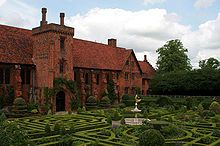
On 20 November 1558, Elizabeth declared her intentions to her Council and other peers who had come to Hatfield to swear allegiance. The speech contains the first record of her adoption of the mediaeval political theology of the sovereign’s “two bodies”: the body natural and the body politic:

My lords, the law of nature moves me to sorrow for my sister; the burden that is fallen upon me makes me amazed, and yet, considering I am God’s creature, ordained to obey His appointment, I will thereto yield, desiring from the bottom of my heart that I may have assistance of His grace to be the minister of His heavenly will in this office now committed to me. And as I am but one body naturally considered, though by His permission a body politic to govern, so shall I desire you all…to be assistant to me, that I with my ruling and you with your service may make a good account to Almighty God and leave some comfort to our posterity on earth. I mean to direct all my actions by good advice and counsel.

As her triumphal progress wound through the city on the eve of the coronation ceremony, she was welcomed wholeheartedly by the citizens and greeted by orations and pageants, most with a strong Protestant flavour. Elizabeth’s open and gracious responses endeared her to the spectators, who were “wonderfully ravished”. The following day, 15 January 1559, Elizabeth was crowned at Westminster Abbey and anointed by the Catholic bishop of Carlisle. She was then presented for the people’s acceptance, amidst a deafening noise of organs, fifes, trumpets, drums, and bells.

The Elizabethan era was a time associated with Queen Elizabeth I’s reign (1558-1603) and is often considered to be the golden age in English history. It was the height of the English Renaissance and saw the flowering of English poetry, music and literature. This was also the time during which Elizabethan theatre flourished, and William Shakespeare and many others composed plays that broke free of England’s past style of plays and theatre. It was an age of exploration and expansion abroad, while back at home, the Protestant Reformation became more acceptable to the people, most certainly after the Spanish Armada was repulsed. It was also the end of the period when England was a separate realm before its royal union with Scotland.

The Elizabethan Age is viewed so highly because of the periods before and after. It was a brief period of largely internal peace between the English Reformation and the battles between Protestants and Catholics and the battles between parliament and the monarchy that engulfed the seventeenth century. The Protestant/Catholic divide was settled, for a time, by the Elizabethan Religious Settlement, and parliament was not yet strong enough to challenge royal absolutism. England was also well-off compared to the other nations of Europe. The Italian Renaissance had come to an end under the weight of foreign domination of the peninsula. France was embroiled in its own religious battles that would only be settled in 1598 with the Edict of Nantes. In part because of this, but also because the English had been expelled from their last outposts on the continent, the centuries long conflict between France and England was largely suspended for most of Elizabeth’s reign.

The one great rival was Spain, with which England clashed both in Europe and the Americas in skirmishes that exploded into the Anglo-Spanish War of 1585-1604. An attempt by Philip II of Spain to invade England with the Spanish Armada in 1588 was famously defeated, but the tide of war turned against England with an unsuccessful expedition to Portugal and the Azores, the Drake-Norris Expedition of 1589. Thereafter Spain provided some support for Irish Catholics in a debilitating rebellion against English rule, and Spanish naval and land forces inflicted a series of reversals against English offensives. This drained both the English Exchequer and economy that had been so carefully restored under Elizabeth’s prudent guidance. English commercial and territorial expansion would be limited until the signing of the Treaty of London the year following Elizabeth’s death.

England during this period had a centralised, well-organised, and effective government, largely a result of the reforms of Henry VII and Henry VIII. Economically, the country began to benefit greatly from the new era of trans-Atlantic trade.

Punting the Pundits: Sunday Preview Edition

Punting the Punditsis an Open Thread. It is a selection of editorials and opinions from around the news medium and the internet blogs. The intent is to provide a forum for your reactions and opinions, not just to the opinions presented, but to what ever you find important.

Thanks to ek hornbeck, click on the link and you can access all the past “Punting the Pundits”.

Follow us on Twitter @StarsHollowGzt

The Sunday Talking Heads:

Up with Steve Kornacki: Steve’s guests for Sunday were not available on the wseb site.

This Week with George Stephanopolis: The guests on “This Week” are: Sen. Kirsten Gillibrand (D-NY); Gov. Scott Walker (R-WI); and the founder of security contractor Blackwater USA Erik Prince discusses his new book.

At the roundtable, the guests are Rep. Adam Kinzinger (R-IL); PBS “NewsHour” co-host and managing editor Gwen Ifill; former Obama White House senior adviser and ABC News contributor David Plouffe; ABC News political analyst Matthew Dowd; former Vermont Gov. Howard Dean; and Wall Street Journal foreign affairs columnist Bret Stephens.

On the upcoming 50th anniversary of the assassination of President John F. Kennedy, ABC News Chief National Correspondent Byron Pitts; JFK nephew Patrick Kennedy; and documentary filmmaker Ken Burns look at JFK’s life, death and legacy.

Face the Nation with Bob Schieffer: Mr. SChieffer’s guests are Luci Baines Johnson, Lyndon B. Johnson’s youngest daughter; Hugh Aynesworth of the Dallas Morning News; Mike Cochran of the Associated Press; Dr. Ronald Jones, the surgeon who treated both President Kennedy and his assassin, Lee Harvey Oswald, at Parkland Hospital; Thurston Clarke, author of “Kennedy’s Last 100 Days;” Larry Sabato, author of “The Kennedy Half Century;” Douglas Brinkley, author of “Cronkite;” Peggy Noonan of the Wall Street Journal; and Harvard University’s David Gergen.

Meet the Press with David Gregory: This Sunday’s guests on MTP are House Democratic Leader Nancy Pelosi (D-CA); and  Sen. Kelly Ayotte (R-NH).

At the roundtable the panelists are NBC Special Correspondent Tom Brokaw; Washington Post columnist Kathleen Parker; Republican Strategist Mike Murphy; and host of MSNBC’s “Hardball,” Chris Matthews.

State of the Union with Candy Crowley: Ms. Crowley’s guests are Israeli Prime Minister Benjamin Netanyahu; Republican Senator John Barrasso and Democratic Congressman James Clyburn.

Joining her for a panel discussion are Crossfire Host Van Jones; CNN Commentator Ross Douthat; and Amy Walter from the Cook Political Report.

Load more