
This is your morning Open Thread. Pour a cup of your favorite morning beverage and review the past and comment on the future.
September 3 is the 246th day of the year (247th in leap years) in the Gregorian calendar. There are 119 days remaining until the end of the year.
Find the past “On This Day in History” here.
On this day in 1783, the Treaty of Paris is signed ending the American Revolution
The treaty document was signed at the Hotel d’York – which is now 56 Rue Jacob – by John Adams, Benjamin Franklin, and John Jay (representing the United States) and David Hartley (a member of the British Parliament representing the British Monarch, King George III). Hartley was lodging at the hotel, which was therefore chosen in preference to the nearby British Embassy – 44 Rue Jacob – as “neutral” ground for the signing.
On September 3, Britain also signed separate agreements with France and Spain, and (provisionally) with the Netherlands. In the treaty with Spain, the colonies of East and West Florida were ceded to Spain (without any clearly defined northern boundary, resulting in disputed territory resolved with the Treaty of Madrid), as was the island of Minorca, while the Bahama Islands, Grenada and Montserrat, captured by the French and Spanish, were returned to Britain. The treaty with France was mostly about exchanges of captured territory (France’s only net gains were the island of Tobago, and Senegal in Africa), but also reinforced earlier treaties, guaranteeing fishing rights off Newfoundland. Dutch possessions in the East Indies, captured in 1781, were returned by Britain to the Netherlands in exchange for trading privileges in the Dutch East Indies.
The American Congress of the Confederation, which met temporarily in Annapolis, Maryland, ratified the treaty of Paris on January 14, 1784 (Ratification Day).[1] Copies were sent back to Europe for ratification by the other parties involved, the first reaching France in March. British ratification occurred on April 9, 1784, and the ratified versions were exchanged in Paris on May 12, 1784. It was not for some time, though, that the Americans in the countryside received the news due to the lack of communication.
 Several inventors worked on early versions of a cash-dispensing machine, but Don Wetzel, an executive at Docutel, a Dallas company that developed automated baggage-handling equipment, is generally credited as coming up with the idea for the modern ATM. Wetzel reportedly conceived of the concept while waiting on line at a bank. The ATM that debuted in New York in 1969 was only able to give out cash, but in 1971, an ATM that could handle multiple functions, including providing customers’ account balances, was introduced.
 Welcome to the
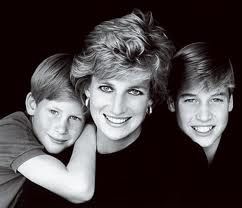 I was living in Paris then not far from the site of the accident. I had been out to dinner that evening with my then ex-husband, Dr. TMC, when we heard the crash, it was that loud, and shortly after the sirens of emergency vehicles. Not unusual in Paris, so, we continued on to our destinations. It wasn’t until very early that I heard that the Princess had died and where. Paris was stunned. The site became a instant memorial.
Recent Comments