
Tag: Open Thread

Punting the Pundits

“Punting the Pundits” is an Open Thread. It is a selection of editorials and opinions from around the news medium and the internet blogs. The intent is to provide a forum for your reactions and opinions, not just to the opinions presented, but to what ever you find important.

Thanks to ek hornbeck, click on the link and you can access all the past “Punting the Pundits”.

Follow us on Twitter @StarsHollowGzt

Krugman: Phony Fear Factor

We live in a golden age of economic debunkery; fallacious doctrines have been dropping like flies. No, monetary expansion needn’t cause hyperinflation. No, budget deficits in a depressed economy don’t cause soaring interest rates. No, slashing spending doesn’t create jobs. No, economic growth doesn’t collapse when debt exceeds 90 percent of G.D.P.

And now the latest myth bites the dust: No, “economic policy uncertainty” – created, it goes without saying, by That Man in the White House – isn’t holding back the recovery. [..]

And the policy moral is clear: We need to stop talking about spending cuts and start talking about job-creating spending increases instead. Yes, I know that the politics of doing the right thing will be very hard. But, as far as the economics goes, the only thing we have to fear is fear-mongering itself.

New York Times Editorial Board: Breaking Through Limits on Spying

Apparently no espionage tool that Congress gives the National Security Agency is big enough or intrusive enough to satisfy the agency’s inexhaustible appetite for delving into the communications of Americans. Time and again, the N.S.A. has pushed past the limits that lawmakers thought they had imposed to prevent it from invading basic privacy, as guaranteed by the Constitution.  [..]

It turns out, as Charlie Savage revealed in The Times on Thursday, that the N.S.A. went far beyond those boundaries. Instead, it copies virtually all overseas messages that Americans send or receive, then scans them to see if they contain any references to people or subjects the agency thinks might have a link to terrorists.

Amy Goodman: Please Read Joseph Heller’s Catch-22 on Your Vacation, Mr. President

Senator Obama’s objection to ‘a dumb war’ won him nomination. As commander-in-chief, he has reneged on opposing militarism

As the Obama family heads to their annual summer vacation on Martha’s Vineyard, perhaps the president should take along a copy of Catch-22 for some beach reading. Joseph Heller’s classic, satirical anti-war novel, published in 1961 and based on his experiences as a bombardier in the second world war, is sadly relevant today, as Obama’s wars, in Afghanistan and beyond, drag on. [..]

Heller’s protagonist in Catch-22, Captain Yossarian, holds a wounded comrade – named Snowden, coincidentally – who dies in his arms. The experience cements Yossarian’s opposition to war. Bradley Manning, too, went to war, and hated what he saw. He took action, leaking documents to spark a national debate.

Heller’s depiction of war – grim and stark – was fiction, though based on his own experience. Obama’s wars, his drone strikes, his war on whistleblowers, are all too real.

Mark Weisbrot: The More Nefarious US Foreign Policy, The More It Relies on Media Complicity

Americans are shielded from the ugly consequences of US military power by our journalists’ self-censorship

The US still has military spending that is higher in real, inflation-adjusted terms than it was during the peak of the Reagan cold war build-up, the Vietnam war and the Korean war. We seem to be in a state of permanent warfare, and – we have recently learned – massive government spying and surveillance of our own citizens. This is despite an ever-receding threat to the actual physical security of Americans. Only 19 people have been killed by acts of terrorism in the US since 11 September 2001, and none or almost none of these was connected to foreign terrorists. Also, there are no “enemy states” that pose a significant military threat to the US – if any governments can be called “enemy states” at all.

Michael T. Klare: How to Fry a Planet

The Third Carbon Age: Don’t for a Second Imagine We’re Heading for an Era of Renewable Energy

When it comes to energy and economics in the climate-change era, nothing is what it seems.  Most of us believe (or want to believe) that the second carbon era, the Age of Oil, will soon be superseded by the Age of Renewables, just as oil had long since superseded the Age of Coal.  President Obama offered exactly this vision in a much-praised June address on climate change.  True, fossil fuels will be needed a little bit longer, he indicated, but soon enough they will be overtaken by renewable forms of energy.

Many other experts share this view, assuring us that increased reliance on “clean” natural gas combined with expanded investments in wind and solar power will permit a smooth transition to a green energy future in which humanity will no longer be pouring carbon dioxide and other greenhouse gases into the atmosphere.  All this sounds promising indeed.  There is only one fly in the ointment: it is not, in fact, the path we are presently headed down.  The energy industry is not investing in any significant way in renewables.  Instead, it is pouring its historic profits into new fossil-fuel projects, mainly involving the exploitation of what are called “unconventional” oil and gas reserves.

Diana Ravitch: Punishing Kids for Adult Failures

The massive score drop on tough new New York tests gives us an opportunity–and obligation–to change course

Test scores across New York State have collapsed, new results released Wednesday showed. Last year, 55% of students in the state passed the reading test; 65% passed the math test. This year, only 31% passed both subjects. In New York City, the proportion passing the state tests fell from 47% in reading and 60% in math to only 26% in reading and 30% in math.

Did the students suddenly get stupid? Did their teachers become incompetent overnight? Did schools fail en masse? [..]

he leaders of the state seem intent on discouraging students, teachers and principals. Why do they want public schools to look bad? That is a question for them to answer.

The madness must end. Next spring, parents should keep their children home on testing day. Or send them to school with a note saying that they are opting out of the state testing. They should exercise their rights as citizens and send a message to the state: “Not with my child.”
On This Day In History August 9

This is your morning Open Thread. Pour your favorite beverage and review the past and comment on the future.

Find the past “On This Day in History” here.

Click on images to enlarge

August 9 is the 221st day of the year (222nd in leap years) in the Gregorian calendar. There are 144 days remaining until the end of the year.

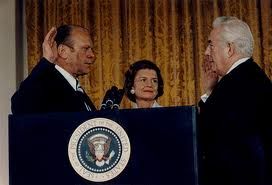
On this day in 1974, one day after the resignation of President Richard M. Nixon, Gerald R. Ford is sworn in as president, making him the first man to assume the presidency upon his predecessor’s resignation. He was also the first non-elected vice president and non-elected president, which made his ascendance to the presidency all the more unique.

Gerald Rudolph Ford, Jr. (born Leslie Lynch King, Jr.; July 14, 1913 – December 26, 2006) was the 38th President of the United States, serving from 1974 to 1977, and the 40th Vice President of the United States serving from 1973 to 1974. As the first person appointed to the vice-presidency under the terms of the 25th Amendment, when he became President upon Richard Nixon’s  resignation on August 9, 1974, he also became the only President of the United States who was elected neither President nor Vice-President.

Before ascending to the vice-presidency, Ford served nearly 25 years as Representative from Michigan’s 5th congressional district, eight of them as the Republican Minority Leader.

As President, Ford signed the Helsinki Accords, marking a move toward detente in the Cold War. With the conquest of South Vietnam by North Vietnam nine months into his presidency, US involvement in Vietnam essentially ended. Domestically, Ford presided over what was then the worst economy since the Great Depression, with growing inflation and a recession during his tenure. One of his more controversial acts was to grant a presidential pardon to President Richard Nixon for his role in the Watergate scandal. During Ford’s incumbency, foreign policy was characterized in procedural terms by the increased role Congress began to play, and by the corresponding curb on the powers of the President. In 1976, Ford narrowly defeated Ronald Reagan for the Republican nomination, but ultimately lost the presidential election to Democrat Jimmy Carter.

Following his years as president, Ford remained active in the Republican Party. After experiencing health problems and being admitted to the hospital four times in 2006, Ford died in his home on December 26, 2006. He lived longer than any other U.S. president, dying at the age of 93 years and 165 days.

Punting the Pundits

“Punting the Pundits” is an Open Thread. It is a selection of editorials and opinions from around the news medium and the internet blogs. The intent is to provide a forum for your reactions and opinions, not just to the opinions presented, but to what ever you find important.

Thanks to ek hornbeck, click on the link and you can access all the past “Punting the Pundits”.

Follow us on Twitter @StarsHollowGzt

John Kiriakou: Obama’s Abuse of the Espionage Act is Modern-Day McCarthyism

Shame on this president for persecuting whistleblowers with a legal relic, while administration officials leak with impunity

The conviction of Bradley Manning under the 1917 Espionage Act, and the US Justice Department’s decision to file espionage charges against NSA whistleblower Edward Snowden under the same act, are yet further examples of the Obama administration’s policy of using an iron fist against human rights and civil liberties activists.

President Obama has been unprecedented in his use of the Espionage Act to prosecute those whose whistleblowing he wants to curtail. The purpose of an Espionage Act prosecution, however, is not to punish a person for spying for the enemy, selling secrets for personal gain, or trying to undermine our way of life. It is to ruin the whistleblower personally, professionally and financially. It is meant to send a message to anybody else considering speaking truth to power: challenge us and we will destroy you.

Mark Weisbot: Mass Media Helps Keep Americans in the Dark About U.S. Foreign Policy

The United States still has military spending that is higher in real, inflation-adjusted terms than it was during the peak of the Reagan Cold War build-up, the Vietnam War, and the Korean War. We seem to be in a state of permanent warfare, and — we have recently learned — massive government spying and surveillance of our own citizens. This is despite an ever-receding threat to the actual physical security of Americans. Only 19 people have been killed acts of terrorism in the United States since September 11, 2001; and none or almost none of these were connected to foreign terrorists. And there are no “enemy states” that pose a significant military threat to the United States — if any governments can be called “enemy states” at all.

One of the reasons for this disconnect is that most of the mass media provide a grossly distorted view of U.S. foreign policy. It presents an American foreign policy that is far more benign and justifiable than the reality of empire that most of the world knows. In a well-researched and thoroughly documented article published by the North American Congress on Latin America (NACLA), Keane Bhatt provides an excellent case study of how this happens.

Richard (RJ) Eskow: 7 Things About Prosecuting Wall Street You Wanted to Know (But Were Too Depressed to Ask)

President Obama’s Justice Department, under the direction of Attorney General Eric Holder, hasn’t indicted a single bank executive for the massive Wall Street crime wave that devastated the economy. The regulatory reform which followed the 2008 crisis wasn’t nearly enough, and yet Republicans are trying to weaken even that.

And just this week there were several news stories about bank crime. What do they mean? Why haven’t any bankers gone to jail? What’s going on in this country?

Here are seven things about Wall Street crime and Washington “justice” you might have wanted to know, but were probably too depressed to ask. It’s true that there’s a shortage of justice where bankers are concerned. But don’t get depressed. Get serious – about demanding change.

Juan Cole: How the GOP Libya Witch Hunt Made Us Close Our Mideast Embassies and Crippled U.S. Diplomacy

About those US embassy closures in the Middle East:  they make the US look like a wimp. [..]

As with George Mitchell and Northern Ireland, the most effective uses of American power have been diplomatic.  But hawks in Washington always want to drag us into foreign wars, in part to benefit their buddies in the arms industry.  The current GOP is divided on the issue of US power abroad, with Libertarians like Rand Paul viewing foreign wars as a waste of money and a fruitless enterprise, but hawks like John McCain and Lindsey Graham failing to discover a potential war that they don’t just love to death.

But the GOP is inadvertently pushing the US into a posture of dangerous diplomatic weakness.  This weakness is clear in the unprecedented closing of 21 US embassies in the Middle East this weekend because of a vague terrorist threat apparently emanating from “al-Qaeda in the Arabian Peninsula,” based in Yemen.

Jared Berstein: [Threatening to ‘Reform’ the Earned Income Tax Credit Threatening to ‘Reform’ the Earned Income Tax Credit]

Devoted readers know that I’m careful not to shoot everything that moves, but the more I hang around the DC tax debate, the more I’m exposed to deeply misguided thinking that seems largely motivated by the conviction that poor people — in this case, the working poor — have too much money and the wealthy have too little.

That’s the lesson from a report by the Tax Foundation on the “benefits” of getting rid of the Earned Income Tax Credit — a wage subsidy for low-income workers — and giving everybody else a tax break.

Jim Hightower: Forget Student Loans — Make Higher Ed Free

Well, finally! Hard-right congressional leaders and the Obama White House have agreed that interest rates on student loans should not double to nearly 7 percent, as they let happen early in July. Instead, college students will be billed at a rate that will steadily rise higher than 8 percent.

This is progress?

Temporarily, yes, because the new law drops this year’s rate to 3.8 percent. But, for the longer run, obviously not. Even capping the interest rate at 8.25 percent, as the White House demanded, is too high, for it still saddles students with a crushing debt of some $20,000 to $40,000 for a four-year degree, just as they’re getting started on their economic path.

On This Day In History August 8

This is your morning Open Thread. Pour your favorite beverage and review the past and comment on the future.

Find the past “On This Day in History” here.

Click on images to enlarge

August 8 is the 220th day of the year (221st in leap years) in the Gregorian calendar. There are 145 days remaining until the end of the year.

On this day in 1974, Richard M. Nixon becomes the first President to resign.

In an evening televised address, President Richard M. Nixon announces his intention to become the first president in American history to resign. With impeachment proceedings underway against him for his involvement in the Watergate affair, Nixon was finally bowing to pressure from the public and Congress to leave the White House. “By taking this action,” he said in a solemn address from the Oval Office, “I hope that I will have hastened the start of the process of healing which is so desperately needed in America.”

Just before noon the next day, Nixon officially ended his term as the 37th president of the United States. Before departing with his family in a helicopter from the White House lawn, he smiled farewell and enigmatically raised his arms in a victory or peace salute. The helicopter door was then closed, and the Nixon family began their journey home to San Clemente, California. Minutes later, Vice President Gerald R. Ford was sworn in as the 38th president of the United States in the East Room of the White House. After taking the oath of office, President Ford spoke to the nation in a television address, declaring, “My fellow Americans, our long national nightmare is over.” He later pardoned Nixon for any crimes he may have committed while in office, explaining that he wanted to end the national divisions created by the Watergate scandal.

Punting the Pundits

“Punting the Pundits” is an Open Thread. It is a selection of editorials and opinions from around the news medium and the internet blogs. The intent is to provide a forum for your reactions and opinions, not just to the opinions presented, but to what ever you find important.

Thanks to ek hornbeck, click on the link and you can access all the past “Punting the Pundits”.

Wednesday is Ladies’ Day.

Follow us on Twitter @StarsHollowGzt

Katrina vanden Heuvel: A Debt-Free College Education

Last Wednesday – almost a month after Congress failed to prevent student loan rates from doubling – Democrats and Republicans reached a compromise that will keep rates low, at least temporarily, for most graduates.

From a body with a record of procrastinating on student debt worse than students procrastinate on term papers, this was welcome news. But let’s not get ahead of ourselves. [..]

A stopgap reduction in loan rates won’t do anything to fix this. We need a whole new model for financing higher education.

Fortunately, though Washington remains perpetually paralyzed, some states are demonstrating refreshing creativity and determination in tackling this issue. Last month, the Oregon legislature passed a bill that paves the way for students to attend state and community colleges without having to pay tuition or take out traditional loans.

Alexis Baden-Mayer: Monsanto Hates Democracy

Monsanto hates democracy because democracy doesn’t work for Monsanto.

Nine out of 10 of us want to know where Monsanto’s been hiding the GMOs in our food and a most of us wouldn’t eat those GMOs if we knew where they were.

If everything in this country were decided democratically, most of the food we eat would be non-GMO and Monsanto would be driven out of business.

We don’t have a problem convincing people we’re right, we have a problem with our democracy when we can’t get the politicians to pass the laws that the majority of us want.

But no government, no matter how corrupted by corporate money, will be able to stop us when we get the nine out of 10 people who agree with us to take action with us. And that’s what’s starting to happen.

Ellen Brown: The Detroit ‘Bail-In’ Template: Fleecing Pensioners to Save the Banks

The Detroit bankruptcy is looking suspiciously like the bail-in template originated by the G20’s Financial Stability Board in 2011, which exploded on the scene in Cyprus in 2013 and is now becoming the model globally. In Cyprus, the depositors were “bailed in” (stripped of a major portion of their deposits) to re-capitalize the banks. In Detroit, it is the municipal workers who are being bailed in, stripped of a major portion of their pensions to save the banks. [..]

Interestingly, Lansing Mayor Virg Bernero, Snyder’s Democratic opponent in the last gubernatorial race, proposed a solution that could have avoided either robbing the pensioners or scaring off the bondholders: a state-owned bank. If the state or the city had its own bank, it would not need to borrow from Wall Street, worry about interest rate swaps, or be beholden to the bond vigilantes. It could borrow from its own bank, which would leverage the local government’s capital into credit, back that credit with the deposits created by the government’s own revenues, and return the interest to the government as a dividend, following the ground-breaking model of the state-owned Bank of North Dakota.

There are other steps that need to be taken, and soon, to prevent a cascade of municipal bankruptcies.  The super-priority of derivatives in bankruptcy needs to be repealed, and the protections of Glass Steagall need to be restored. While we are waiting on a very dilatory Congress, however, state and local governments might consider protecting themselves and their revenues by setting up their own banks.

Lisa Graves: Voices Rising Against Hedge Fund Millionaire Larry Summers to Head the Fed

Opposition is growing to the idea of President Obama naming Larry Summers to head the Federal Reserve. As William Greider wrote in The Nation, “Summers is a toxic retread from the old boys’ network and a nettlesome egotist who offended just about everyone during his previous tours in government. More to the point, Summers was a central player in the grave governing errors that led to the financial collapse and a ruined economy.”

Summers is so cocksure and callous he once suggested using “underpopulated countries in Africa” as toxic waste dumps. [..]

The last thing America needs right now is a Friedmanite at the helm of the Fed. Summers would bring more winter in the economy for ordinary Americans while his buddies on Wall Street would get more and more of America’s wealth to offshore.

Valerie Strauss: Five Absurdities about High-Stakes Standardized Tests

Barely a day goes by when the education world isn’t treated to some new story involving high-stakes standardized tests, the chief metric of “accountability systems” in the modern era of school reform.

It might be about how student test scores went up or down or all around; about how standardized tests were incorrectly scored by giant companies that make millions from testing contracts; that some questions on the test don’t make any sense; that the high stakes being attached to the results – which are being used to evaluate students, teachers, principals, schools, districts and states – have gone from being unfair to preposterous.

Sue Sturgis: The South’s Widening War on Abortion Rights

Date on which North Carolina Gov. Pat McCrory (R) signed into law a bill that requires the state’s abortion clinics to meet the same standards as ambulatory surgical centers, despite a campaign promise that he would not sign any legislation that further restricts abortion: 7/30/2013

Additional cost to build a clinic that meets ambulatory surgical center standards: $1 million

Number of bodyguards that accompanied McCrory the following day when he left the executive mansion and stepped into the street to deliver cookies to abortion rights advocates protesting outside, who returned them with a note that said, “We want women’s health care, not cookies”: 4

On This Day In History August 7

This is your morning Open Thread. Pour your favorite beverage and review the past and comment on the future.

Find the past “On This Day in History” here.

Click on images to enlarge

August 7 is the 219th day of the year (220th in leap years) in the Gregorian calendar. There are 146 days remaining until the end of the year.

The Northern Hemisphere is considered to be halfway through its summer and the Southern Hemisphere half way through its winter on this day.

On this day in 1947, Kon-Tiki, a balsa wood raft captained by Norwegian anthropologist Thor Heyerdahl, completes a 4,300-mile, 101-day journey from Peru to Raroia in the Tuamotu Archipelago, near Tahiti. Heyerdahl wanted to prove his theory that prehistoric South Americans could have colonized the Polynesian islands by drifting on ocean currents.

Heyerdahl and his five-person crew set sail from Callao, Peru, on the 40-square-foot Kon-Tiki on April 28, 1947. The Kon-Tiki, named for a mythical white chieftain, was made of indigenous materials and designed to resemble rafts of early South American Indians. While crossing the Pacific, the sailors encountered storms, sharks and whales, before finally washing ashore at Raroia. Heyerdahl, born in Larvik, Norway, on October 6, 1914, believed that Polynesia’s earliest inhabitants had come from South America, a theory that conflicted with popular scholarly opinion that the original settlers arrived from Asia. Even after his successful voyage, anthropologists and historians continued to discredit Heyerdahl’s belief. However, his journey captivated the public and he wrote a book about the experience that became an international bestseller and was translated into 65 languages. Heyerdahl also produced a documentary about the trip that won an Academy Award in 1951.
Punting the Pundits

“Punting the Pundits” is an Open Thread. It is a selection of editorials and opinions from around the news medium and the internet blogs. The intent is to provide a forum for your reactions and opinions, not just to the opinions presented, but to what ever you find important.

Thanks to ek hornbeck, click on the link and you can access all the past “Punting the Pundits”.

Follow us on Twitter @StarsHollowGzt

Peter Van Buren: Welcome to Post-Constitution America

What If Your Country Begins to Change and No One Notices?

On July 30, 1778, the Continental Congress created the first whistleblower protection law, stating “that it is the duty of all persons in the service of the United States to give the earliest information to Congress or other proper authority of any misconduct, frauds, or misdemeanors committed by any officers or persons in the service of these states.”

Two hundred thirty-five years later, on July 30, 2013, Bradley Manning was found guilty on 20 of the 22 charges for which he was prosecuted, specifically for “espionage” and for videos of war atrocities he released, but not for “aiding the enemy.”

Days after the verdict, with sentencing hearings in which Manning could receive 136 years of prison time ongoing, the pundits have had their say. The problem is that they missed the most chilling aspect of the Manning case: the way it ushered us, almost unnoticed, into post-Constitutional America.

Lance deHaven-Smith: As an American, I question the US travel alerts and embassy closures

We’ve seen this before where US presidents cite terrorism concerns in an effort to win back public opinion

It is unfortunate, but true that Americans cannot trust the statements of their leaders about threats to national security. Ironically, this is especially so when questions are being raised about the competence of the government or the legitimacy of its policies. The United States government has a long history of deflecting criticism by crying wolf, especially the terrorism kind of wolf. [..]

There are several reasons to wonder if this threat is being concocted – or at least exaggerated – for political purposes. One reason, of course, is the timing of the alert. Allegedly based on electronic eavesdropping, the alert comes in the midst of a national and international political firestorm over the continuing revelations of Edward Snowden about the electronic surveillance programs of the National Security Agency. Opposition to the NSA dragnet that is sweeping up data on millions of Americans’ emails, phone calls, and internet activities is snowballing in US public opinion and in Congress. The NSA programs have also become a major issue in the domestic politics of America’s allies.

Michael Boyle: President Obama’s disastrous counterterrorism legacy

A president who came into office pledging to take the ‘war on terror’ out of the shadows plunged it deeper into those shadows

When future historians look back on the presidency of Barack Obama, they will conclude that counterterrorism was the policy area with the biggest gap between the hopes of his supporters and reality of his actions in office. [..]

While Obama has had some important accomplishments, he has failed to deliver on a comprehensive counterterrorism policy that does not undermine American ideals. Although he ended the use of torture by US personnel, his administration has refused to seek accountability for those in the Bush administration that instituted this practice. Rendition of terrorist suspects to foreign countries has continued, with the US now only receiving unverifiable “assurances” that torture will not be used. Guantánamo Bay will remain a national disgrace for the foreseeable future. In the last few months, the US has even resorted to the grotesque spectacle of force-feeding its detainees to keep them alive during Ramadan.

John Nichols: Big Media Story Isn’t Bezos and the Post, It’s the RNC Threatening CNN, NBCn

So if the sale of the Post is not as dramatic a development as might initially seem to be the case, what is?

The big deal in media this week has to do with the relationship of broadcast and cable news networks to the two major political parties. And it matters-more-because it gets to question that is at the heart of all of our discussions about the future of print, broadcast and digital media: Will we have a sufficient journalism, and a sufficiently independent journalism, to sustain democracy?

Ever since the Democratic and Republican parties took over the nation’s presidential debates in 1987, with the creation of a corporate-funded “Commission on Presidential Debates” run by the former chairs of the Democratic National Committee and the Republican National Committee, the dialogue in presidential election years has been the ultimate insiders’ game.

Dean Baker: The Economy Is Awful and Larry Summers Should Not Be Fed Chair

In his recent defense of Larry Summers, President Obama appeared to be badly confused about the state of the economy. This apparently leads him to believe that the country should be grateful to Larry Summers for his successes, as opposed to furious at him for his failures.

Obama’s story is that the economy was in a free fall when he took office and the program that was in large part designed by Summers helped turn it around. While it is true that the economy was in free fall, there was no reason to expect that to continue regardless of what policies were pursued. Note that in every single wealthy country the sharp drop in output at the end of 2008 and the beginning of 2009 was stopped and reversed by the end of the year. Other countries were not able to rely on the genius of Larry Summers in setting their policies.

Robert Reich: The Three Biggest Lies About Why Corporate Taxes Should Be Lowered

nstead of spending August on the beach, corporate lobbyists are readying arguments for when Congress returns in September about why corporate taxes should be lowered.

But they’re lies. You need to know why so you can spread the truth. [..]

Corporations want corporate tax reduction to be the centerpiece of “tax reform” come the fall. The president has already signaled a willingness to sign on in return for more infrastructure investment. But the arguments for corporate tax reduction are specious.

On This Day In History August 6

This is your morning Open Thread. Pour your favorite beverage and review the past and comment on the future.

Find the past “On This Day in History” here.

Click on images to enlarge

August 6 is the 218th day of the year (219th in leap years) in the Gregorian calendar. There are 147 days remaining until the end of the year.

On this day there have been many significant events. Certainly, one of the most memorable is that this is the anniversary of dropping of the first atomic bomb on Hiroshima, Japan. It is also the anniversary of President Johnson signing the Voting Rights Act.

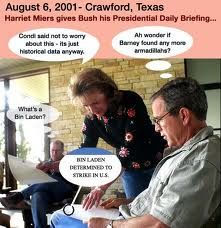
Recent significant history that has been over looked by my usual sources is this: The August 6, 2001 Presidential Daily Briefing better known as the August 6th PDB. It was handed to President George W. Bush, who was on one of his many vacations to his home in Crawford, TX, by Harriet Miers, who was the President’s WH Council, and promptly ignored. Whether Bush ignored the warning that Osama bin Laden was planning to attack the US because he was told to let it happen or, the darker theory, that the government made it happen will never be known, at least not in the lifetime of those reading this. Whatever Bush’s motive was, it set off a series of events in this country that has affected us all and divided us like no other incident since the Civil War. The US has now been in Afghanistan for almost 9 years 10 years 12 years and Iraq for over seven eight , the last U.S. combat troops withdrawing from Iraq on 18 December, 2011. Despite campaign promises to restore the rule of law and the Constitution, the Obama administration has continued the most heinous of the Bush policies that are violations of not just US law but International Law, ratified treaties and agreements. A sad anniversary, indeed.

I wrote this three years ago, although Pres. Obama has withdrawn combats troops from Iraq, “support” troops still remain. The US is in the process drawing down military presence in Afghanistan. That may sound encouraging but the President has since increased drones attacks in Pakistan and targeted American citizens for assassination and, now, is turning the US into a police surveillance state, shredding the Constitutional rights of its citizens. So much for ending the “war on terror” and restoring the rule of  law.

Punting the Pundits

“Punting the Pundits” is an Open Thread. It is a selection of editorials and opinions from around the news medium and the internet blogs. The intent is to provide a forum for your reactions and opinions, not just to the opinions presented, but to what ever you find important.

Thanks to ek hornbeck, click on the link and you can access all the past “Punting the Pundits”.

Follow us on Twitter @StarsHollowGzt

Robert Kuttner: Obama, the Economy and the Movement

The latest figures on the economy make it all too clear that we are stuck in a feeble recovery that could go on for several years to come. Growth was only 1.4 percent in the first half of 2013, and the economy is still creating too few jobs to increase worker earnings, which actually declined in July. [..]

For three decades, this society has been dividing into haves and have-nots. Yet the struggles of ordinary people have been weirdly disconnected from our politics. Democrats express an economic populism when their backs are to the wall, but our Democratic presidents tend to get captured by economic elites.

Rebuilding the economy from the middle out is a start. Even better would be rebuilding it from the bottom up.

Paul Krugman: Republicans Against Reality

Last week House Republicans voted for the 40th time to repeal Obamacare. Like the previous 39 votes, this action will have no effect whatsoever. But it was a stand-in for what Republicans really want to do: repeal reality, and the laws of arithmetic in particular. The sad truth is that the modern G.O.P. is lost in fantasy, unable to participate in actual governing.

Just to be clear, I’m not talking about policy substance. I may believe that Republicans have their priorities all wrong, but that’s not the issue here. Instead, I’m talking about their apparent inability to accept very basic reality constraints, like the fact that you can’t cut overall spending without cutting spending on particular programs, or the fact that voting to repeal legislation doesn’t change the law when the other party controls the Senate and the White House.

Am I exaggerating? Consider what went down in Congress last week.

Robert Reich: Why Republicans Want Jobs to Stay Anemic

Job-growth is sputtering. So why, exactly, do regressive Republicans continue to say “no” to every idea for boosting it — even last week’s almost absurdly modest proposal by President Obama to combine corporate tax cuts with increased spending on roads and other public works?

It can’t be because Republicans don’t know what’s happening. The data are indisputable. July’s job growth of 162,000 jobs was the weakest in four months. The average workweek was the shortest in six months. The Bureau of Labor Statistics has also lowered its estimates of hiring during May and June.  [..]

The real answer, I think, is they and their patrons want unemployment to remain high and job-growth to sputter.

Richard (RJ) Eskow: Fighting the GOP’s Hateful Agenda – Without Hate

When is it fair to say that some political battles aren’t just disagreements over policy, but actually represent a struggle between ‘good’ and ‘evil’ points of view? And when, if ever, is it helpful to say so?

There are those on the Right who debase the currency of that four-letter word – “evil” – by using it against anyone who disagrees with them. But what word do you apply to people who deny food to hungry families, voting rights to minorities, or a chance for self-advancement to hard-working students from lower-income homes?

How do you fight the hateful without succumbing to hate?

David A. Love: The US civil war is playing out again – this time over voter rights

White southern Republicans enact voter ID laws because they don’t want Democrats to vote, particularly people of color

Nearly 150 years after the end of the US civil war, the South and the federal government are poised for a rematch over the voting rights of black Americans, and ultimately over the fundamental rights of all Americans. Once again, the former Confederate states are determined to defend their traditions and way of life, while the Union forces in the North – the federal government – are positioning themselves to defend justice and equality.

But this time, in an ironic twist, two black men – President Barack Obama and Attorney General Eric Holder – are leading the charge.

In the 1860s, the fight between the North and the South was about slavery and the right of the Confederate states to maintain a dreaded institution that kept people of African descent in bondage. Unprecedented carnage resulted.

Ralph Nader: Love, Corporate-Style

Mitt Romney famously said during his most recent bid for the presidency: “Corporations are people, my friend.” Perhaps nothing else better surmises the state of our country — even the state of our culture — than a prominent politician running for the presidency openly advancing such a flawed opinion. It is no secret that corporations now wield immense power in our elections, in our economy, and even in how we spend time with our friends and families. Corporate entities, in their massive, billion dollar efforts to advertise and “brand” themselves, not only want consumers to think of them as people, but even as “friends.” If a corporation could hit the campaign trail itself, one could imagine it uttering the phrase: “Corporations are friends, my people.”

I recently came across a full-page ad in the New York Times. The ad, which shows a tiny baby’s hand clutching the fingers of an adult hand, is captioned with the words: “Love is the most powerful thing on the planet.” It goes on to read: “For all the things in your life that make life worth living — Johnson and Johnson, for all you love.” Notably, this is Johnson and Johnson’s first “corporate branding” campaign in over a decade.

This poses an interesting question. What exactly is corporate love? Love is a very human emotion — but, coming from a business conglomerate whose over-riding goal is bigger profits — this message rings hollow.

On This Day In History August 5

This is your morning Open Thread. Pour your favorite beverage and review the past and comment on the future.

Find the past “On This Day in History” here.

Click on images to enlarge

August 5 is the 217th day of the year (218th in leap years) in the Gregorian calendar. There are 148 days remaining until the end of the year.

On this day in 1957, American Bandstand goes national

Television, rock and roll and teenagers. In the late 1950s, when television and rock and roll were new and when the biggest generation in American history was just about to enter its teens, it took a bit of originality to see the potential power in this now-obvious combination. The man who saw that potential more clearly than any other was a 26-year-old native of upstate New York named Dick Clark, who transformed himself and a local Philadelphia television program into two of the most culturally significant forces of the early rock-and-roll era. His iconic show, American Bandstand, began broadcasting nationally on this day in 1957, beaming images of clean-cut, average teenagers dancing to the not-so-clean-cut Jerry Lee Lewis’ “Whole Lotta Shakin’ Goin’ On” to 67 ABC affiliates across the nation.

The show that evolved into American Bandstand began on Philadephia’s WFIL-TV in 1952, a few years before the popular ascension of rock and roll. Hosted by local radio personality Bob Horn, the original Bandstand nevertheless established much of the basic format of its later incarnation. In the first year after Dick Clark took over as host in the summer of 1956, Bandstand remained a popular local hit, but it took Clark’s ambition to help it break out. When the ABC television network polled its affiliates in 1957 for suggestions to fill its 3:30 p.m. time slot, Clark pushed hard for Bandstand, which network executives picked up and scheduled for an August 5, 1957 premiere.

Load more