
This is your morning Open Thread. Pour your favorite beverage and review the past and comment on the future.
Find the past “On This Day in History” here.
December 22 is the 356th day of the year (357th in leap years) in the Gregorian calendar. There are nine days remaining until the end of the year.
On this day in 1808, Ludwig von Beethoven’s 5th Symphony makes its world premier in Vienna.
Also premiering that day at the Theater an der Wien in Vienna were Beethoven’s Piano Concerto No. 4 in G major, Op. 58, and the Symphony No. 6 in F major, Op. 68-the “Pastoral Symphony.” But it was the Fifth Symphony that, despite its shaky premiere, would eventually be recognized as Beethoven’s greatest achievement to that point in his career. Writing in 1810, the critic E.T.A. Hoffman praised Beethoven for having outstripped the great Haydn and Mozart with a piece that “opens the realm of the colossal and immeasurable to us…evokes terror, fright, horror, and pain, and awakens that endless longing that is the essence of Romanticism.”
That assessment would stand the test of time, and the Fifth Symphony would quickly become a centerpiece of the classical repertoire for orchestras around the world. But beyond its revolutionary qualities as a serious composition, the Fifth Symphony has also proven to be a work with enormous pop-cultural staying power, thanks primarily to its powerful four-note opening motif-three short Gs followed by a long E-flat. Used in World War II-era Britain to open broadcasts of the BBC because it mimicked the Morse-code “V” for “Victory,” and used in the disco-era United States by Walter Murphy as the basis for his unlikely #1 pop hit “A Fifth Of Beethoven,” the opening notes of Beethoven’s Fifth Symphony have become a kind of instantly recognizable musical shorthand since they were first heard by the public on this day in 1808.


 In April 1803, the United States purchased from France the 828,000 square miles that had formerly been French Louisiana. The area was divided into two territories: the northern half was Louisiana Territory, the largely unsettled (though home to many Indians) frontier section that was later explored by Lewis and Clark; and the southern Orleans Territory, which was populated by Europeans.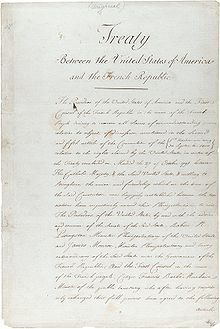
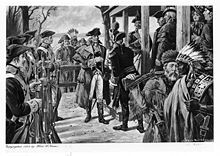
 When these phrases appeared in the pages of the Pennsylvania Journal for the first time, General George Washington’s troops were encamped at McKonkey’s Ferry on the Delaware River opposite Trenton, New Jersey. In August, they had suffered humiliating defeats and lost New York City to British troops. Between September and December, 11,000 American volunteers gave up the fight and returned to their families. General Washington could foresee the destiny of a rebellion without an army if the rest of his men returned home when their service contracts expired on December 31. He knew that without an upswing in morale and a significant victory, the American Revolution would come to a swift and humiliating end.
 On this day in 1918, the House of Representatives passed the
Recent Comments