
This is your morning Open Thread. Pour your favorite beverage and review the past and comment on the future.
Find the past “On This Day in History” here.
January 8 is the eighth day of the year in the Gregorian calendar. There are 357 days remaining until the end of the year (358 in leap years).
On this day in 1877, Crazy Horse and his warriors–outnumbered, low on ammunition and forced to use outdated weapons to defend themselves–fight their final losing battle against the U.S. Cavalry in Montana.
Six months earlier, in the Battle of Little Bighorn, Crazy Horse and his ally, Chief Sitting Bull, led their combined forces of Sioux and Cheyenne to a stunning victory over Lieutenant Colonel George Custer (1839-76) and his men. The Indians were resisting the U.S. government’s efforts to force them back to their reservations. After Custer and over 200 of his soldiers were killed in the conflict, later dubbed “Custer’s Last Stand,” the American public wanted revenge. As a result, the U.S. Army launched a winter campaign in 1876-77, led by General Nelson Miles (1839-1925), against the remaining hostile Indians on the Northern Plains.
On January 8, 1877, General Miles found Crazy Horse’s camp along Montana’s Tongue River. U.S. soldiers opened fire with their big wagon-mounted guns, driving the Indians from their warm tents out into a raging blizzard. Crazy Horse and his warriors managed to regroup on a ridge and return fire, but most of their ammunition was gone, and they were reduced to fighting with bows and arrows. They managed to hold off the soldiers long enough for the women and children to escape under cover of the blinding blizzard before they turned to follow them.
Though he had escaped decisive defeat, Crazy Horse realized that Miles and his well-equipped cavalry troops would eventually hunt down and destroy his cold, hungry followers. On May 6, 1877, Crazy Horse led approximately 1,100 Indians to the Red Cloud reservation near Nebraska’s Fort Robinson and surrendered. Five months later, a guard fatally stabbed him after he allegedly resisted imprisonment by Indian policemen
 On this day in 1789,
  Samuel Finley Breese Morse was born April 27, 1791, in Charlestown, Massachusetts. He attended Yale University, where he was interested in art, as well as electricity, still in its infancy at the time. After college, Morse became a painter. In 1832, while sailing home from Europe, he heard about the newly discovered electromagnet and came up with an idea for an electric telegraph. He had no idea that other inventors were already at work on the concept.
 Before the bridge was built, the only practical short route between San Francisco and what is now Marin County was by boat across a section of San Francisco Bay.
  On this day in 1938, The
  On this day in 1962,
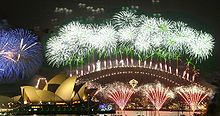 Probably observed on March 1 in the old Roman Calendar, The World Book Encyclopedia of 1984, volume 14, page 237 states: “The Roman ruler Julius Caesar established January 1 as New Year’s Day in 46 BC. The Romans dedicated this day to Janus, the god of gates, doors, and beginnings. The month of January was named after Janus, who had two faces – one looking forward and the other looking backward.” This suggests that New Year’s celebrations are founded on pagan traditions. Some have suggested this occurred in 153 BC, when it was stipulated that the two annual consuls (after whose names the years were identified) entered into office on that day, though no consensus exists on the matter. Dates in March, coinciding with the spring equinox, or commemorating the Annunciation of Jesus, along with a variety of Christian feast dates were used throughout the Middle Ages, though calendars often continued to display the months in columns running from January to December.
 On this day in 1759,
Recent Comments