
This is your morning Open Thread. Pour your favorite beverage and review the past and comment on the future.
Find the past “On This Day in History” here.
September 13 is the 256th day of the year (257th in leap years) in the Gregorian calendar. There are 109 days remaining until the end of the year.
On this day in 1814, Francis Scot Key pens Star-Spangled Banner
“The Star-Spangled Banner“ is the national anthem of the United States of America. The lyrics come from “Defence of Fort McHenry”, a poem written in 1814 by the 35-year-old lawyer and amateur poet, Francis Scott Key, after witnessing the bombardment of Fort McHenry by the British Royal Navy ships in Chesapeake Bay during the Battle of Fort McHenry in the War of 1812.
The poem was set to the tune of a popular British drinking song, written by John Stafford Smith for the Anacreontic Society, a men’s social club in London. “The Anacreontic Song” (or “To Anacreon in Heaven”), with various lyrics, was already popular in the United States. Set to Key’s poem and renamed “The Star-Spangled Banner“, it would soon become a well-known American patriotic song. With a range of one and a half octaves, it is known for being difficult to sing. Although the song has four stanzas, only the first is commonly sung today, with the fourth (“O thus be it ever when free men shall stand…”) added on more formal occasions. In the fourth stanza, Key urged the adoption of “In God is our Trust” as the national motto (“And this be our motto: In God is our Trust”). The United States adopted the motto “In God We Trust” by law in 1956.
“The Star-Spangled Banner” was recognized for official use by the Navy in 1889 and the President in 1916, and was made the national anthem by a congressional resolution on March 3, 1931 (46 Stat. 1508, codified at 36 U.S.C. § 301), which was signed by President Herbert Hoover.
Before 1931, other songs served as the hymns of American officialdom. “Hail, Columbia” served this purpose at official functions for most of the 19th century. “My Country, ‘Tis of Thee“, whose melody was derived from the British national anthem, also served as a de facto anthem before the adoption of “The Star-Spangled Banner.” Following the War of 1812 and subsequent American wars, other songs would emerge to compete for popularity at public events, among them “The Star-Spangled Banner.”
 The Bavarian royalty invited the citizens of Munich to attend the festivities, held on the fields in front of the city gates. These famous public fields were named Theresienwiese-“Therese’s fields”-in honor of the crown princess; although locals have since abbreviated the name simply to the “Wies’n.” Horse races in the presence of the royal family concluded the popular event, celebrated in varying forms all across Bavaria.
 The Pentagon is the headquarters of the
 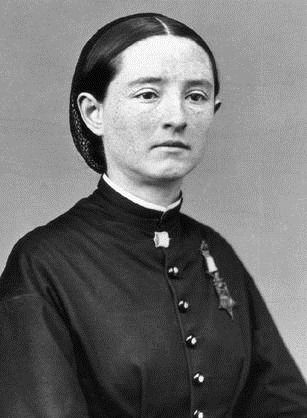 The only woman to be awarded the Medal of Honor, America’s highest military honor, was a civilian and a surgeon. Dr. Mary Edwards Walker
 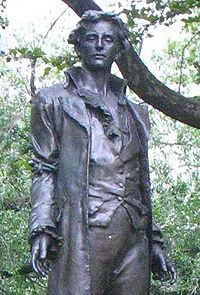 On this day in 1776, General George Washington asks for a volunteer for an extremely dangerous mission: to gather intelligence behind enemy lines before the coming Battle of Harlem Heights. Captain Nathan Hale of the 19th Regiment of the Continental Army stepped forward and subsequently become one of the first known American spies of the Revolutionary War.
 On this day in 1776, the Continental Congress formally declares the name of the new nation to be the “United States” of America. This replaced the term “United Colonies,” which had been in general use.
 The name is linked to Samuel Wilson, a meat packer from Troy, New York, who supplied barrels of beef to the United States Army during the War of 1812. Wilson (1766-1854) stamped the barrels with “U.S.” for United States, but soldiers began referring to the grub as “Uncle Sam’s.” The local newspaper picked up on the story and Uncle Sam eventually gained widespread acceptance as the nickname for the U.S. federal government.
Recent Comments