
This is your morning Open Thread. Pour your favorite beverage and review the past and comment on the future.
Find the past “On This Day in History” here.
September 12 is the 255th day of the year (256th in leap years) in the Gregorian calendar. There are 110 days remaining until the end of the year.
On this day in 1940, Lascaux cave paintings discovered

Lascaux is the setting of a complex of caves in southwestern France famous for its Paleolithic cave paintings. The original caves are located near the village of Montignac, in the Dordogne département. They contain some of the best-known Upper Paleolithic art. These paintings are estimated to be 17,000 years old. They primarily consist of primitive images of large animals, most of which are known from fossil evidence to have lived in the area at the time. In 1979, Lascaux was added to the UNESCO World Heritage Sites list along with other prehistoric sites in the Vezere valley.
The cave was discovered on September 12, 1940 by four teenagers, Marcel Ravidat, Jacques Marsal, Georges Agnel, and Simon Coencas, as well as Marcel’s dog, Robot. The cave complex was opened to the public in 1948. By 1955, the carbon dioxide produced by 1,200 visitors per day had visibly damaged the paintings. The cave was closed to the public in 1963 in order to preserve the art. After the cave was closed, the paintings were restored to their original state, and were monitored on a daily basis. Rooms in the cave include The Great Hall of the Bulls, the Lateral Passage, the Shaft of the Dead Man, the Chamber of Engravings, the Painted Gallery, and the Chamber of Felines.
Lascaux II, a replica of two of the cave halls – the Great Hall of the Bulls and the Painted Gallery – was opened in 1983, 200 meters from the original. Reproductions of other Lascaux artwork can be seen at the Centre of Prehistoric Art at Le Thot, France.
 The Pentagon is the headquarters of the
 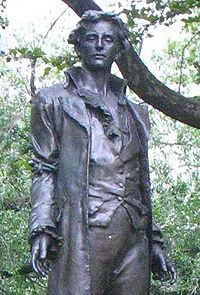 On this day in 1776, General George Washington asks for a volunteer for an extremely dangerous mission: to gather intelligence behind enemy lines before the coming Battle of Harlem Heights. Captain Nathan Hale of the 19th Regiment of the Continental Army stepped forward and subsequently become one of the first known American spies of the Revolutionary War.
 On this day in 1776, the Continental Congress formally declares the name of the new nation to be the “United States” of America. This replaced the term “United Colonies,” which had been in general use.
 The name is linked to Samuel Wilson, a meat packer from Troy, New York, who supplied barrels of beef to the United States Army during the War of 1812. Wilson (1766-1854) stamped the barrels with “U.S.” for United States, but soldiers began referring to the grub as “Uncle Sam’s.” The local newspaper picked up on the story and Uncle Sam eventually gained widespread acceptance as the nickname for the U.S. federal government.

Recent Comments