
This is your morning Open Thread. Pour your favorite beverage and review the past and comment on the future.
Find the past “On This Day in History” here.
January 5 is the fifth day of the year in the Gregorian calendar. There are 360 days remaining until the end of the year (361 in leap years).
On this day in 1933, construction starts on what will become one of America’s most famous landmarks: the Golden Gate Bridge. When completed in 1937, the Golden Gate has a 4,200-foot-long suspension span, making it the world’s longest suspension bridge. Since opening to the public in May 1937, almost 2 billion vehicles have crossed the bridge, in both the north- and southbound directions.
The bridge was named not for its distinctive orange color (which provides extra visibility to passing ships in San Francisco’s famous fog), but for the Golden Gate Strait, where the San Francisco Bay opens into the Pacific Ocean. The bridge spans the strait and connects the northern part of the city of San Francisco to Marin County, California.
Before the bridge was built, the only practical short route between San Francisco and what is now Marin County was by boat across a section of San Francisco Bay. Ferry service began as early as 1820, with regularly scheduled service beginning in the 1840s for purposes of transporting water to San Francisco. The Sausalito Land and Ferry Company service, launched in 1867, eventually became the Golden Gate Ferry Company, a Southern Pacific Railroad subsidiary, the largest ferry operation in the world by the late 1920s. Once for railroad passengers and customers only, Southern Pacific’s automobile ferries became very profitable and important to the regional economy. The ferry crossing between the Hyde Street Pier in San Francisco and Sausalito in Marin County took approximately 20 minutes and cost US$1.00 per vehicle, a price later reduced to compete with the new bridge. The trip from the San Francisco Ferry Building took 27 minutes.
Many wanted to build a bridge to connect San Francisco to Marin County. San Francisco was the largest American city still served primarily by ferry boats. Because it did not have a permanent link with communities around the bay, the city’s growth rate was below the national average. Many experts said that a bridge couldn’t be built across the 6,700 ft (2,042 m) strait. It had strong, swirling tides and currents, with water 500 ft (150 m) in depth at the center of the channel, and frequent strong winds. Experts said that ferocious winds and blinding fogs would prevent construction and operation.
 On this day in 1962,
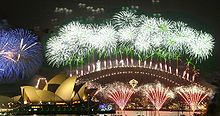 Probably observed on March 1 in the old Roman Calendar, The World Book Encyclopedia of 1984, volume 14, page 237 states: “The Roman ruler Julius Caesar established January 1 as New Year’s Day in 46 BC. The Romans dedicated this day to Janus, the god of gates, doors, and beginnings. The month of January was named after Janus, who had two faces – one looking forward and the other looking backward.” This suggests that New Year’s celebrations are founded on pagan traditions. Some have suggested this occurred in 153 BC, when it was stipulated that the two annual consuls (after whose names the years were identified) entered into office on that day, though no consensus exists on the matter. Dates in March, coinciding with the spring equinox, or commemorating the Annunciation of Jesus, along with a variety of Christian feast dates were used throughout the Middle Ages, though calendars often continued to display the months in columns running from January to December.
 On this day in 1759,
  Today history was made in in Parson’s Kansas where the last roll of
  On this day in 1890, the
 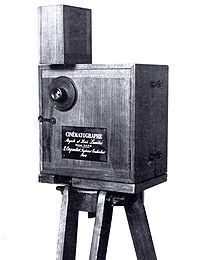 On this day in 1895,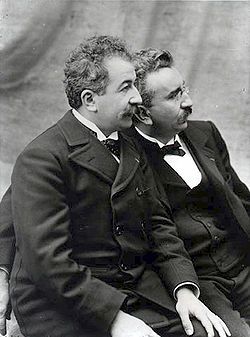
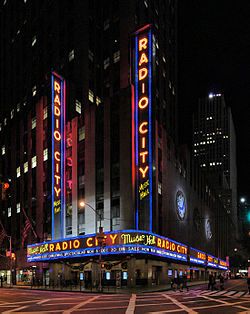 On this day in 1932,
Recent Comments