
This is your morning Open Thread. Pour your favorite beverage and review the past and comment on the future.
Find the past “On This Day in History” here.
August 26 is the 238th day of the year (239th in leap years) in the Gregorian calendar. There are 127 days remaining until the end of the year.

On this day in 1920, The 19th Amendment, guaranteeing women the right to vote, is formally adopted into the U.S. Constitution by proclamation of Secretary of State Bainbridge Colby. The amendment was the culmination of more than 70 years of struggle by woman suffragists. Its two sections read simply:
“The right of citizens of the United States to vote shall not be denied or abridged by the United States or by any State on account of sex” and “Congress shall have power to enforce this article by appropriate legislation.”
America’s woman suffrage movement was founded in the mid 19th century by women who had become politically active through their work in the abolitionist and temperance movements. In July 1848, 200 woman suffragists, organized by Elizabeth Cady Stanton and Lucretia Mott, met in Seneca Falls, New York, to discuss women’s rights. After approving measures asserting the right of women to educational and employment opportunities, they passed a resolution that declared “it is the duty of the women of this country to secure to themselves their sacred right to the elective franchise.” For proclaiming a women’s right to vote, the Seneca Falls Convention was subjected to public ridicule, and some backers of women’s rights withdrew their support. However, the resolution marked the beginning of the woman suffrage movement in America.
n January 1918, the woman suffrage amendment passed the House of Representatives with the necessary two-thirds majority vote. In June 1919, it was approved by the Senate and sent to the states for ratification. Campaigns were waged by suffragists around the country to secure ratification, and on August 18, 1920, Tennessee became the 36th state to ratify the amendment, giving it the two-thirds majority of state ratification necessary to make it the law of the land.
The package containing the certified record of the action of the Tennessee legislature was sent by train to the nation’s capital, arriving in the early hours of August 26. At 8 a.m. that morning, Secretary of State Bainbridge Colby signed it without ceremony at his residence in Washington. None of the leaders of the woman suffrage movement were present when the proclamation was signed, and no photographers or film cameras recorded the event. That afternoon, Carrie Chapman Catt, head of the National American Suffrage Association, was received at the White House by President Woodrow Wilson and Edith Wilson, the first lady.
The 26th of August was proclaimed “Women’s Equality Day” in 1971 when a joint resolution, that was introduced by Rep. Bella Abzug, was passed. Each year the President issues a proclamation recognizing women’s equality.
WHEREAS, the women of the United States have been treated as second-class citizens and have not been entitled the full rights and privileges, public or private, legal or institutional, which are available to male citizens of the United States; and
WHEREAS, the women of the United States have united to assure that these rights and privileges are available to all citizens equally regardless of sex;
WHEREAS, the women of the United States have designated August 26th, the anniversary date of the passage of the Nineteenth Amendment, as symbol of the continued fight for equal rights: and
WHEREAS, the women of United States are to be commended and supported in their organizations and activities,
NOW, THEREFORE, BE IT RESOLVED, the Senate and House of Representatives of the United States of America in Congress assembled, that August 26th of each year is designated as “Women’s Equality Day,” and the President is authorized and requested to issue a proclamation annually in commemoration of that day in 1920, on which the women of America were first given the right to vote, and that day in 1970, on which a nationwide demonstration for women’s rights took place.


 After centuries of dormancy, Mount Vesuvius erupts in southern Italy, devastating the prosperous Roman cities of Pompeii and Herculaneum and killing thousands. The cities, buried under a thick layer of volcanic material and mud, were never rebuilt and largely forgotten in the course of history. In the 18th century, Pompeii and Herculaneum were rediscovered and excavated, providing an unprecedented archaeological record of the everyday life of an ancient civilization, startlingly preserved in sudden death.
 Those that did not flee the city of Pompeii in August of 79 AD were doomed. Buried for 1700 years under 30 feet of mud and ash and reduced by the centuries to skeletons, they remained entombed until excavations in the early 1800s.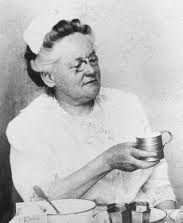


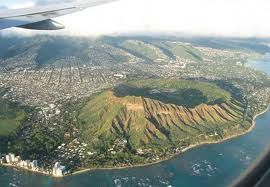 Hawaii’s natural beauty, warm tropical climate, inviting waters and waves, and active volcanoes make it a popular destination for tourists, surfers, biologists, and volcanologists alike. Due to its mid-Pacific location, Hawaii has many North American and Asian influences along with its own vibrant native culture. Hawaii has over a million permanent residents along with many visitors and U.S. military personnel. Its capital is Honolulu on the island of Oahu.
 On this day in 1911, a dispatcher in the New York Times office sends the first telegram around the world via commercial service. Exactly 66 years later, the National Aeronautics and Space Administration (NASA) sends a different kind of message–a phonograph record containing information about Earth for extraterrestrial beings–shooting into space aboard the unmanned spacecraft Voyager II.
 allowed it to be kept in the plane of the Ecliptic (the plane of the Solar System) so that it could be sent on to Uranus and Neptune by means of utilizing gravity assists during its fly-by of Saturn in 1981 and of Uranus in 1986. Because of this chosen trajectory, Voyager 2 could not take a close-up look at the large Saturnian moon Titan as its sister space probe had. However, Voyager 2 did become the first and only spacecraft to make the spaceflight by Uranus and Neptune, and hence completing the Planetary Grand Tour. This is one that is made practical by a seldom-occurring geometric alignment of the outer planets (happening once every 175 years).
 The rectangular two-and-a-half-mile track linked four turns, each exactly 440 yards from start to finish, by two long and two short straight sections. In that first five-mile race on August 19, 1909, 12,000 spectators watched Austrian engineer Louis Schwitzer win with an average speed of 57.4 miles per hour. The track’s surface of crushed rock and tar proved a disaster, breaking up in a number of places and causing the deaths of two drivers, two mechanics and two spectators.
Recent Comments