
This is your morning Open Thread. Pour your favorite beverage and review the past and comment on the future.
Find the past “On This Day in History” here.
April 2 is the 92nd day of the year (93rd in leap years) in the Gregorian calendar. There are 273 days remaining until the end of the year.
On this day in 1513, Ponce de Leon discovers Florida. Near present-day St. Augustine, Spanish explorer Juan Ponce de Leon comes ashore on the Florida coast, and claims the territory for the Spanish crown.
Although other European navigators may have sighted the Florida peninsula before, Ponce de Leon is credited with the first recorded landing and the first detailed exploration of the Florida coast. The Spanish explorer was searching for the “Fountain of Youth,” a fabled water source that was said to bring eternal youth. Ponce de Leon named the peninsula he believed to be an island “La Florida” because his discovery came during the time of the Easter feast, or Pascua Florida.
Ponce de Leon equipped three ships with at least 200 men at his own expense and set out from Puerto Rico on March 4, 1513. The only contemporary description known for this expedition comes from Antonio de Herrera y Tordesillas, a Spanish historian who apparently had access to the original ships’ logs or related secondary sources from which he created a summary of the voyage published in 1601. The brevity of the account and occasional gaps in the record have led historians to speculate and dispute many details of the voyage.
The three ships in this small fleet were the Santiago, the San Cristobal and the Santa Maria de la Consolacion. Anton de Alaminos was their chief pilot. He was already an experienced sailor and would become one of the most respected pilots in the region. After leaving Puerto Rico, they sailed northwest along the great chain of Bahama Islands, known then as the Lucayos. By March 27, Easter Sunday, they reached the northern end of the Bahamas sighting an unfamiliar island (probably Great Abaco).
For the next several days the fleet crossed open water until April 2, 1513, when they sighted land which Ponce de Leon believed was another island. He named it La Florida in recognition of the verdant landscape and because it was the Easter season, which the Spaniards called Pascua Florida (Festival of Flowers). The following day they came ashore to seek information and take possession of this new land. The precise location of their landing on the Florida coast has been disputed for many years. Some historians believe it occurred at St. Augustine; others prefer a more southern landing at a small harbor now called Ponce de Leon Inlet; and some argue that Ponce came ashore even further south near the present location of Melbourne Beach.
After remaining in the vicinity of their first landing for about five days, the ships turned south for further exploration of the coast. On April 8 they encountered a current so strong that it pushed them backwards and forced them to seek anchorage. The tiniest ship, the San Cristobal, was carried out of sight and lost for two days. This was the first encounter with the Gulf Stream where it reaches maximum force between the Florida coast and the Bahamas. Because of the powerful boost provided by the current, it would soon become the primary route for eastbound ships leaving the Spanish Indies bound for Europe.
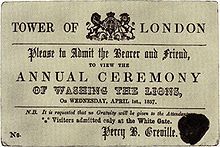 On this day in 1700,
  On this day in 1776, future first lady
 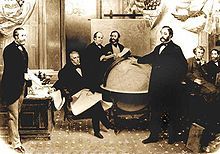 Russia was in a difficult financial position and feared losing Russian America without compensation in some future conflict, especially to the British, whom they had fought in the Crimean War (1853-1856). While Alaska attracted little interest at the time, the population of nearby British Columbia started to increase rapidly a few years after hostilities ended, with a large gold rush there prompting the creation of a crown colony on the mainland. The Russians therefore started to believe that in any future conflict with Britain, their hard-to-defend region might become a prime target, and would be easily captured. Therefore the Tsar decided to sell the territory. Perhaps in hopes of starting a bidding war, both the British and the Americans were approached, however the British expressed little interest in buying Alaska. The Russians in 1859 offered to sell the territory to the United States, hoping that its presence in the region would offset the plans of Russia’s greatest regional rival, Great Britain. However, no deal was brokered due to the American Civil War.
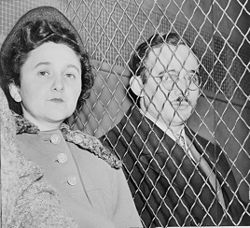 On this day in 1951,
  On this day in 1979,
  On this day in 1939,
Recent Comments