
Up with Chris host, Chris Hayes shares research showing how the median household income fell during the recession and how it continued to fall during the so-called recovery. His panel guests are Michelle Goldberg, senior contributing writer for Newsweek/Daily Beast and author of “The Means of Reproduction: Sex, Power and the Future of the World;” W. Kamau Bell, comedian and host of FX’s “Totally Biased with W. Kamau Bell;” Ta-Nehisi Coates, senior editor at The Atlantic and author of “The Beautiful Struggle: A Father, Two Sons, and an Unlikely Road to Manhood;” and Jay Smooth, host of WBAI-FM’s “Underground Railroad.”
Big Income Losses for Those Near Retirement
by Catherine Rampell
Americans nearing retirement age have suffered disproportionately after the financial crisis: along with the declining value of their homes, which were intended to cushion their final years, their incomes have fallen sharply.
The typical household income for people age 55 to 64 years old is almost 10 percent less in today’s dollars than it was when the recovery officially began three years ago, according to a new report from Sentier Research, a data analysis company that specializes in demographic and income data.
Across the country, in almost every demographic, Americans earn less today than they did in June 2009, when the recovery technically started. As of June, the median household income for all Americans was $50,964, or 4.8 percent lower than its level three years earlier, when the inflation-adjusted median income was $53,508.
The decline looks even worse when comparing today’s incomes to those when the recession began in December 2007. Then, the median household income was $54,916, meaning that incomes have fallen 7.2 percent since the economy last peaked. [..]
The real median annual household income for blacks fell 11.1 percent from June 2009 to June 2012, landing at $32,498 from $36,567. That compares with 5.2 percent for whites, 3.6 percent for other race combinations (including Asians) and 4.1 percent for Hispanics – all of whom started with higher incomes than blacks.


 After centuries of dormancy, Mount Vesuvius erupts in southern Italy, devastating the prosperous Roman cities of Pompeii and Herculaneum and killing thousands. The cities, buried under a thick layer of volcanic material and mud, were never rebuilt and largely forgotten in the course of history. In the 18th century, Pompeii and Herculaneum were rediscovered and excavated, providing an unprecedented archaeological record of the everyday life of an ancient civilization, startlingly preserved in sudden death.
 Those that did not flee the city of Pompeii in August of 79 AD were doomed. Buried for 1700 years under 30 feet of mud and ash and reduced by the centuries to skeletons, they remained entombed until excavations in the early 1800s.


 Hawaii’s natural beauty, warm tropical climate, inviting waters and waves, and active volcanoes make it a popular destination for tourists, surfers, biologists, and volcanologists alike. Due to its mid-Pacific location, Hawaii has many North American and Asian influences along with its own vibrant native culture. Hawaii has over a million permanent residents along with many visitors and U.S. military personnel. Its capital is Honolulu on the island of Oahu.
 On this day in 1911, a dispatcher in the New York Times office sends the first telegram around the world via commercial service. Exactly 66 years later, the National Aeronautics and Space Administration (NASA) sends a different kind of message–a phonograph record containing information about Earth for extraterrestrial beings–shooting into space aboard the unmanned spacecraft Voyager II.
 allowed it to be kept in the plane of the Ecliptic (the plane of the Solar System) so that it could be sent on to Uranus and Neptune by means of utilizing gravity assists during its fly-by of Saturn in 1981 and of Uranus in 1986. Because of this chosen trajectory, Voyager 2 could not take a close-up look at the large Saturnian moon Titan as its sister space probe had. However, Voyager 2 did become the first and only spacecraft to make the spaceflight by Uranus and Neptune, and hence completing the Planetary Grand Tour. This is one that is made practical by a seldom-occurring geometric alignment of the outer planets (happening once every 175 years).
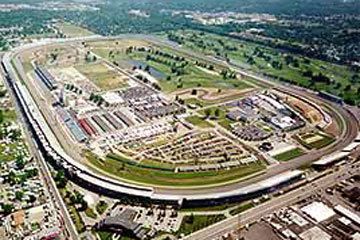 The rectangular two-and-a-half-mile track linked four turns, each exactly 440 yards from start to finish, by two long and two short straight sections. In that first five-mile race on August 19, 1909, 12,000 spectators watched Austrian engineer Louis Schwitzer win with an average speed of 57.4 miles per hour. The track’s surface of crushed rock and tar proved a disaster, breaking up in a number of places and causing the deaths of two drivers, two mechanics and two spectators.
 It took 70 years of struggle by women of the Suffrage Movement headed by Susan B. Anthony to get this amendment passed.
Recent Comments