
This is your morning Open Thread. Pour your favorite beverage and review the past and comment on the future.
Find the past “On This Day in History” here.
November 22 is the 326th day of the year (327th in leap years) in the Gregorian calendar. There are 39 days remaining until the end of the year.
On this day in 1990, Margaret Thatcher, the first woman prime minister in British history, announces her resignation after 11 years in Britain’s top office.
Margaret Hilda Thatcher, Baroness Thatcher, LG, OM, PC, FRS (born 13 October 1925) served as Prime Minister of the United Kingdom from 1979 to 1990 and Leader of the Conservative Party from 1975 to 1990. Thatcher is the only woman to have held either post.
Born in Grantham in Lincolnshire, United Kingdom, Thatcher went to school at Kesteven and Grantham Girls’ School in Grantham, where she was head girl in 1942-43. She read chemistry at Somerville College, Oxford and later trained as a barrister. She won a seat in the 1959 general election, becoming the MP for Finchley as a Conservative. When Edward Heath formed a government in 1970, he appointed Thatcher Secretary of State for Education and Science. Four years later, she backed Keith Joseph in his bid to become Conservative Party leader but he was forced to drop out of the election. In 1975 Thatcher entered the contest herself and became leader of the Conservative Party. At the 1979 general election she became Britain’s first female Prime Minister.
In her foreword to the 1979 Conservative manifesto, Thatcher wrote of “a feeling of helplessness, that a once great nation has somehow fallen behind.” She entered 10 Downing Street determined to reverse what she perceived as a precipitate national decline. Her political philosophy and economic policies emphasised deregulation, particularly of the financial sector, flexible labour markets, and the selling off and closing down of state owned companies and withdrawing subsidy to others. Amid a recession and high unemployment, Thatcher’s popularity declined, though economic recovery and the 1982 Falklands War brought a resurgence of support and she was re-elected in 1983. She took a hard line against trade unions, survived the Brighton hotel bombing assassination attempt and opposed the Soviet Union (her tough-talking rhetoric gained her the nickname the “Iron Lady”); she was re-elected for an unprecedented third term in 1987. The following years would prove difficult, as her Poll tax plan was largely unpopular, and her views regarding the European Community were not shared by others in her Cabinet. She resigned as Prime Minister in November 1990 after Michael Heseltine’s challenge to her leadership of the Conservative Party.
Thatcher’s tenure as Prime Minister was the longest since that of Lord Salisbury and the longest continuous period in office since Lord Liverpool in the early 19th century. She was the first woman to lead a major political party in the United Kingdom, and the first of only four women to hold any of the four great offices of state. She holds a life peerage as Baroness Thatcher, of Kesteven in the County of Lincolnshire, which entitles her to sit in the House of Lords.
 The Nuremberg Trials were conducted by an international tribunal made up of representatives from the United States, the Soviet Union, France, and Great Britain. It was the first trial of its kind in history, and the defendants faced charges ranging from crimes against peace, to crimes of war, to crimes against humanity. Lord Justice Geoffrey Lawrence, the British member, presided over the proceedings, which lasted 10 months and consisted of 216 court sessions.
 On November 19, 1863, at the dedication of a military cemetery at Gettysburg, Pennsylvania, during the American Civil War, President Abraham Lincoln delivers one of the most memorable speeches in American history. In just 272 words, Lincoln brilliantly and movingly reminded a war-weary public why the Union had to fight, and win, the Civil War.
 On this day in 1883,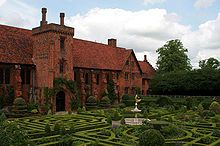

 Did the young Austrian nun named Maria really take to the hills surrounding Salzburg to sing spontaneously of her love of music? Did she comfort herself with thoughts of copper kettles, and did she swoon to her future husband’s song about an alpine flower while the creeping menace of Nazism spread across central Europe? No, the real-life Maria von Trapp did none of those things. She was indeed a former nun, and she did indeed marry Count Georg von Trapp and become stepmother to his large brood of children, but nearly all of the particulars she related in her 1949 book, The Story of the Trapp Family Singers, were ignored by the creators of the Broadway musical her memoir inspired. And while the liberties taken by the show’s writers, Howard Lindsay and Russel Crouse, and by its composer and lyricist, Richard Rodgers and Oscar Hammerstein II, caused some consternation to the real Maria von Trapp and to her stepchildren, according to many later reports, those liberties made The Sound of Music a smash success from the very night of its Broadway opening on this day in 1959.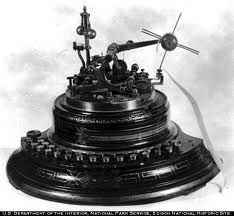
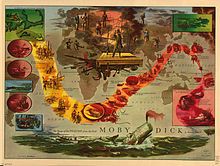
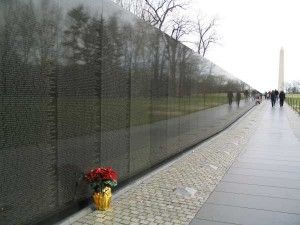
 Inscribed on the walls with the Optima typeface are the names of servicemen who were either confirmed to be KIA (Killed in Action) or remained classified as MIA (Missing in Action) when the walls were constructed in 1982. They are listed in chronological order, starting at the apex on panel 1E in 1959 (although it was later discovered that the first casualties were military advisers who were killed by artillery fire in 1957), moving day by day to the end of the eastern wall at panel 70E, which ends on May 25, 1968, starting again at panel 70W at the end of the western wall which completes the list for May 25, 1968, and returning to the apex at panel 1W in 1975. Symbolically, this is described as a “wound that is closed and healing.” Information about rank, unit, and decorations are not given. The wall listed 58,159 names when it was completed in 1993; as of June 2010, there are 58,267 names, including 8 women. Approximately 1,200 of these are listed as missing (MIAs, POWs, and others), denoted with a cross; the confirmed dead are marked with a diamond. If the missing return alive, the cross is circumscribed by a circle (although this has never occurred as of March 2009); if their death is confirmed, a diamond is superimposed over the cross. According to the Vietnam Veterans Memorial Fund, “there is no definitive answer to exactly how many, but there could be as many as 38 names of personnel who survived, but through clerical errors, were added to the list of fatalities provided by the Department of Defense.” Directories are located on nearby podiums so that visitors may locate specific names.
Recent Comments