
This is your morning Open Thread. Pour your favorite beverage and review the past and comment on the future.
Find the past “On This Day in History” here.
Click on image to enlarge
June 11 is the 162nd day of the year (163rd in leap years) in the Gregorian calendar. There are 203 days remaining until the end of the year.

On this day in 1776, the Continental Congress selects Thomas Jefferson of Virginia, John Adams of Massachusetts, Benjamin Franklin of Pennsylvania, Roger Sherman of Connecticut and Robert R. Livingston of New York to draft a declaration of independence.
Knowing Jefferson’s prowess with a pen, Adams urged him to author the first draft of the document, which was then carefully revised by Adams and Franklin before being given to Congress for review on June 28.
The revolutionary treatise began with reverberating prose:
While political maneuvering was setting the stage for an official declaration of independence, a document explaining the decision was being written. On June 11, 1776, Congress appointed a “Committee of Five”, consisting of John Adams of Massachusetts, Benjamin Franklin of Pennsylvania, Thomas Jefferson of Virginia, Robert R. Livingston of New York, and Roger Sherman of Connecticut, to draft a declaration. Because the committee left no minutes, there is some uncertainty about how the drafting process proceeded-accounts written many years later by Jefferson and Adams, although frequently cited, are contradictory and not entirely reliable. What is certain is that the committee, after discussing the general outline that the document should follow, decided that Jefferson would write the first draft. Considering Congress’s busy schedule, Jefferson probably had limited time for writing over the next seventeen days, and likely wrote the draft quickly. He then consulted the others, made some changes, and then produced another copy incorporating these alterations. The committee presented this copy to the Congress on June 28, 1776. The title of the document was “A Declaration by the Representatives of the United States of America, in General Congress assembled.” Congress ordered that the draft “lie on the table”.
On Monday, July 1, having tabled the draft of the declaration, Congress resolved itself into a committee of the whole, with Benjamin Harrison of Virginia presiding, and resumed debate on Lee’s resolution of independence. John Dickinson made one last effort to delay the decision, arguing that Congress should not declare independence without first securing a foreign alliance and finalizing the Articles of Confederation.[64] John Adams gave a speech in reply to Dickinson, restating the case for an immediate declaration.
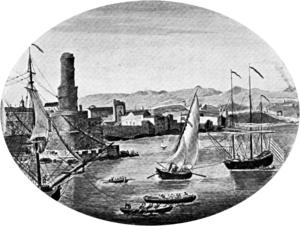
 Port Royal provided a safe harbour initially for privateers and subsequently for pirates plying the shipping lanes to and from Spain and Panama. Buccaneers found Port Royal appealing for several reasons. Its proximity to trade routes allowed them easy access to prey, but the most important advantage was the port’s proximity to several of the only safe passages or straits giving access to the Spanish Main from the Atlantic. The harbour was large enough to accommodate their ships and provided a place to careen and repair these vessels. It was also ideally situated for launching raids on Spanish settlements. From Port Royal, Henry Morgan attacked Panama, Portobello, and Maracaibo. Roche Brasiliano, John Davis (buccaneer), and Edward Mansveldt (Mansfield) also came to Port Royal.
Recent Comments