
Donald Trump disrespects New Yorkers by taking Sarah Palin to a pizza chain and eating his stacked slices with a fork.
Jun 05 2011
Rant of the Week: Jon Stewart
Jun 05 2011
On This Day In History June 5
This is your morning Open Thread. Pour your favorite beverage and review the past and comment on the future.
Find the past “On This Day in History” here.
Click on image to enlarge
June 5 is the 156th day of the year (157th in leap years) in the Gregorian calendar. There are 209 days remaining until the end of the year
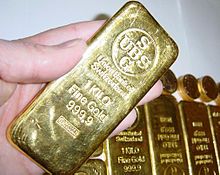
1933, the United States went off the gold standard, a monetary system in which currency is backed by gold, when Congress enacted a joint resolution nullifying the right of creditors to demand payment in gold. The United States had been on a gold standard since 1879, except for an embargo on gold exports during World War I, but bank failures during the Great Depression of the 1930s frightened the public into hoarding gold, making the policy untenable.
Soon after taking office in March 1933, Roosevelt declared a nationwide bank moratorium in order to prevent a run on the banks by consumers lacking confidence in the economy. He also forbade banks to pay out gold or to export it. According to Keynesian economic theory, one of the best ways to fight off an economic downturn is to inflate the money supply. And increasing the amount of gold held by the Federal Reserve would in turn increase its power to inflate the money supply. Facing similar pressures, Britain had dropped the gold standard in 1931, and Roosevelt had taken note.
Prolongation of the Great Depression
Some economic historians, such as American professor Barry Eichengreen, blame the gold standard of the 1920s for prolonging the Great Depression. Others including Federal Reserve Chairman Ben Bernanke and Nobel Prize winning economist Milton Friedman lay the blame at the feet of the Federal Reserve. The gold standard limited the flexibility of central banks’ monetary policy by limiting their ability to expand the money supply, and thus their ability to lower interest rates. In the US, the Federal Reserve was required by law to have 40% gold backing of its Federal Reserve demand notes, and thus, could not expand the money supply beyond what was allowed by the gold reserves held in their vaults.
In the early 1930s, the Federal Reserve defended the fixed price of dollars in respect to the gold standard by raising interest rates, trying to increase the demand for dollars. Its commitment and adherence to the gold standard explain why the U.S. did not engage in expansionary monetary policy. To compete in the international economy, the U.S. maintained high interest rates. This helped attract international investors who bought foreign assets with gold. Higher interest rates intensified the deflationary pressure on the dollar and reduced investment in U.S. banks. Commercial banks also converted Federal Reserve Notes to gold in 1931, reducing the Federal Reserve’s gold reserves, and forcing a corresponding reduction in the amount of Federal Reserve Notes in circulation. This speculative attack on the dollar created a panic in the U.S. banking system. Fearing imminent devaluation of the dollar, many foreign and domestic depositors withdrew funds from U.S. banks to convert them into gold or other assets.
The forced contraction of the money supply caused by people removing funds from the banking system during the bank panics resulted in deflation; and even as nominal interest rates dropped, inflation-adjusted real interest rates remained high, rewarding those that held onto money instead of spending it, causing a further slowdown in the economy. Recovery in the United States was slower than in Britain, in part due to Congressional reluctance to abandon the gold standard and float the U.S. currency as Britain had done.
Congress passed the Gold Reserve Act on 30 January 1934; the measure nationalized all gold by ordering the Federal Reserve banks to turn over their supply to the U.S. Treasury. In return the banks received gold certificates to be used as reserves against deposits and Federal Reserve notes. The act also authorized the president to devalue the gold dollar so that it would have no more than 60 percent of its existing weight. Under this authority the president, on 31 January 1934, fixed the value of the gold dollar at 59.06 cents.
70 – Titus and his Roman legions breach the middle wall of Jerusalem in the Siege of Jerusalem.
1257 – Krakow, Poland receives city rights.
1798 – The Battle of New Ross: The attempt to spread United Irish Rebellion into Munster is defeated.
1817 – The first Great Lakes steamer, the Frontenac, is launched.
1829 – HMS Pickle captures the armed slave ship Voladora off the coast of Cuba.
1832 – The June Rebellion breaks out in Paris in an attempt to overthrow the monarchy of Louis-Philippe.
1837 – Houston, Texas is incorporated by the Republic of Texas.
1849 – Denmark becomes a constitutional monarchy by the signing of a new constitution.
1851 – Harriet Beecher Stowe’s anti-slavery serial, Uncle Tom’s Cabin or, Life Among the Lowly starts a ten-month run in the National Era abolitionist newspaper.
1862 – As the Treaty of Saigon is signed, ceding parts of southern Vietnam to France, the guerrilla leader Truong Dinh decides to defy Emperor Tu Duc of Vietnam and fight on against the Europeans.
1864 – American Civil War: Battle of Piedmont: Union forces under General David Hunter defeat a Confederate army at Piedmont, Virginia, taking nearly 1,000 prisoners.
1883 – The first regularly scheduled Orient Express departs Paris.
1888 – The Rio de la Plata Earthquake takes place.
1900 – Second Boer War: British soldiers take Pretoria.
1915 – Denmark amends its constitution to allow women’s suffrage.
1916 – Louis Brandeis is sworn in as a Justice of the United States Supreme Court.
1917 – World War I: Conscription begins in the United States as “Army registration day”.
1933 – The U.S. Congress abrogates the United States’ use of the gold standard by enacting a joint resolution (48 Stat. 112) nullifying the right of creditors to demand payment in gold.
1941 – Four thousand Chongqing residents are asphyxiated in a bomb shelter during the Bombing of Chongqing.
1942 – World War II: United States declares war on Bulgaria, Hungary, and Romania.
1944 – World War II: More than 1000 British bombers drop 5,000 tons of bombs on German gun batteries on the Normandy coast in preparation for D-Day.
1945 – The Allied Control Council, the military occupation governing body of Germany, formally takes power.
1947 – Marshall Plan: In a speech at Harvard University, United States Secretary of State George Marshall calls for economic aid to war-torn Europe.
1949 – Thailand elects Orapin Chaiyakan, the first Thai female member of Thailand’s Parliament.
1956 – Elvis Presley introduces his new single, “Hound Dog”, on The Milton Berle Show, scandalizing the audience with his suggestive hip movements.
1959 – The first government of the State of Singapore is sworn in.
1963 – British Secretary of State for War John Profumo resigns in a sex scandal known as the Profumo Affair.
1963 – Movement of 15 Khordad: Protest against arrest of Ayatollah Ruhollah Khomeini by Shah of Iran, Mohammad Reza Pahlavi. In several cities, masses of angry demonstrators are confronted by tanks and paratroopers.
1964 – DSV Alvin is commissioned.
1967 – Six-Day War begins: The Israeli air force launches simultaneous pre-emptive attacks on the air forces of Egypt, Jordan, and Syria.
1968 – U.S. presidential candidate Robert F. Kennedy is shot at the Ambassador Hotel in Los Angeles, California by Palestinian Sirhan Sirhan. Kennedy dies the next day.
1969 – The International communist conference begins in Moscow.
1975 – The Suez Canal opens for the first time since the Six-Day War.
1975 – The United Kingdom holds its first and only country-wide referendum, on remaining in the European Economic Community (EEC).
1976 – Collapse of the Teton Dam in Idaho, United States.
1977 – A coup takes place in Seychelles.
1977 – The Apple II, one of the first personal computers, goes on sale.
1981 – The Morbidity and Mortality Weekly Report of the Centers for Disease Control and Prevention report that five people in Los Angeles, California have a rare form of pneumonia seen only in patients with weakened immune systems, in what turns out to be the first recognized cases of AIDS.
1984 – Prime Minister of India Indira Gandhi orders an attack on the Golden Temple, the holiest site of the Sikh religion.
1989 – The Unknown Rebel halts the progress of a column of advancing tanks for over half an hour after the Tiananmen Square protests of 1989.
1995 – The Bose-Einstein condensate is first created.
1998 – A strike begins at the General Motors parts factory in Flint, Michigan, that quickly spreads to five other assembly plants (the strike lasted seven weeks).
2001 – Tropical Storm Allison makes landfall on the upper-Texas coastline as a strong tropical storm and dumps large amounts of rain over Houston. The storm caused $5.5 billion in damages, making Allison the costliest tropical storm in U.S history.
2003 – A severe heat wave across Pakistan and India reaches its peak, as temperatures exceed 50°C (122°F) in the region.
2006 – Serbia declares independence from the State Union of Serbia and Montenegro.
* Arbor Day (New Zealand)
* Christian Feast Day:
* Boniface (Roman Catholic Church)
* June 5 (Eastern Orthodox liturgics)
* Constitution Day and Father’s Day (Denmark)
* Indian Arrival Day (Suriname)
* Khordad Movement Anniversary (Iran)
* Liberation Day (Seychelles)
* President’s Day (Equatorial Guinea)
* World Environment Day (International)
Jun 05 2011
Veal Pen Progressives
(h/t to Xanthe who scooped me, also TMC, Corrente, and FDL)
I am not a “progressive” or a “liberal”. I’m a leftist, more specifically an anarcho-syndicalist. I mention this so you’ll understand that “who are the real Communists here” fights primarily amuse me and I’m highlighting this one as recent and illustrative as well.
Most of you will recognize Yves Smith as the author of Naked Capitalism. Over the last couple of days there has been a lot of discussion which started out with this post-
Bribes Work: How Peterson, the Enemy of Social Security, Bought the Roosevelt Name
Friday, June 3, 2011
Bribes work. AT&T gave money to GLAAD, and now the gay rights organization is supporting the AT&T-T-Mobile merger. La Raza is mouthing the talking points of the Mortgage Bankers Association on down payments. The NAACP is fighting on debit card rules. The Center for Budget and Policy Priorities and the Economic Policy Institute supported the extension of the Bush tax cuts back in December. While it seems counter-intuitive that a left-leaning organization would support illiberal extensions of corporate power, in fact, that is the role of the DC pet liberal. This dynamic of rent-a-reputation is greased with corporate cash and/or political access. As the entitlement fight comes to a head, it’s worth looking under the hood of the DC think tank scene to see how the Obama administration and the GOP are working to lock down their cuts to social programs.
And so it is that the arch-enemy of Social Security, Pete Peterson, rented out the good name of Franklin Delano Roosevelt, the reputation of the Center for American Progress, and EPI. All three groups submitted budget proposals to close the deficit and had their teams share the stage with Republican con artist du jour Paul Ryan. The goal of Peterson’s conference was to legitimize the fiscal crisis narrative, and to make sure that “all sides” were represented.
Well, there’s been quite a reaction. As Yves puts it-
I’m surprised that my post, “Bribes Work: How Peterson, the Enemy of Social Security, Bought the Roosevelt Name” has created a bit of a firestorm within what passes for the left wing political blogosphere. It has elicited responses from Andy Rich of the Roosevelt Institute, Roosevelt Institute fellow Mike Konczal, as well as two groups only mentioned in passing in the piece, the Economic Policy Institute and the Center on Budget and Policy Priorities.
Her longer response-
On Fauxgressive Rationalizations of Selling Out to Powerful, Moneyed Backers
Sunday, June 5, 2011
Left wing operatives seem unable to grasp what outsiders see clearly: that what advances their resume is often inconsistent with what is in the best interest of the causes they say they believe in. Some face this tradeoff more on an institutional rather than individual level. The EPI and CFPB were both created to counter the right supply side phantasmagoria with fact based analysis. They’ve been truer to the left wing principles than the Hamilton Project infested Center for American Progress. But they depend on Democratic party infrastructure for much of their fundraising. As a consequence, they are often asked to take dives, such as the stance we highlighted in our post, that of supporting an extension of the Bush tax cuts last fall. The payoff was not explicit as in the Roosevelt case, but maintaining good relationships with money sources is as important as grant funding.
…
Let’s look at the Mike Konczal post as an illustration. It’s an odd mix of misdirection, rationalization, and coded ad hominem. His opening sentence depicts me as “unhappy”, thus tagging me as being emotional rather than having a reasoned critique. It also characterizes the critic as someone who doesn’t see the system as legitimate, and thus cannot be trusted as a credible system-supportive messenger.But that’s precisely the point – my priority is not sustaining a corrupt order, while that is exactly what he is doing. I feel no allegiance to the powerful officials and interests who made decisions, and I believe they owe the public an accounting for the deeply destabilizing and immoral two-tiered system of justice they have foisted on all of us. He is keen to marginalize those who demand answers from our self-appointed guardians of discourse. For instance, his peculiar emphasis on word count is to suggest that people like me are tiresome and irrelevant.
His post is not even an argument, it’s a tribal signal to the insider class that, though he may have liberal sympathies, he can be trusted at crunch time.
…
It is in fact an argument against moral courage.
…
(T)he reality is that the Roosevelt participation was utterly irrelevant save for its PR value to Peterson. It’s simply an ornament that allows Peterson to claim millennial support for his toxic game plan. No one cares what the student paper says; the only reason I bothered dealing with it substantively was to show I had indeed read it and point out how it failed to build on or even acknowledge prior (better) Roosevelt work.
Jun 05 2011
Water Water
The cooling pump failure at Reactor 5 (yes, Reactor 5, a new one) seems to have been corrected by the installation of an additional pump. The failure raised temperatures from 68 to 93.6 degrees in the reactor and 41 to 46 degrees in the fuel pool. I suspect that these numbers are Celsius, not Fahrenheit, which puts the boiling point of water at 100, not 212. The explosion heard at about the same time came from rubble clearing equipment damaging a gas cylinder according to TEPCO.
And we all believe them, don’t we?
On the credibility front, Prime Minister Naoto Kan barely survived a no-confidence vote by making a pledge to resign “once certain progress” has been made.
Former Prime Minister Yukio Hatoyama, who brokered the deal, said that Kan had agreed to go by the end of June, while Kan said at a press conference late Thursday that the work required him to stay at least through the end of the year.
Hatoyama shot back Friday morning, saying that Kan was a “con artist” if he tried to stay on.
“Right before the no-confidence vote, he says he will resign, and then once it’s voted down, he says he won’t. The prime minister should not be behaving like a con artist…If he is such a person, I should have supported the no-confidence vote,” Hatoyama told reporters Friday morning.
But there are more important things happening, like the imminent exhaustion of ALL the storage for the now highly radioactive water they’ve been pumping to prevent another out of control reaction.
Fukushima Radioactive Water May Breach Plant’s Storage Trenches in 5 Days
By Tsuyoshi Inajima, Bloomberg News
Jun 2, 2011 6:32 AM ET
Tepco has pumped millions of liters of cooling water into the three reactors that melted down. By May 18, almost 100,000 tons of radioactive water had leaked into the basements of reactor and turbine buildings, connecting tunnels and service trenches at the plant, according to Tepco’s estimates.
Water levels are between 27.7 centimeters (11 inches) below the top of a shaft leading to a trench connected to the No. 2 building and 23.9 centimeters below the ground at the No. 3 unit today, Junichi Matsumoto, a general manager at Tepco, said.
The levels were 64.1 centimeters for the No. 2 building and 45.6 for No. 3 on May 27, showing a rate of increase that will reach the lip of the trenches as early as June 6.
…
The rate of increase in water level quickened because of three days of rain from typhoon Songda that weakened as it swept past Japan earlier this week. Namie, a town near the Fukushima Dai-Ichi station, had 112 millimeters of rain on May 30, according to the Japan Meteorological Agency.
The Associated Press is currently reporting that TEPCO is planning on removing 1,500 tons of water immediately, but you don’t have to be a math genius to compare 100,000 to 1,500 and reach the sure and certain conclusion that this represents 1.5%, literally a drop in the bucket.
Even this more optimistic piece from AFP says that only 2 or 3 of a planned 370 temporary storage tanks are expected to reach the site in the next few days with the rest taking as long as mid August to get there. And when they do the capacity will be a mere 40,000 tons which some quick and non-controversial arithmetic tells me leaves 60% still sloshing around.
They still keep pumping more too.
59% of Japanese are worried they have been exposed to radiation from the Fukushima disaster and at least 2 workers have exceeded their lifetime limits with an additional 40 being tested.
Jun 05 2011
Punting the Pundits: Sunday Preview Edition
“Punting the Pundits” is an Open Thread. It is a selection of editorials and opinions from around the news medium and the internet blogs. The intent is to provide a forum for your reactions and opinions, not just to the opinions presented, but to what ever you find important.
Thanks to ek hornbeck, click on the link and you can access all the past “Punting the Pundits”.
The Sunday Talking Heads:
This Week with Christiane Amanpour: Ms. Amanpour has an exclusive interview with the president’s top adviser on the economy, Austan Goolsbee.
To discuss the never ending stand-off on the economy and how it should be managed is 2008 Nobel Prize-winning economist, Paul Krugman of The New York Times, chief economist of the Chamber of Commerce Martin Regalia and Chrystia Freeland of Thomson Reuters.
The “This Week” roundtable takes on all the week’s politics with Republican political adviser Mark McKinnon, ABC News’ senior political correspondent, Jonathan Karl, former Clinton press secretary Dee Dee Myers and the Republican presidential candidate rising in the polls, Herman Cain.
Except for Krugman, that you can catch later on-line, weeding the garden would be more interesting.
Face the Nation with Bob Schieffer: Joining Mr. Schieffer is House Minority Leader Nancy Pelosi (D-CA) and Mississippi Governor Haley Barbour.
The Chris Matthews Show: This week’s guests Bob Woodward, The Washington Post Associate Editor, Helene Cooper, The New York Times White House Correspondent, Alex Wagner, Politics Daily White House Correspondent and John Heilemann, New York Magazine National Political Correspondent will discuss these questions:
He won the White House as the insurgent, so how will Barack Obama win again as the incumbent?
Can Republicans run for president while running from interviews?
Meet the Press with David Gregory: We get a break from Lurch this week for live coverage of the Men’s Final of the French Open at Stade Roland Garros in Paris between Roger Federer and Rafael Nadal. This is what I’ll be watching with a café au lait and a croissant.
State of the Union with Candy Crowley: Ms. Crowley’s guests: Chief economist on President Obama’s Economic Advisory Board, Austan Goolsbee, former director of the Office of Management and Budget, Alice Rivlin, and former director of the Congressional Budget Office, Douglas Holtz-Eakin, presidential candidate Ron Paul, former White House communications director Anita Dunn and Ed Gillespie, the former Republican National Committee chairman and Counselor to President Bush.
Tennis, sleep or weeding the garden, your many options
Fareed Zakaris: GPS: Mr. Zakaria’s guests will be two top economists, Jeffrey Sachs from Columbia University and Kenneth Rogoff from Harvard and an interview with a top leader of the Muslim Brotherhood, Essam El Erian
Glenn Greenwald: WashPost: Criminal Law is Not for Political Elites
The Washington Post Editors work in a city and live in a nation in which huge numbers of poor and minority residents are consigned to cages for petty and trivial transgressions of the criminal law — typically involving drugs — and pursuant to processes that are extremely tilted toward the State. Post Editors virtually never speak out against that, if they ever have. But that all changes — that indifference disappears — when political elites are targeted for prosecution, even for serious crimes . . .
In some of these cases (Libby, Mubarak), the Post couches its defense of political elites in terms of concerns about the process while claiming they’re receptive to the possibility of punishment. In others (Edwards), the concerns they raise are not invalid. But whatever else is true, Post Editors are deeply and almost invariably disturbed when political elites are subjected to criminal accountability for their wrongful acts, but wholly indifferent — if not supportive — when ordinary Americans are mercilessly prosecuted for far less serious wrongdoing.
And it’s not just Post Editors, but their stable of Op-Ed columnists, who reflexively defend political elites when they break the law. The late Dean of the Washington Press Corps, David Broder, was one of the first and most vocal advocates of one of the earliest expressions of elite immunity: Gerald Ford’s pardon of Richard Nixon, and Broder repeated that defense in 2006 upon Ford’s death (“I thought and wrote at the time that he was well justified to spare the country further struggling with the Nixon legacy”). The Post‘s Broder also vigorously defended President Obama’s decision to oppose prosecution of Bush officials: “he was just as right to declare that there should be no prosecution of those who carried out what had been the policy of the United States government. And he was right when he sent out his chief of staff, Rahm Emanuel, to declare that the same amnesty should apply to the lawyers and bureaucrats who devised and justified the Bush administration practices.”
Maureen Dowd: An Archbishop Burns While Rome Fiddles
The archbishop of Dublin was beginning to sniffle.
He could not get through a story about “a really nasty man” – an Irish priest who sexually abused, physically tortured and emotionally threatened vulnerable boys – without pulling out his handkerchief and wiping his nose.
“He built a swimming pool in his own garden, to which only boys of a certain age, of a certain appearance were allowed into it,” Archbishop Diarmuid Martin told me recently. “There were eight other priests in that parish, and not one of them seemed to think there was something strange about it.”
Two years after learning the extent of the depraved and Dickensian treatment of children in the care of the Irish Catholic Church – a fifth circle of hell hidden for decades by church and police officials – the Irish are still angry and appalled.
César Chelala: UN Sharply Critical of US on Women’s Rights
The United Nations Rapporteur on violence against women, its causes and consequences, has issued a very critical report of the U.S. on its policies on women’s rights. The report is based on a trip of the Special Rapporteur to the US from 24 January to 7 February 2011. During that trip, Ms. Rashida Manjoo broadly examined issues of violence against women in different settings. Her recommendations should provide fruitful material for the U.S. to improve its policies towards women.
As indicated in the report, “Violence against women occurs along a continuum in which the various forms of violence are often both causes and consequences of violence.” Domestic violence or Intimate Partner Violence (IPV) is one of the most critical expressions of violence. According to the National Crime Victimization Survey (NCVS) 552,000 violent crimes by an intimate partner were committed against women in the U.S. in 2008.
Their husbands or intimate acquaintances are responsible for the majority of crimes against women. The Violence Policy Center states that the number of women shot and killed by their husbands or intimate acquaintances was four times higher than the total number of women murdered by male strangers using all weapons combined, according to an analysis of 2008 data.
James Hansen: Silence Is Deadly: I’m Speaking Out Against Canada-U.S. Tar Sands Pipeline
The U.S. Department of State seems likely to approve a huge pipeline, known as Keystone XL to carry tar sands oil (about 830,000 barrels per day) to Texas refineries unless sufficient objections are raised. The scientific community needs to get involved in this fray now. If this project gains approval, it will become exceedingly difficult to control the tar sands monster. The environmental impacts of tar sands development include: irreversible effects on biodiversity and the natural environment, reduced water quality, destruction of fragile pristine Boreal Forest and associated wetlands, aquatic and watershed mismanagement, habitat fragmentation, habitat loss, disruption to life cycles of endemic wildlife particularly bird and Caribou migration, fish deformities and negative impacts on the human health in downstream communities. Although there are multiple objections to tar sands development and the pipeline, including destruction of the environment in Canada, and the likelihood of spills along the pipeline’s pathway, such objections, by themselves, are very unlikely to stop the project.
An overwhelming objection is that exploitation of tar sands would make it implausible to stabilize climate and avoid disastrous global climate impacts. The tar sands are estimated (e.g., see IPCC Fourth Assessment Report) to contain at least 400 GtC (equivalent to about 200 ppm CO2). Easily available reserves of conventional oil and gas are enough to take atmospheric CO2 well above 400 ppm, which is unsafe for life on earth. However, if emissions from coal are phased out over the next few decades and if unconventional fossil fuels including tar sands are left in the ground, it is conceivable to stabilize earth’s climate.
Jun 05 2011
Six In The Morning
Forests fight back all over the world
Woodland density is going up after decades of decline, but concerns about deforestation remain. Andrew Marszal reports on the Great Reversal
Sunday, 5 June 2011
Forest density is increasing across much of the world after decades of decline, according to a new study by scientists from the United States and Europe. The change, which is being dubbed the Great Reversal by the authors, has important, has positive implications for carbon capture and climate change.The research, carried out by teams from the University of Helsinki and New York’s Rockefeller University, shows that forests are thickening in 45 of 68 countries, which together account for 72 per cent of global forests.
South Africa fears new wave of violence against foreigners
Township killings and attacks on shops raise pressure on President Jacob Zuma to act
Tracy McVeigh
The Observer, Sunday 5 June 2011
Fears are rising that South Africa could face a new wave of xenophobic violence as mock eviction notices are issued to foreign traders in townships around Johannesburg, the scenes of bloody violence in May 2008.In one settlement, Pakistani and Somali shopkeepers have temporarily closed and are staying indoors, some claiming the police ordered them to do so for their own safety. Last week, more than 50 Somali-owned shops in Port Elizabeth were attacked, burned and looted.
Portugal election: Vote amid bail-out austerity
Voters in Portugal are going to the polls to choose a new government which will implement a demanding 78bn euro ($116bn; £70bn) bail-out.
5 June 2011Opinion polls suggest the opposition centre-right Social Democrats (PSD) lead the governing Socialists, but not by enough to form a majority.
Analysts say the PSD may try to form a coalition with the third-ranked CDS.
All the main parties endorsed the bail-out, which requires tough austerity measures amid a faltering economy.
Ecuador threatens to tap Amazon oil fields
June 5, 2011
Ecuador will begin operating three oil fields in a pristine Amazon preserve unless the international community contributes $US100 million ($93.77 million) by December, President Rafael Correa has announced.Ecuador’s government pledged in 2007 to leave the oil fields under the Yasuni biosphere reserve untapped for a decade if rich countries would contribute $US3.6 billion ($3.38 billion), which it estimated was half of what the country could earn from the oil.
Malawi’s ‘witches’ challenge colonial-era sorcery law
FELIX MPONDA LILONGWE, MALAWI – Jun 05 2011
They accused the 82-year-old grandmother of casting a spell on him, and filed a criminal complaint of witchcraft, landing her in jail under a century-old law now under fire by both non-believers and self-proclaimed witches.“How could I bewitch my own grandchild. For what?” said the soft-spoken woman.
She and two elderly friends were convicted and sentenced to $33 fines each, a steep sum for women who — like 62% of Malawians — live on less than $2 a day. When they could not pay, they were jailed.
U.S. effort to boost anti-terrorism technology criticized
The Safety Act of 2002 is considered a laudable effort to encourage development of technology to fight terrorism. But analysts and security-tech companies say the government has been clumsy in making the initiative work as intended.
By Julie Mianecki, Washington Bureau
Reporting from Washington– Craig Harvey likened applying for government certification of his company’s anti-terrorism technology to applying for a patent: It took hundreds of pages of technical writing and six months to complete.Still, he said, the process was necessary – he just wished his company, NVision Solutions Inc., had heard of it earlier.
Harvey’s complaint echoed those of experts who say the government does a good job of creating programs to work with the private sector in developing anti-terrorism technology – it just doesn’t do a good job of getting the word out about them.
Jun 05 2011
DocuDharma Digest
Regular Features-
- Late Night Karaoke by mishima
- Six In The Morning by mishima
- Cartnoon by ek hornbeck
Featured Essays for June 4, 2011-
- Moody by ek hornbeck
- When you’ve lost James Carville… by ek hornbeck
- Raising the Roof: The Debt Ceiling by TheMomCat
- Nibble, Nibble by TheMomCat
- My Little Town 20110601: The Hackett Hoodlums by Translator
Jun 05 2011
DocuDharma Digest
- Late Night Karaoke by mishima
- Six In The Morning by mishima
- Cartnoon by ek hornbeck
Featured Essays for June 4, 2011-
- Moody by ek hornbeck
- When you’ve lost James Carville… by ek hornbeck
- Raising the Roof: The Debt Ceiling by TheMomCat
- Nibble, Nibble by TheMomCat
- My Little Town 20110601: The Hackett Hoodlums by Translator
Jun 05 2011
Mangled History: Palin’s Version Of Revere’s Midnight Ride
(4 pm. – promoted by ek hornbeck)
No bells, no whistles and no shots fired but some Tea Party revisionists will take the former Republican VP candidate, Sarah Palin on her word. Maybe if she would have had a clue if had checked Wikipedia, read the poem or even YouTube:
One If By Misstatement, Two If By Ignorant: Palin Gets an “F” in American History
It is tiresome to pick on Palin. She has taken more than her share of hits on matters of geography, newspaper reading, American allies and favorite founders. Even conservatives ridicule her — it was Glenn Beck who pressed her on the favorite founder issue.
There is little point to piling on after Beck has taken his shot.
Palin is not going to run for president because (as the polling makes abundantly clear) Republicans do not want her to be their candidate, because (as the polling makes even more abundantly clear) Americans would never elect her and because she is not about to give up her lucrative book, broadcasting and speaking fees to go back into public service.
It has ever been the case that Palin’s patriotism extends only so far as it benefits her own self-interest.
What is now equally evident, however, is that her historical bumbling is not a misstep here, a misstatement there. It is a pattern, a pattern of disconnection with and disinterest in the American story. Like so many politicians, she uses American history as a prop, not as inspiration, and certainly not as instruction.
It is astonishing that the ignorance of this woman and her counter part, Michelle Bachmann, garner this much attention from the MSM. Frankly, they are both embarrassing representations of women.
Jun 05 2011
The Abbreviated Evening Edition
Our Chief News Editor ek hornbeck has the day off and left me in charge. 🙂
Well, I’ve had a busy day with maintenance and shopping, nice buy a new sandals. So tonight’s Evening edition is going to be ABBREVIATED.
Britain deploys top diplomat, helicopters to Libya
by Jean-Pierre Campagne – 2 hrs 36 mins ago
BENGHAZI, Libya (AFP) – British Foreign Minister William Hague on Saturday met leaders of rebels fighting to oust Libyan leader Moamer Kadhafi after NATO deployed attack helicopters for the first time.
Russia’s top diplomat, meanwhile, warned that the NATO military operation in Libya was “sliding towards” a land campaign as warplanes again blasted the capital Tripoli.
“We are here today for one principal reason — to show our support for the Libyan people and for the National Transitional Council, the legitimate representative of the Libyan people,” Hague said in a statement.
Hague, accompanied by international development minister Andrew Mitchell, held talks with chief of the rebel National Transitional Council Mustafa al-Jalil.
3 dead in Syria clashes as burials draw 100,000
DAMASCUS (AFP) – Security forces on Saturday killed three demonstrators in northwestern Syria, after more than 100,000 mourners turned out in Hama for the funerals of protesters, rights groups said.
In Jisrash Shughur, “security forces opened fire to scatter more than 1,000 demonstrators protesting after the funeral of a civilian killed on Friday” in protests at the nearby village http://www.thestarshollowgazet… Has in northwestern Idlib province, an activist said on condition of anonymity.
3 dead in Syria clashes as burials draw 100,000
DAMASCUS (AFP) – Security forces on Saturday killed three demonstrators in northwestern Syria, after more than 100,000 mourners turned out in Hama for the funerals of protesters, rights groups said.
In Jisrash Shughur, “security forces opened fire to scatter more than 1,000 demonstrators protesting after the funeral of a civilian killed on Friday” in protests at the nearby village of Has in northwestern Idlib province, an activist said on condition of anonymity.
Mystery deepens over E. coli poisoning
FRANKFURT (AFP) – Scientists have yet to trace the source of an E. coli outbreak that has spread to 12 countries and killed at least 19 people, mainly in Germany, as experts on Saturday ruled out links to a Hamburg festival.
The European Commission said it would send an expert team to Germany to bolster efforts to find the origin of the killer bacteria as Qatar became the latest country to ban imports of salad items from Germany.
Thousands in Hong Kong mark Tiananmen crackdown
by Beh Lih Yi
HONG KONG (AFP) – Tens of thousands of people in Hong Kong on Saturday marked the bloody 1989 Tiananmen Square crackdown, as China defies world condemnation with an ongoing roundup of political dissidents.
A sea of people, mostly clad in black as a sign of mourning, held up candles and sang solemn songs — some with tears in their eyes — filling the city’s Victoria Park, in the only commemoration on Chinese soil.
Police said 77,000 people had crammed into the park, an area the size of the six football pitches, but organisers put the crowd at more than 150,000.
Human toll of deadly tornado cuts deep in Joplin
JOPLIN, Mo. – They were regular churchgoers, devoted parents, seniors in their retirement years and children with untold promise.
Some gave their lives to save strangers, thrust by circumstance and human instinct into the role of hero. Others faced a parent’s worst fear, losing their lives while also failing to protect their children from death.
Few outside the town of about 50,000 will recognize the names of the dead. But Joplin’s close-knit community lost a staggering array of human capital in the May 22 tornado, including seniors who were the town’s history and young people who were its future. Some lived their lives ordinarily, only to be defined in their final moments by breathtaking courage.
Pitfalls abound for prosecutors in Edwards case
RALEIGH, N.C. – Two crucial witnesses are dead. Another is 100 years old. A fourth was recently held in contempt of court. The daring indictment of two-time presidential candidate John Edwards has pitfalls at every turn for federal prosecutors, adding strain to a Justice Department section still trying to recover after botching its last major political case.
Government attorneys are relying on an untested legal theory to argue that money used to tangentially help a candidate – in this case, by keeping Edwards’ pregnant mistress private during his 2008 presidential run – should have been considered a campaign contribution. Edwards’ attorneys counter with an argument that’s reprehensible but could raise reasonable doubts with a jury: He was only interested in hiding the affair from his cancer-stricken wife, who died in December.
Historic flood begins to abate, but far from over
JACKSON, Miss. – The Mississippi River flood of 2011 may seem like a thing of the past for people who fled rising waters that never came, yet the final toll is shrouded in murky water for thousands of people devastated as the flood made its way from the Midwest to the Gulf of Mexico.
Thousands of acres of crops, timber and catfish farms are still flooded, mostly by tributaries that backed up because the Mississippi River was so high. Hundreds are still displaced from flooded homes. Some people had nothing to go home to.
I said it was ABBREVIATED, I wasn’t foolin’ ya. Now, what’s for dinner? Cooking for two, Dr. TMC is back from his adventures in Libya a few pounds lighter than he should be.
Recent Comments