
This is your morning Open Thread. Pour your favorite beverage and review the past and comment on the future.
Find the past “On This Day in History” here.
September 14 is the 257th day of the year (258th in leap years) in the Gregorian calendar. There are 108 days remaining until the end of the year.
On this Day in 1901, U.S. President William McKinley dies after being shot by a deranged anarchist during the Pan-American Exposition in Buffalo, New York.
President and Mrs. McKinley attended the Pan-American Exposition in Buffalo, New York. He delivered a speech about his positions on tariffs and foreign trade on September 5, 1901. The following morning, McKinley visited Niagara Falls before returning to the Exposition. That afternoon McKinley had an engagement to greet the public at the Temple of Music. Standing in line, Leon Frank Czolgosz waited with a pistol in his right hand concealed by a handkerchief. At 4:07 p.m. Czolgosz fired twice at the president. The first bullet grazed the president’s shoulder. The second, however, went through McKinley’s stomach, pancreas, and kidney, and finally lodged in the muscles of his back. The president whispered to his secretary, George Cortelyou “My wife, Cortelyou, be careful how you tell her, oh be careful.” Czolgosz would have fired again, but he was struck by a bystander and then subdued by an enraged crowd. The wounded McKinley even called out “Boys! Don’t let them hurt him!” because the angry crowd beat Czolgosz so severely it looked as if they might kill him on the spot.
One bullet was easily found and extracted, but doctors were unable to locate the second bullet. It was feared that the search for the bullet might cause more harm than good. In addition, McKinley appeared to be recovering, so doctors decided to leave the bullet where it was.
The newly developed x-ray machine was displayed at the fair, but doctors were reluctant to use it on McKinley to search for the bullet because they did not know what side effects it might have on him. The operating room at the exposition’s emergency hospital did not have any electric lighting, even though the exteriors of many of the buildings at the extravagant exposition were covered with thousands of light bulbs. The surgeons were unable to operate by candlelight because of the danger created by the flammable ether used to keep the president unconscious, so doctors were forced to use pans instead to reflect sunlight onto the operating table while they treated McKinley’s wounds.
McKinley’s doctors believed he would recover, and the President convalesced for more than a week in Buffalo at the home of the exposition’s director. On the morning of September 12, he felt strong enough to receive his first food orally since the shooting-toast and a small cup of coffee. However, by afternoon he began to experience discomfort and his condition rapidly worsened. McKinley began to go into shock. At 2:15 a.m. on September 14, 1901, eight days after he was shot, he died from gangrene surrounding his wounds. He was 58. His last words were “It is God’s way; His will be done, not ours.” He was originally buried in West Lawn Cemetery in Canton, Ohio, in the receiving vault. His remains were later reinterred in the McKinley Memorial, also in Canton.
Czolgosz was tried and found guilty of murder, and was executed by electric chair at Auburn Prison on October 29, 1901.
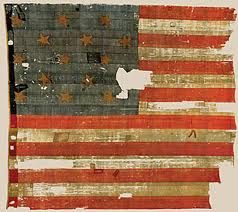

 The Pentagon is the headquarters of the
 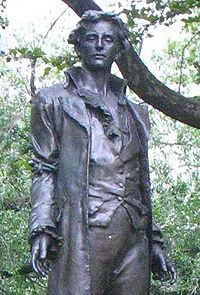 On this day in 1776, General George Washington asks for a volunteer for an extremely dangerous mission: to gather intelligence behind enemy lines before the coming Battle of Harlem Heights. Captain Nathan Hale of the 19th Regiment of the Continental Army stepped forward and subsequently become one of the first known American spies of the Revolutionary War.
 On this day in 1776, the Continental Congress formally declares the name of the new nation to be the “United States” of America. This replaced the term “United Colonies,” which had been in general use.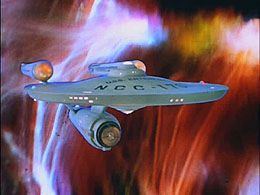
 The name is linked to Samuel Wilson, a meat packer from Troy, New York, who supplied barrels of beef to the United States Army during the War of 1812. Wilson (1766-1854) stamped the barrels with “U.S.” for United States, but soldiers began referring to the grub as “Uncle Sam’s.” The local newspaper picked up on the story and Uncle Sam eventually gained widespread acceptance as the nickname for the U.S. federal government.
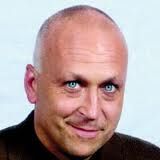 Calvin Edwin “Cal” Ripken, Jr. (born August 24, 1960) is a former Major League Baseball shortstop and third baseman who played his entire career (1981-2001) for the Baltimore Orioles.
Recent Comments