
This is your morning Open Thread. Pour your favorite beverage and review the past and comment on the future.
Find the past “On This Day in History” here.
August 25 is the 237th day of the year (238th in leap years) in the Gregorian calendar. There are 128 days remaining until the end of the year.
On this day in 1768, James Cook began his first voyage to travel to the Pacific Ocean to observe and record the transit of Venus across the Sun. This would be the first of three voyages that would be hailed as heroic by the scientific community.

The routes of Captain James Cook’s voyages. The first voyage is shown in red, second voyage in green, and third voyage in blue. The route of Cook’s crew following his death is shown as a dashed blue line.
In 1766, the Royal Society hired (James) Cook to travel to the Pacific Ocean to observe and record the transit of Venus across the Sun. Cook was promoted to Lieutenant and named as commander of the expedition. The expedition sailed from England in 1768, rounded Cape Horn and continued westward across the Pacific to arrive at Tahiti on 13 April 1769, where the observations were to be made. However, the result of the observations was not as conclusive or accurate as had been hoped. Cook later mapped the complete New Zealand coastline, making only some minor errors. He then sailed west, reaching the south-eastern coast of the Australian continent on 19 April 1770, and in doing so his expedition became the first recorded Europeans to have encountered its eastern coastline.
On 23 April he made his first recorded direct observation of indigenous Australians at Brush Island near Bawley Point, noting in his journal: “…and were so near the Shore as to distinguish several people upon the Sea beach they appear’d to be of a very dark or black Colour but whether this was the real colour of their skins or the C[l]othes they might have on I know not.” On 29 April Cook and crew made their first landfall on the mainland of the continent at a place now known as the Kurnell Peninsula, which he named Botany Bay after the unique specimens retrieved by the botanists Joseph Banks and Daniel Solander. It is here that James Cook made first contact with an Aboriginal tribe known as the Gweagal.
After his departure from Botany Bay he continued northwards, and a mishap occurred when Endeavour ran aground on a shoal of the Great Barrier Reef, on 11 June, and “nursed into a river mouth on 18 June 1770.” The ship was badly damaged and his voyage was delayed almost seven weeks while repairs were carried out on the beach (near the docks of modern Cooktown, at the mouth of the Endeavour River). Once repairs were complete the voyage continued, sailing through Torres Strait and on 22 August he landed on Possession Island, where he claimed the entire coastline he had just explored as British territory. He returned to England via Batavia (modern Jakarta, Indonesia), the Cape of Good Hope and the island of Saint Helena, arriving on 12 July 1771.
 After centuries of dormancy, Mount Vesuvius erupts in southern Italy, devastating the prosperous Roman cities of Pompeii and Herculaneum and killing thousands. The cities, buried under a thick layer of volcanic material and mud, were never rebuilt and largely forgotten in the course of history. In the 18th century, Pompeii and Herculaneum were rediscovered and excavated, providing an unprecedented archaeological record of the everyday life of an ancient civilization, startlingly preserved in sudden death.
 Those that did not flee the city of Pompeii in August of 79 AD were doomed. Buried for 1700 years under 30 feet of mud and ash and reduced by the centuries to skeletons, they remained entombed until excavations in the early 1800s.
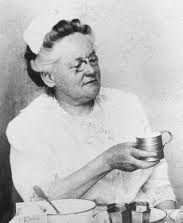

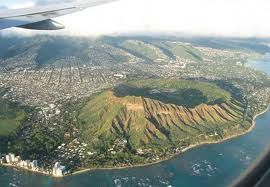 Hawaii’s natural beauty, warm tropical climate, inviting waters and waves, and active volcanoes make it a popular destination for tourists, surfers, biologists, and volcanologists alike. Due to its mid-Pacific location, Hawaii has many North American and Asian influences along with its own vibrant native culture. Hawaii has over a million permanent residents along with many visitors and U.S. military personnel. Its capital is Honolulu on the island of Oahu.
 On this day in 1911, a dispatcher in the New York Times office sends the first telegram around the world via commercial service. Exactly 66 years later, the National Aeronautics and Space Administration (NASA) sends a different kind of message–a phonograph record containing information about Earth for extraterrestrial beings–shooting into space aboard the unmanned spacecraft Voyager II.
 allowed it to be kept in the plane of the Ecliptic (the plane of the Solar System) so that it could be sent on to Uranus and Neptune by means of utilizing gravity assists during its fly-by of Saturn in 1981 and of Uranus in 1986. Because of this chosen trajectory, Voyager 2 could not take a close-up look at the large Saturnian moon Titan as its sister space probe had. However, Voyager 2 did become the first and only spacecraft to make the spaceflight by Uranus and Neptune, and hence completing the Planetary Grand Tour. This is one that is made practical by a seldom-occurring geometric alignment of the outer planets (happening once every 175 years).
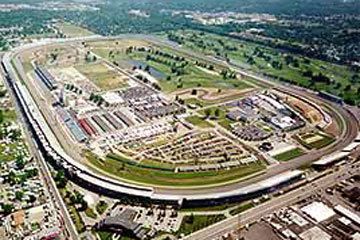 The rectangular two-and-a-half-mile track linked four turns, each exactly 440 yards from start to finish, by two long and two short straight sections. In that first five-mile race on August 19, 1909, 12,000 spectators watched Austrian engineer Louis Schwitzer win with an average speed of 57.4 miles per hour. The track’s surface of crushed rock and tar proved a disaster, breaking up in a number of places and causing the deaths of two drivers, two mechanics and two spectators.
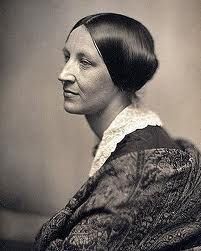 It took 70 years of struggle by women of the Suffrage Movement headed by Susan B. Anthony to get this amendment passed.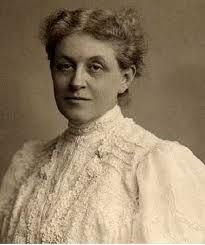
 Throughout the late 1850s, treaty violations by the United States and late or unfair annuity payments by Indian agents caused increasing hunger and hardship among the Dakota. Traders with the Dakota previously had demanded that the government give the annuity payments directly to them (introducing the possibility of unfair dealing between the agents and the traders to the exclusion of the Dakota). In mid-1862 the Dakota demanded the annuities directly from their agent, Thomas J. Galbraith. The traders refused to provide any more supplies on credit under those conditions, and negotiations reached an impasse.
Recent Comments