
This is your morning Open Thread. Pour your favorite beverage and review the past and comment on the future.
Find the past “On This Day in History” here.
November 20 is the 324th day of the year (325th in leap years) in the Gregorian calendar. There are 41 days remaining until the end of the year.
On this day in 1945, Twenty-four high-ranking Nazis go on trial in Nuremberg, Germany, for atrocities committed during World War II.
The Nuremberg Trials were conducted by an international tribunal made up of representatives from the United States, the Soviet Union, France, and Great Britain. It was the first trial of its kind in history, and the defendants faced charges ranging from crimes against peace, to crimes of war, to crimes against humanity. Lord Justice Geoffrey Lawrence, the British member, presided over the proceedings, which lasted 10 months and consisted of 216 court sessions.
British War Cabinet documents, released on 2 January 2006, have shown that as early as December 1944, the Cabinet had discussed their policy for the punishment of the leading Nazis if captured. British Prime Minister Winston Churchill had then advocated a policy of summary execution in some circumstances, with the use of an Act of Attainder to circumvent legal obstacles, being dissuaded from this only by talks with US leaders later in the war. In late 1943, during the Tripartite Dinner Meeting at the Tehran Conference, the Soviet leader, Joseph Stalin, proposed executing 50,000-100,000 German staff officers. US President Franklin D. Roosevelt, joked that perhaps 49,000 would do. Churchill denounced the idea of “the cold blooded execution of soldiers who fought for their country.” However, he also stated that war criminals must pay for their crimes and that in accordance with the Moscow Document which he himself had written, they should be tried at the places where the crimes were committed. Churchill was vigorously opposed to executions “for political purposes.” According to the minutes of a Roosevelt-Stalin meeting during the Yalta Conference, on February 4, 1945, at the Livadia Palace, President Roosevelt “said that he had been very much struck by the extent of German destruction in the Crimea and therefore he was more bloodthirsty in regard to the Germans than he had been a year ago, and he hoped that Marshal Stalin would again propose a toast to the execution of 50,000 officers of the German Army.”
US Treasury Secretary, Henry Morgenthau, Jr., suggested a plan for the total denazification of Germany; this was known as the Morgenthau Plan. The plan advocated the forced de-industrialisation of Germany. Roosevelt initially supported this plan, and managed to convince Churchill to support it in a less drastic form. Later, details were leaked to the public, generating widespread protest. Roosevelt, aware of strong public disapproval, abandoned the plan, but did not adopt an alternate position on the matter. The demise of the Morgenthau Plan created the need for an alternative method of dealing with the Nazi leadership. The plan for the “Trial of European War Criminals” was drafted by Secretary of War Henry L. Stimson and the War Department. Following Roosevelt’s death in April 1945, the new president, Harry S. Truman, gave strong approval for a judicial process. After a series of negotiations between Britain, the US, Soviet Union and France, details of the trial were worked out. The trials were set to commence on 20 November 1945, in the Bavarian city of Nuremberg.
 On November 19, 1863, at the dedication of a military cemetery at Gettysburg, Pennsylvania, during the American Civil War, President Abraham Lincoln delivers one of the most memorable speeches in American history. In just 272 words, Lincoln brilliantly and movingly reminded a war-weary public why the Union had to fight, and win, the Civil War.
 On this day in 1883,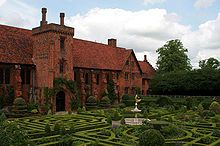

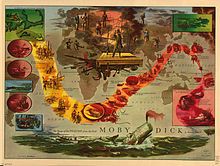
 Did the young Austrian nun named Maria really take to the hills surrounding Salzburg to sing spontaneously of her love of music? Did she comfort herself with thoughts of copper kettles, and did she swoon to her future husband’s song about an alpine flower while the creeping menace of Nazism spread across central Europe? No, the real-life Maria von Trapp did none of those things. She was indeed a former nun, and she did indeed marry Count Georg von Trapp and become stepmother to his large brood of children, but nearly all of the particulars she related in her 1949 book, The Story of the Trapp Family Singers, were ignored by the creators of the Broadway musical her memoir inspired. And while the liberties taken by the show’s writers, Howard Lindsay and Russel Crouse, and by its composer and lyricist, Richard Rodgers and Oscar Hammerstein II, caused some consternation to the real Maria von Trapp and to her stepchildren, according to many later reports, those liberties made The Sound of Music a smash success from the very night of its Broadway opening on this day in 1959.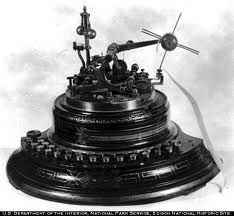
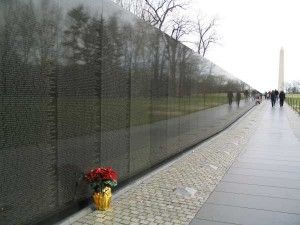
 Inscribed on the walls with the Optima typeface are the names of servicemen who were either confirmed to be KIA (Killed in Action) or remained classified as MIA (Missing in Action) when the walls were constructed in 1982. They are listed in chronological order, starting at the apex on panel 1E in 1959 (although it was later discovered that the first casualties were military advisers who were killed by artillery fire in 1957), moving day by day to the end of the eastern wall at panel 70E, which ends on May 25, 1968, starting again at panel 70W at the end of the western wall which completes the list for May 25, 1968, and returning to the apex at panel 1W in 1975. Symbolically, this is described as a “wound that is closed and healing.” Information about rank, unit, and decorations are not given. The wall listed 58,159 names when it was completed in 1993; as of June 2010, there are 58,267 names, including 8 women. Approximately 1,200 of these are listed as missing (MIAs, POWs, and others), denoted with a cross; the confirmed dead are marked with a diamond. If the missing return alive, the cross is circumscribed by a circle (although this has never occurred as of March 2009); if their death is confirmed, a diamond is superimposed over the cross. According to the Vietnam Veterans Memorial Fund, “there is no definitive answer to exactly how many, but there could be as many as 38 names of personnel who survived, but through clerical errors, were added to the list of fatalities provided by the Department of Defense.” Directories are located on nearby podiums so that visitors may locate specific names.

Recent Comments