
This is your morning Open Thread. Pour your favorite beverage and review the past and comment on the future.
Find the past “On This Day in History” here.
October 31 is the 304th day of the year (305th in leap years) in the Gregorian calendar. There are 61 days remaining until the end of the year.
This day is internationally known as Halloween, also known as All Hallow’s Eve, Reformation Day, and Day of the Dead for the Philippines
Houdini was born Erik Weisz in Budapest in 1874, the son of a rabbi. At a young age, he immigrated with his family to Appleton, Wisconsin, and soon demonstrated a natural acrobatic ability and an extraordinary skill at picking locks.
He went on his first international tour in 1900 and performed all over Europe to great acclaim. In executing his escapes, he relied on strength, dexterity, and concentration-not trickery-and was a great showman.
In 1908, Houdini began performing more dangerous and dramatic escapes. In a favorite act, he was bound and then locked in an ironbound chest that was dropped into a water tank or thrown off a boat. In another, he was heavily bound and then suspended upside down in a glass-walled water tank. Other acts featured Houdini being hung from a skyscraper in a straitjacket, or bound and buried-without a coffin-under six feet of dirt.
In his later years, Houdini campaigned against mediums, mind readers, fakirs, and others who claimed supernatural talents but depended on tricks. At the same time, he was deeply interested in spiritualism and made a pact with his wife and friends that the first to die was to try and communicate with the world of reality from the spirit world.
Eyewitnesses to an incident in Montreal gave rise to speculation that Houdini’s death was caused by a McGill University student, J. Gordon Whitehead, who delivered multiple blows to Houdini’s abdomen to test Houdini’s claim that he was able to take any blow to the body above the waist without injury.
The eyewitnesses, students named Jacques Price and Sam Smilovitz (sometimes called Jack Price and Sam Smiley), proferred accounts of the incident that generally corroborated one another. The following is Price’s description of events:
Houdini was reclining on his couch after his performance, having an art student sketch him. When Whitehead came in and asked if it was true that Houdini could take any blow to the stomach, Houdini replied groggily in the affirmative. In this instance, he was hit three times before Houdini could tighten up his stomach muscles to avoid serious injury. Whitehead reportedly continued hitting Houdini several more times and Houdini acted as though he were in some pain.
Houdini reportedly stated that if he had time to prepare himself properly he would have been in a better position to take the blows. He had apparently been suffering from appendicitis for several days prior and yet refused medical treatment. His appendix would likely have burst on its own without the trauma. Although in serious pain, Houdini continued to travel without seeking medical attention.
When Houdini arrived at the Garrick Theater in Detroit, Michigan on October 24, 1926, for what would be his last performance, he had a fever of 104 F (40 C). Despite a diagnosis of acute appendicitis, Houdini took the stage. He was reported to have passed out during the show, but was revived and continued. Afterwards, he was hospitalized at Detroit’s Grace Hospital.
Houdini died of peritonitis from a ruptured appendix at 1:26 p.m. in Room 401 on October 31, aged 52.After taking statements from Price and Smilovitz, Houdini’s insurance company concluded that the death was due to the dressing-room incident and paid double indemnity.
Houdini’s funeral was held on November 4, 1926 in New York, with more than 2,000 mourners in attendance. He was interred in the Machpelah Cemetery in Queens, New York, with the crest of the Society of American Magicians inscribed on his gravesite. To this day the Society holds a broken wand ceremony at the grave site in November. Houdini’s widow, Bess, died on February 11, 1943, aged 67, in Needles, California. She had expressed a wish to be buried next to him but instead was interred at the Gate of Heaven Cemetery in Westchester, New York, as her Catholic family refused to allow her to be buried in a Jewish cemetery out of concern for her soul.
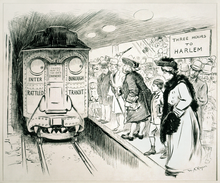 While London boasts the world’s oldest underground train network (opened in 1863) and Boston built the first subway in the United States in 1897, the New York City subway soon became the largest American system. The first line, operated by the Interborough Rapid Transit Company (IRT), traveled 9.1 miles through 28 stations. Running from City Hall in lower Manhattan to Grand Central Terminal in midtown, and then heading west along 42nd Street to Times Square, the line finished by zipping north, all the way to 145th Street and Broadway in Harlem. On opening day, Mayor McClellan so enjoyed his stint as engineer that he stayed at the controls all the way from City Hall to 103rd Street.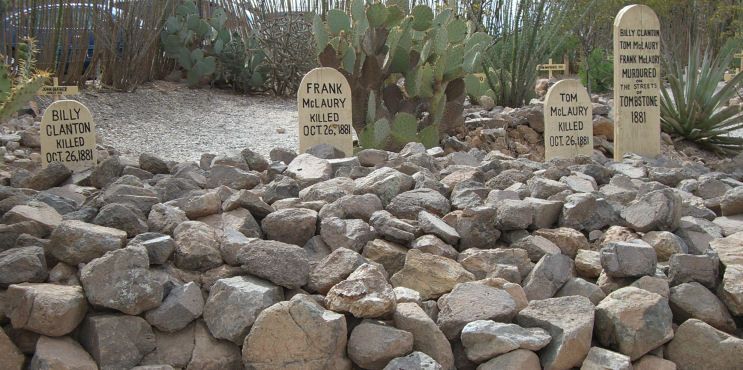
 A few weeks following the grand jury refusal to indict, Virgil Earp was shot by hidden assailants from an unused building at night – a wound causing him complete loss of the use of his left arm. Three months later Morgan Earp was murdered by a shot in the back in Tombstone by men shooting from a dark alley.
 Later in 1887, just over six years from the time of the O.K. fight, Doc Holliday died of tuberculosis in Glenwood Springs, Colorado, aged 36.
 The issue of fault at the O.K. Corral shooting has been hotly debated over the years. To this day, Pro-Earp followers view the gunfight as a struggle between “Law-and-order” against out-of-control Cowboys; Pro-Clanton/McLaury followers view it as a political vendetta and abuse of authority.
 Despite the anger that the American public felt towards the United Kingdom after the British Parliament established the Coercive Acts, called the
 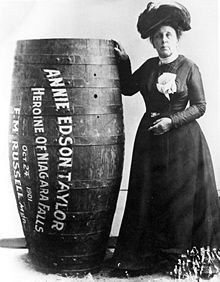 Desiring to secure her later years financially, she decided she would be the
  According to the official records of the Army Graves Registration Service deposited in the U.S. National Archives in Washington, four bodies were transported to Chalons from the cemeteries of Aisne-Marne, Somme, Meuse-Argonne and Saint-Mihiel. All were great battlegrounds, and the latter two regions were the sites of two offensive operations in which American troops took a leading role in the decisive summer and fall of 1918. As the service records stated, the identity of the bodies was completely unknown: “The original records showing the internment of these bodies were searched and the four bodies selected represented the remains of soldiers of which there was absolutely no indication as to name, rank, organization or date of death.”
 Bearing the inscription “An Unknown American who gave his life in the World War,” the chosen casket traveled to Paris and then to Le Havre, France, where it would board the cruiser Olympia for the voyage across the Atlantic. Once back in the United States, the Unknown Soldier was buried in Arlington National Cemetery, near Washington, D.C.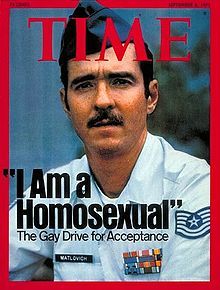
 On June 22, 1988, less than a month before his 45th birthday, Matlovich died of complications from HIV/AIDS beneath a large photo of Martin Luther King, Jr. His tombstone, meant to be a memorial to all gay veterans, does not bear his name. It reads, “When I was in the military, they gave me a medal for killing two men and a discharge for loving one.” Matlovich’s tombstone at Congressional Cemetery is on the same row as that of FBI Director
Recent Comments