
This is your morning Open Thread. Pour your favorite beverage and review the past and comment on the future.
Find the past “On This Day in History” here.
October 21 is the 294th day of the year (295th in leap years) in the Gregorian calendar. There are 71 days remaining until the end of the year.
On this day in 1959, On this day in 1959, on New York City’s Fifth Avenue, thousands of people line up outside a bizarrely shaped white concrete building that resembled a giant upside-down cupcake. It was opening day at the new Guggenheim Museum, home to one of the world’s top collections of contemporary art.
Guided by his art adviser, the German painter Hilla Rebay, Solomon Guggenheim began to collect works by nonobjective artists in 1929. (For Rebay, the word “nonobjective” signified the spiritual dimensions of pure abstraction.) Guggenheim first began to show his work from his apartment, and as the collection grew, he established The Solomon R. Guggenheim Foundation in 1937. Guggenheim and Rebay opened the foundation for the “promotion and encouragement and education in art and the enlightenment of the public.” Chartered by the Board of Regents of New York State, the Foundation was endowed to operate one or more museums; Solomon Guggenheim was elected its first President and Rebay its Director.
In 1939, the Guggenheim Foundation’s first museum, “The Museum of Non-Objective Painting”, opened in rented quarters at 24 East Fifty-Fourth Street in New York and showcased art by early modernists such as Rudolf Bauer, Hilla Rebay, Wassily Kandinsky, and Piet Mondrian. During the life of Guggenheim’s first museum, Guggenheim continued to add to his collection, acquiring paintings by Marc Chagall, Robert Delaunay, Fernand Leger, Amedeo Modigliani and Pablo Picasso. The collection quickly outgrew its original space, so in 1943, Rebay and Guggenheim wrote a letter to Frank Lloyd Wright pleading him to design a permanent structure for the collection. It took Wright 15 years, 700 sketches, and six sets of working drawings to create the museum. While Wright was designing the museum Rebay was searching for sites where the museum would reside. Where the museum now stands was its original chosen site by Rebay which is at the corners of 89th Street and Fifth Avenue (overlooking Central Park). On October 21, 1959, ten years after the death of Solomon Guggenheim and six months after the death of Frank Lloyd Wright the Museum opened its doors for the first time to the general public.
The distinctive building, Wright’s last major work, instantly polarized architecture critics upon completion, though today it is widely revered. From the street, the building looks approximately like a white ribbon curled into a cylindrical stack, slightly wider at the top than the bottom. Its appearance is in sharp contrast to the more typically boxy Manhattan buildings that surround it, a fact relished by Wright who claimed that his museum would make the nearby Metropolitan Museum of Art “look like a Protestant barn.”
Internally, the viewing gallery forms a gentle helical spiral from the main level up to the top of the building. Paintings are displayed along the walls of the spiral and also in exhibition space found at annex levels along the way.
Most of the criticism of the building has focused on the idea that it overshadows the artworks displayed within, and that it is particularly difficult to properly hang paintings in the shallow windowless exhibition niches that surround the central spiral. Although the rotunda is generously lit by a large skylight, the niches are heavily shadowed by the walkway itself, leaving the art to be lit largely by artificial light. The walls of the niches are neither vertical nor flat (most are gently concave), meaning that canvasses must be mounted proud of the wall’s surface. The limited space within the niches means that sculptures are generally relegated to plinths amid the main spiral walkway itself. Prior to its opening, twenty-one artists, including Willem de Kooning and Robert Motherwell, signed a letter protesting the display of their work in such a space.


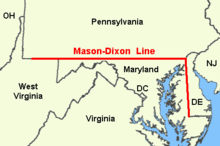 Charles Mason and Jeremiah Dixon complete their survey of the boundary between the colonies of Pennsylvania and Maryland as well as areas that would eventually become the states of Delaware and West Virginia. The Penn and Calvert families had hired Mason and Dixon, English surveyors, to settle their dispute over the boundary between their two proprietary colonies, Pennsylvania and Maryland.
 Congress, and a majority of the American public, had not been supportive of the Reagan administration’s efforts to topple the Sandinista government in Nicaragua. Reagan began a “secret war” to bring down the Nicaraguan government soon after taking office in 1981. Millions of dollars, training, and arms were funneled to the Contras (an armed force of Nicaraguan exiles intent on removing the leftist Nicaraguan regime) through the CIA. American involvement in the Contra movement soon became public, however, as did disturbing reports about the behavior of the Contra force. Charges were leveled in newspapers and in Congress that the Contras were little more than murderers and drug runners; rumors of corruption and payoffs were common. Congress steadily reduced U.S. assistance to the Contras, and in 1984 passed the second Boland Amendment prohibiting U.S. agencies from giving any aid to the group.
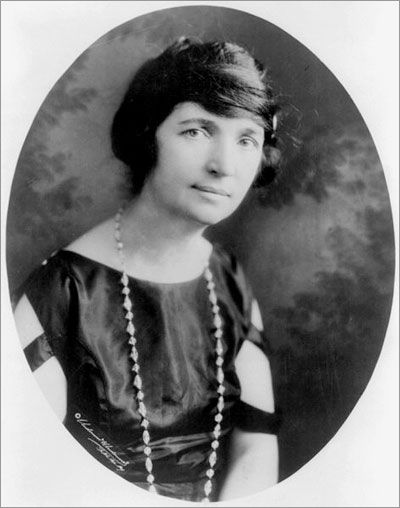 It was raided 9 days later by the police. She served 30 days in prison. An initial appeal was rejected but in 1918 an opinion written by Judge Frederick E. Crane of the New York Court of Appeals allowed doctors to prescribe contraception.
 On this day in 1815,
 The Bavarian royalty invited the citizens of Munich to attend the festivities, held on the fields in front of the city gates. These famous public fields were named Theresienwiese-“Therese’s fields”-in honor of the crown princess; although locals have since abbreviated the name simply to the “Wies’n.” Horse races in the presence of the royal family concluded the popular event, celebrated in varying forms all across Bavaria.
Recent Comments