
This is your morning Open Thread. Pour a cup of your favorite morning beverage and review the past and comment on the future.
Find the past “On This Day in History” here.
August 29 is the 241st day of the year (242nd in leap years) in the Gregorian calendar. There are 124 days remaining until the end of the year.
On this day in 1533, the 300 year old Inca civilization ended when Francisco Pizarro’s conquistadors strangled the last Inca Emperor, Atahuallpa.
High in the Andes Mountains of Peru, the Inca built a dazzling empire that governed a population of 12 million people. Although they had no writing system, they had an elaborate government, great public works, and a brilliant agricultural system. In the five years before the Spanish arrival, a devastating war of succession gripped the empire. In 1532, Atahuallpa’s army defeated the forces of his half-brother HuÁscar in a battle near Cuzco. Atahuallpa was consolidating his rule when Pizarro and his 180 soldiers appeared.
In 1531, Pizarro sailed down to Peru, landing at Tumbes. He led his army up the Andes Mountains and on November 15, 1532, reached the Inca town of Cajamarca, where Atahuallpa was enjoying the hot springs in preparation for his march on Cuzco, the capital of his brother’s kingdom. Pizarro invited Atahuallpa to attend a feast in his honor, and the emperor accepted. Having just won one of the largest battles in Inca history, and with an army of 30,000 men at his disposal, Atahuallpa thought he had nothing to fear from the bearded white stranger and his 180 men. Pizarro, however, planned an ambush, setting up his artillery at the square of Cajamarca.
On November 16, Atahuallpa arrived at the meeting place with an escort of several thousand men, all apparently unarmed. Pizarro sent out a priest to exhort the emperor to accept the sovereignty of Christianity and Emperor Charles V., and Atahuallpa refused, flinging a Bible handed to him to the ground in disgust. Pizarro immediately ordered an attack. Buckling under an assault by the terrifying Spanish artillery, guns, and cavalry (all of which were alien to the Incas), thousands of Incas were slaughtered, and the emperor was captured.
Atahuallpa offered to fill a room with treasure as ransom for his release, and Pizarro accepted. Eventually, some 24 tons of gold and silver were brought to the Spanish from throughout the Inca empire. Although Atahuallpa had provided the richest ransom in the history of the world, Pizarro treacherously put him on trial for plotting to overthrow the Spanish, for having his half-brother HuÁscar murdered, and for several other lesser charges. A Spanish tribunal convicted Atahuallpa and sentenced him to die. On August 29, 1533, the emperor was tied to a stake and offered the choice of being burned alive or strangled by garrote if he converted to Christianity. In the hope of preserving his body for mummification, Atahuallpa chose the latter, and an iron collar was tightened around his neck until he died.
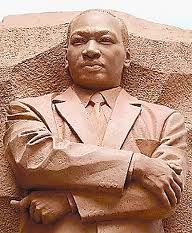 His speech,


 After centuries of dormancy, Mount Vesuvius erupts in southern Italy, devastating the prosperous Roman cities of Pompeii and Herculaneum and killing thousands. The cities, buried under a thick layer of volcanic material and mud, were never rebuilt and largely forgotten in the course of history. In the 18th century, Pompeii and Herculaneum were rediscovered and excavated, providing an unprecedented archaeological record of the everyday life of an ancient civilization, startlingly preserved in sudden death.
 Those that did not flee the city of Pompeii in August of 79 AD were doomed. Buried for 1700 years under 30 feet of mud and ash and reduced by the centuries to skeletons, they remained entombed until excavations in the early 1800s.


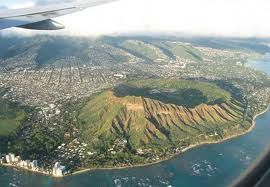 Hawaii’s natural beauty, warm tropical climate, inviting waters and waves, and active volcanoes make it a popular destination for tourists, surfers, biologists, and volcanologists alike. Due to its mid-Pacific location, Hawaii has many North American and Asian influences along with its own vibrant native culture. Hawaii has over a million permanent residents along with many visitors and U.S. military personnel. Its capital is Honolulu on the island of Oahu.
 On this day in 1911, a dispatcher in the New York Times office sends the first telegram around the world via commercial service. Exactly 66 years later, the National Aeronautics and Space Administration (NASA) sends a different kind of message–a phonograph record containing information about Earth for extraterrestrial beings–shooting into space aboard the unmanned spacecraft Voyager II.
 allowed it to be kept in the plane of the Ecliptic (the plane of the Solar System) so that it could be sent on to Uranus and Neptune by means of utilizing gravity assists during its fly-by of Saturn in 1981 and of Uranus in 1986. Because of this chosen trajectory, Voyager 2 could not take a close-up look at the large Saturnian moon Titan as its sister space probe had. However, Voyager 2 did become the first and only spacecraft to make the spaceflight by Uranus and Neptune, and hence completing the Planetary Grand Tour. This is one that is made practical by a seldom-occurring geometric alignment of the outer planets (happening once every 175 years).
Recent Comments