
This is your morning Open Thread. Pour your favorite beverage and review the past and comment on the future.
Find the past “On This Day in History” here.
October 15 is the 288th day of the year (289th in leap years) in the Gregorian calendar. There are 77 days remaining until the end of the year.
On this day in 1815, Napoleon Bonaparte begins his final exile on the Island of St. Helene.
Napoleon Bonaparte (15 August 1769 – 5 May 1821) was a military and political leader of France and Emperor of the French as Napoleon I, whose actions shaped European politics in the early 19th century.
Napoleon was born in Corsica to parents of minor noble Italian ancestry and trained as an artillery officer in mainland France. Bonaparte rose to prominence under the French First Republic and led successful campaigns against the First and Second Coalitions arrayed against France. In 1799, he staged a coup d’etat and installed himself as First Consul; five years later the French Senate proclaimed him emperor. In the first decade of the 19th century, the French Empire under Napoleon engaged in a series of conflicts-the Napoleonic Wars-involving every major European power. After a streak of victories, France secured a dominant position in continental Europe, and Napoleon maintained the French sphere of influence through the formation of extensive alliances and the appointment of friends and family members to rule other European countries as French client states.
The French invasion of Russia in 1812 marked a turning point in Napoleon’s fortunes. His Grande Armee was badly damaged in the campaign and never fully recovered. In 1813, the Sixth Coalition defeated his forces at Leipzig; the following year the Coalition invaded France, forced Napoleon to abdicate and exiled him to the island of Elba. Less than a year later, he escaped Elba and returned to power, but was defeated at the Battle of Waterloo in June 1815. Napoleon spent the last six years of his life in confinement by the British on the island of Saint Helena. An autopsy concluded he died of stomach cancer, though Sten Forshufvud and other scientists have since conjectured he was poisoned with arsenic.
Napoleon’s campaigns are studied at military academies the world over. While considered a tyrant by his opponents, he is also remembered for the establishment of the Napoleonic code, which laid the administrative and judicial foundations for much of Western Europe.

 The Bavarian royalty invited the citizens of Munich to attend the festivities, held on the fields in front of the city gates. These famous public fields were named Theresienwiese-“Therese’s fields”-in honor of the crown princess; although locals have since abbreviated the name simply to the “Wies’n.” Horse races in the presence of the royal family concluded the popular event, celebrated in varying forms all across Bavaria.
 The Mary Rose was a carrack-type warship of the English Tudor navy of King Henry VIII. After serving for 33 years in several wars against France, Scotland, and Brittany and after being substantially rebuilt in 1536, she saw her last action on 19 July 1545. While leading the attack on the galleys of a French invasion fleet, she sank in the Solent, the straits north of the Isle of Wight. The wreck of the Mary Rose was rediscovered in 1971 and salvaged in 1982 by the Mary Rose Trust in one of the most complex and expensive projects in the history of maritime archaeology. The surviving section of the ship and thousands of recovered artefacts are of immeasurable value as a Tudor-era time capsule.
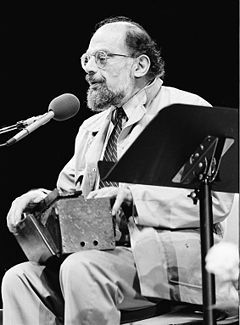
 The first feature-length motion picture with synchronized dialogue sequences, its release heralded the commercial ascendance of the “talkies” and the decline of the silent film era. Produced by Warner Bros. with its Vitaphone sound-on-disc system, the movie stars Al Jolson, who performs six songs. Directed by Alan Crosland, it is based on a play by Samson Raphaelson.
Recent Comments