
This is your morning Open Thread. Pour your favorite beverage and review the past and comment on the future.
Find the past “On This Day in History” here.
November 21 is the 325th day of the year (326th in leap years) in the Gregorian calendar. There are 40 days remaining until the end of the year.
On this day in 1934, Ella Fitzgerald wins Amateur Night at Harlem’s Apollo Theater. A young and gangly would-be dancer took to the stage of Harlem’s Apollo Theater to participate in a harrowing tradition known as Amateur Night. Finding herself onstage as a result of pure chance after her name was drawn out of a hat, the aspiring dancer spontaneously decided to turn singer instead-a change of heart that would prove momentous not only for herself personally, but also for the future course of American popular music. The performer in question was a teenaged Ella Fitzgerald, whose decision to sing rather than dance on this day in 1934 set her on a course toward becoming a musical legend. It also led her to victory at Amateur Night at the Apollo, a weekly event that was then just a little more than a year old but still thrives today
Ella Jane Fitzgerald (April 25, 1917 – June 15, 1996), also known as the “First Lady of Song” and “Lady Ella,” was an American jazz and song vocalist. With a vocal range spanning three octaves (Db3 to Db6), she was noted for her purity of tone, impeccable diction, phrasing and intonation, and a “horn-like” improvisational ability, particularly in her scat singing.
She is considered to be a notable interpreter of the Great American Songbook. Over a recording career that lasted 59 years, she was the winner of 14 Grammy Awards and was awarded the National Medal of Art by Ronald Reagan and the Presidential Medal of Freedom by George H. W. Bush.
 The Nuremberg Trials were conducted by an international tribunal made up of representatives from the United States, the Soviet Union, France, and Great Britain. It was the first trial of its kind in history, and the defendants faced charges ranging from crimes against peace, to crimes of war, to crimes against humanity. Lord Justice Geoffrey Lawrence, the British member, presided over the proceedings, which lasted 10 months and consisted of 216 court sessions.
 On November 19, 1863, at the dedication of a military cemetery at Gettysburg, Pennsylvania, during the American Civil War, President Abraham Lincoln delivers one of the most memorable speeches in American history. In just 272 words, Lincoln brilliantly and movingly reminded a war-weary public why the Union had to fight, and win, the Civil War.
 On this day in 1883,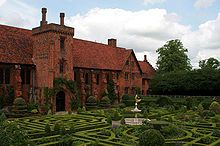

 Did the young Austrian nun named Maria really take to the hills surrounding Salzburg to sing spontaneously of her love of music? Did she comfort herself with thoughts of copper kettles, and did she swoon to her future husband’s song about an alpine flower while the creeping menace of Nazism spread across central Europe? No, the real-life Maria von Trapp did none of those things. She was indeed a former nun, and she did indeed marry Count Georg von Trapp and become stepmother to his large brood of children, but nearly all of the particulars she related in her 1949 book, The Story of the Trapp Family Singers, were ignored by the creators of the Broadway musical her memoir inspired. And while the liberties taken by the show’s writers, Howard Lindsay and Russel Crouse, and by its composer and lyricist, Richard Rodgers and Oscar Hammerstein II, caused some consternation to the real Maria von Trapp and to her stepchildren, according to many later reports, those liberties made The Sound of Music a smash success from the very night of its Broadway opening on this day in 1959.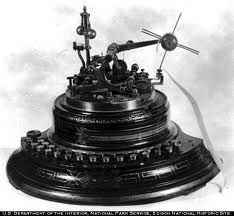
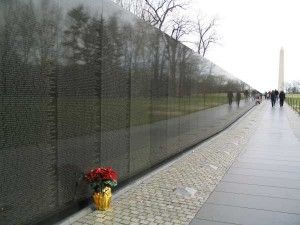
 Inscribed on the walls with the Optima typeface are the names of servicemen who were either confirmed to be KIA (Killed in Action) or remained classified as MIA (Missing in Action) when the walls were constructed in 1982. They are listed in chronological order, starting at the apex on panel 1E in 1959 (although it was later discovered that the first casualties were military advisers who were killed by artillery fire in 1957), moving day by day to the end of the eastern wall at panel 70E, which ends on May 25, 1968, starting again at panel 70W at the end of the western wall which completes the list for May 25, 1968, and returning to the apex at panel 1W in 1975. Symbolically, this is described as a “wound that is closed and healing.” Information about rank, unit, and decorations are not given. The wall listed 58,159 names when it was completed in 1993; as of June 2010, there are 58,267 names, including 8 women. Approximately 1,200 of these are listed as missing (MIAs, POWs, and others), denoted with a cross; the confirmed dead are marked with a diamond. If the missing return alive, the cross is circumscribed by a circle (although this has never occurred as of March 2009); if their death is confirmed, a diamond is superimposed over the cross. According to the Vietnam Veterans Memorial Fund, “there is no definitive answer to exactly how many, but there could be as many as 38 names of personnel who survived, but through clerical errors, were added to the list of fatalities provided by the Department of Defense.” Directories are located on nearby podiums so that visitors may locate specific names.
Recent Comments