
Find the past “On This Day in History” here.
November 1 is the 305th day of the year (306th in leap years) in the Gregorian calendar. There are 60 days remaining until the end of the year.
On this day in 1512, the ceiling of the Sistine Chapel in Rome, one of Italian artist Michelangelo’s finest works, is exhibited to the public for the first time.
Michelangelo Buonarroti was commissioned by Pope Julius II in 1508 to repaint the vault, or ceiling, of the Chapel. It was originally painted as golden stars on a blue sky. The work was completed between 1508 and 2 November 1512. He painted the Last Judgment over the altar, between 1535 and 1541, on commission from Pope Paul III Farnese.
Michelangelo was intimidated by the scale of the commission, and made it known from the outset of Julius II’s approach that he would prefer to decline. He felt he was more of a sculptor than a painter, and was suspicious that such a large-scale project was being offered to him by enemies as a set-up for an inevitable fall. For Michelangelo, the project was a distraction from the major marble sculpture that had preoccupied him for the previous few years.To be able to reach the ceiling, Michelangelo needed a support; the first idea was by Julius’ favoured architect Donato Bramante, who wanted to build for him a scaffold to be suspended in the air with ropes. However, Bramante did not successfully complete the task, and the structure he built was flawed. He had perforated the vault in order to lower strings to secure the scaffold. Michelangelo laughed when he saw the structure, and believed it would leave holes in the ceiling once the work was ended. He asked Bramante what was to happen when the painter reached the perforations, but the architect had no answer.
The matter was taken before the Pope, who ordered Michelangelo to build a scaffold of his own. Michelangelo created a flat wooden platform on brackets built out from holes in the wall, high up near the top of the windows. He stood on this scaffolding while he painted.
Michelangelo used bright colours, easily visible from the floor. On the lowest part of the ceiling he painted the ancestors of Christ. Above this he alternated male and female prophets, with Jonah over the altar. On the highest section, Michelangelo painted nine stories from the Book of Genesis. He was originally commissioned to paint only 12 figures, the Apostles. He turned down the commission because he saw himself as a sculptor, not a painter. The Pope offered to allow Michelangelo to paint biblical scenes of his own choice as a compromise. After the work was finished, there were more than 300. His figures showed the creation, Adam and Eve in the Garden of Eden, and the Great Flood.
 Houdini was born Erik Weisz in Budapest in 1874, the son of a rabbi. At a young age, he immigrated with his family to Appleton, Wisconsin, and soon demonstrated a natural acrobatic ability and an extraordinary skill at picking locks.
 The eyewitnesses, students named Jacques Price and Sam Smilovitz (sometimes called Jack Price and Sam Smiley), proferred accounts of the incident that generally corroborated one another. The following is Price’s description of events:
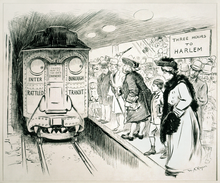 While London boasts the world’s oldest underground train network (opened in 1863) and Boston built the first subway in the United States in 1897, the New York City subway soon became the largest American system. The first line, operated by the Interborough Rapid Transit Company (IRT), traveled 9.1 miles through 28 stations. Running from City Hall in lower Manhattan to Grand Central Terminal in midtown, and then heading west along 42nd Street to Times Square, the line finished by zipping north, all the way to 145th Street and Broadway in Harlem. On opening day, Mayor McClellan so enjoyed his stint as engineer that he stayed at the controls all the way from City Hall to 103rd Street.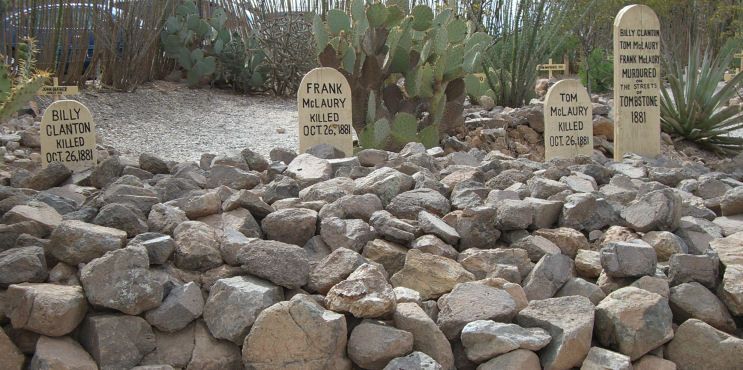
 A few weeks following the grand jury refusal to indict, Virgil Earp was shot by hidden assailants from an unused building at night – a wound causing him complete loss of the use of his left arm. Three months later Morgan Earp was murdered by a shot in the back in Tombstone by men shooting from a dark alley.
 Later in 1887, just over six years from the time of the O.K. fight, Doc Holliday died of tuberculosis in Glenwood Springs, Colorado, aged 36.
 The issue of fault at the O.K. Corral shooting has been hotly debated over the years. To this day, Pro-Earp followers view the gunfight as a struggle between “Law-and-order” against out-of-control Cowboys; Pro-Clanton/McLaury followers view it as a political vendetta and abuse of authority.
 Despite the anger that the American public felt towards the United Kingdom after the British Parliament established the Coercive Acts, called the
 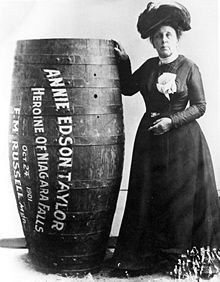 Desiring to secure her later years financially, she decided she would be the
  According to the official records of the Army Graves Registration Service deposited in the U.S. National Archives in Washington, four bodies were transported to Chalons from the cemeteries of Aisne-Marne, Somme, Meuse-Argonne and Saint-Mihiel. All were great battlegrounds, and the latter two regions were the sites of two offensive operations in which American troops took a leading role in the decisive summer and fall of 1918. As the service records stated, the identity of the bodies was completely unknown: “The original records showing the internment of these bodies were searched and the four bodies selected represented the remains of soldiers of which there was absolutely no indication as to name, rank, organization or date of death.”
 Bearing the inscription “An Unknown American who gave his life in the World War,” the chosen casket traveled to Paris and then to Le Havre, France, where it would board the cruiser Olympia for the voyage across the Atlantic. Once back in the United States, the Unknown Soldier was buried in Arlington National Cemetery, near Washington, D.C.
Recent Comments