
This is your morning Open Thread. Pour your favorite beverage and review the past and comment on the future.
Find the past “On This Day in History” here.
November 3 is the 307th day of the year (308th in leap years) in the Gregorian calendar. There are 58 days remaining until the end of the year.
On this day in 1964, residents of the District of Columbia cast their ballots in a presidential election for the first time. The passage of the 23rd Amendment in 1961 gave citizens of the nation’s capital the right to vote for a commander in chief and vice president. They went on to help Democrat Lyndon Johnson defeat Republican Barry Goldwater in 1964, the next presidential election.
Washington, D.C., formally the District of Columbia and commonly referred to as Washington, the District, or simply D.C., is the capital of the United States, founded on July 16, 1790. Article One of the United States Constitution provides for a federal district, distinct from the states, to serve as the permanent national capital. The City of Washington was originally a separate municipality within the federal territory until an act of Congress in 1871 established a single, unified municipal government for the whole District. It is for this reason that the city, while legally named the District of Columbia, is known as Washington, D.C. Named in honor of George Washington, the city shares its name with the U.S. state of Washington located on the country’s Pacific coast.
On July 16, 1790, the Residence Act provided for a new permanent capital to be located on the Potomac River, the exact area to be selected by President Washington. As permitted by the U.S. Constitution, the initial shape of the federal district was a square, measuring 10 miles (16 km) on each side, totaling 100 square miles (260 km2). During 1791-92, Andrew Ellicott and several assistants, including Benjamin Banneker, surveyed the border of the District with both Maryland and Virginia, placing boundary stones at every mile point. Many of the stones are still standing. A new “federal city” was then constructed on the north bank of the Potomac, to the east of the established settlement at Georgetown. On September 9, 1791, the federal city was named in honor of George Washington, and the district was named the Territory of Columbia, Columbia being a poetic name for the United States in use at that time. Congress held its first session in Washington on November 17, 1800.
The Organic Act of 1801 officially organized the District of Columbia and placed the entire federal territory, including the cities of Washington, Georgetown, and Alexandria, under the exclusive control of Congress. Further, the unincorporated territory within the District was organized into two counties: the County of Washington to the east of the Potomac and the County of Alexandria to the west. Following this Act, citizens located in the District were no longer considered residents of Maryland or Virginia, thus ending their representation in Congress.
The Twenty-third Amendment to the United States Constitution was ratified in 1961, granting the District three votes in the Electoral College for the election of President and Vice President, but still no voting representation in Congress.
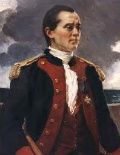 After departing Brest, Jones successfully executed raids on two forts in England’s Whitehaven Harbor, despite a disgruntled crew more interested in “gain than honor.” Jones then continued to his home territory of Kirkcudbright Bay, Scotland, where he intended to abduct the earl of Selkirk and then exchange him for American sailors held captive by Britain. Although he did not find the earl at home, Jones’ crew was able to steal all his silver, including his wife’s teapot, still containing her breakfast tea. From Scotland, Jones sailed across the Irish Sea to Carrickfergus, where the Ranger captured the HMS Drake after delivering fatal wounds to the British ship’s captain and lieutenant.
 Houdini was born Erik Weisz in Budapest in 1874, the son of a rabbi. At a young age, he immigrated with his family to Appleton, Wisconsin, and soon demonstrated a natural acrobatic ability and an extraordinary skill at picking locks.
 The eyewitnesses, students named Jacques Price and Sam Smilovitz (sometimes called Jack Price and Sam Smiley), proferred accounts of the incident that generally corroborated one another. The following is Price’s description of events:
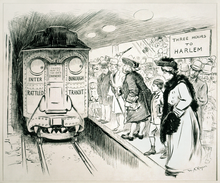 While London boasts the world’s oldest underground train network (opened in 1863) and Boston built the first subway in the United States in 1897, the New York City subway soon became the largest American system. The first line, operated by the Interborough Rapid Transit Company (IRT), traveled 9.1 miles through 28 stations. Running from City Hall in lower Manhattan to Grand Central Terminal in midtown, and then heading west along 42nd Street to Times Square, the line finished by zipping north, all the way to 145th Street and Broadway in Harlem. On opening day, Mayor McClellan so enjoyed his stint as engineer that he stayed at the controls all the way from City Hall to 103rd Street.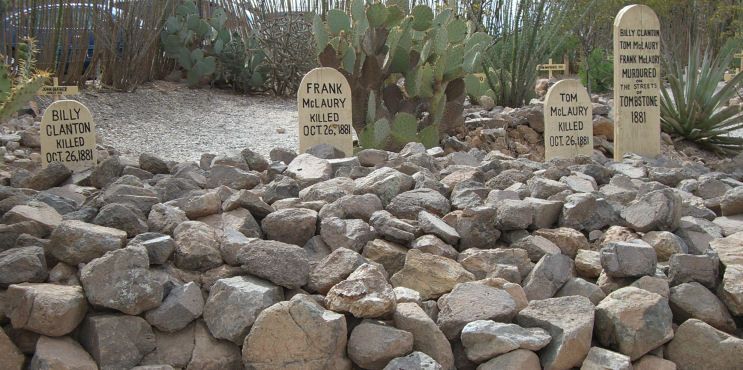
 A few weeks following the grand jury refusal to indict, Virgil Earp was shot by hidden assailants from an unused building at night – a wound causing him complete loss of the use of his left arm. Three months later Morgan Earp was murdered by a shot in the back in Tombstone by men shooting from a dark alley.
 Later in 1887, just over six years from the time of the O.K. fight, Doc Holliday died of tuberculosis in Glenwood Springs, Colorado, aged 36.
 The issue of fault at the O.K. Corral shooting has been hotly debated over the years. To this day, Pro-Earp followers view the gunfight as a struggle between “Law-and-order” against out-of-control Cowboys; Pro-Clanton/McLaury followers view it as a political vendetta and abuse of authority.
 Despite the anger that the American public felt towards the United Kingdom after the British Parliament established the Coercive Acts, called the
Recent Comments