
This is your morning Open Thread. Pour your favorite beverage and review the past and comment on the future.
Find the past “On This Day in History” here.
October 24 is the 297th day of the year (298th in leap years) in the Gregorian calendar. There are 68 days remaining until the end of the year.
On this day in 1901, a 63-year-old schoolteacher named Annie Edson Taylor becomes the first person to take the plunge over Niagara Falls in a barrel. After her husband died in the Civil War, the New York-born Taylor moved all over the U. S. before settling in Bay City, Michigan, around 1898. In July 1901, while reading an article about the Pan-American Exposition in Buffalo, she learned of the growing popularity of two enormous waterfalls located on the border of upstate New York and Canada. Strapped for cash and seeking fame, Taylor came up with the perfect attention-getting stunt: She would go over Niagara Falls in a barrel.
Desiring to secure her later years financially, she decided she would be the first person to ride Niagara Falls in a barrel. Taylor used a custom-made barrel for her trip, constructed of oak and iron and padded with a mattress. Several delays occurred in the launching of the barrel, particularly because no one wanted to be part of a potential suicide. Two days before Taylor’s own attempt, a domestic cat was sent over the Horseshoe Falls in her barrel to test its strength. Contrary to rumors at the time, the cat survived the plunge unharmed and later was posed with Taylor in photographs.
On October 24, 1901, her 63rd birthday, the barrel was put over the side of a rowboat, and Taylor climbed in, along with her lucky heart-shaped pillow. After screwing down the lid, friends used a bicycle tire pump to compress the air in the barrel. The hole used for this was plugged with a cork, and Taylor was set adrift near the American shore, south of Goat Island.
The Niagara River currents carried the barrel toward the Canadian Horseshoe Falls, which has since been the site for all daredevil stunting at Niagara Falls. Rescuers reached her barrel shortly after the plunge. Taylor was discovered to be alive and relatively uninjured, save for a small gash on her head. The trip itself took less than twenty minutes, but it was some time before the barrel was actually opened. After the journey, Annie Taylor told the press:
If it was with my dying breath, I would caution anyone against attempting the feat… I would sooner walk up to the mouth of a cannon, knowing it was going to blow me to pieces than make another trip over the Fall.
She briefly earned money speaking about her experience, but was never able to build much wealth. Her manager, Frank M. Russell, decamped with her barrel, and most of her savings were used towards private detectives hired to find it. It was eventually located in Chicago, only to permanently disappear some time later.
Annie Taylor died on April 29, 1921, aged 82, at the Niagara County Infirmary in Lockport, New York. She is interred in the “Stunters Section” of Oakwood Cemetery in Niagara Falls, New York.
 According to the official records of the Army Graves Registration Service deposited in the U.S. National Archives in Washington, four bodies were transported to Chalons from the cemeteries of Aisne-Marne, Somme, Meuse-Argonne and Saint-Mihiel. All were great battlegrounds, and the latter two regions were the sites of two offensive operations in which American troops took a leading role in the decisive summer and fall of 1918. As the service records stated, the identity of the bodies was completely unknown: “The original records showing the internment of these bodies were searched and the four bodies selected represented the remains of soldiers of which there was absolutely no indication as to name, rank, organization or date of death.”
 Bearing the inscription “An Unknown American who gave his life in the World War,” the chosen casket traveled to Paris and then to Le Havre, France, where it would board the cruiser Olympia for the voyage across the Atlantic. Once back in the United States, the Unknown Soldier was buried in Arlington National Cemetery, near Washington, D.C.
 On June 22, 1988, less than a month before his 45th birthday, Matlovich died of complications from HIV/AIDS beneath a large photo of Martin Luther King, Jr. His tombstone, meant to be a memorial to all gay veterans, does not bear his name. It reads, “When I was in the military, they gave me a medal for killing two men and a discharge for loving one.” Matlovich’s tombstone at Congressional Cemetery is on the same row as that of FBI Director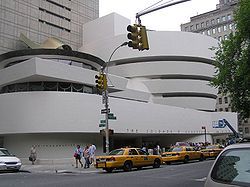
 In 1939, the Guggenheim Foundation’s first museum, “The Museum of Non-Objective Painting”, opened in rented quarters at 24 East Fifty-Fourth Street in New York and showcased art by early modernists such as
  Internally, the viewing gallery forms a gentle helical spiral from the main level up to the top of the building. Paintings are displayed along the walls of the spiral and also in exhibition space found at annex levels along the way.

 Charles Mason and Jeremiah Dixon complete their survey of the boundary between the colonies of Pennsylvania and Maryland as well as areas that would eventually become the states of Delaware and West Virginia. The Penn and Calvert families had hired Mason and Dixon, English surveyors, to settle their dispute over the boundary between their two proprietary colonies, Pennsylvania and Maryland.
 Congress, and a majority of the American public, had not been supportive of the Reagan administration’s efforts to topple the Sandinista government in Nicaragua. Reagan began a “secret war” to bring down the Nicaraguan government soon after taking office in 1981. Millions of dollars, training, and arms were funneled to the Contras (an armed force of Nicaraguan exiles intent on removing the leftist Nicaraguan regime) through the CIA. American involvement in the Contra movement soon became public, however, as did disturbing reports about the behavior of the Contra force. Charges were leveled in newspapers and in Congress that the Contras were little more than murderers and drug runners; rumors of corruption and payoffs were common. Congress steadily reduced U.S. assistance to the Contras, and in 1984 passed the second Boland Amendment prohibiting U.S. agencies from giving any aid to the group.
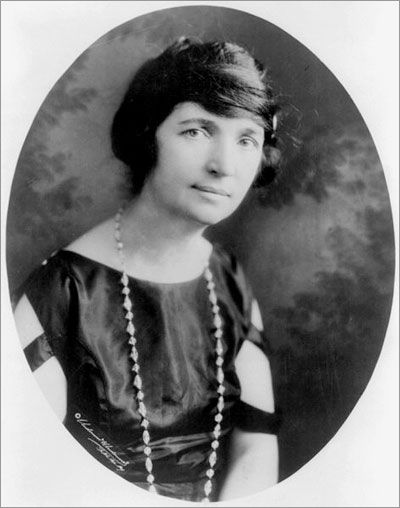 It was raided 9 days later by the police. She served 30 days in prison. An initial appeal was rejected but in 1918 an opinion written by Judge Frederick E. Crane of the New York Court of Appeals allowed doctors to prescribe contraception.
 On this day in 1815,
Recent Comments