
This is your morning Open Thread. Pour your favorite beverage and review the past and comment on the future.
Find the past “On This Day in History” here.
October 17 is the 290th day of the year (291st in leap years) in the Gregorian calendar. There are 75 days remaining until the end of the year.
On this day in 1986, President Ronald Reagan signs into law an act of Congress approving $100 million of military and “humanitarian” aid for the Contras. Unfortunately for the President and his advisors, the Iran-Contra scandal is just about to break wide open, seriously compromising their goal of overthrowing the leftist Sandinista government in Nicaragua.
Congress, and a majority of the American public, had not been supportive of the Reagan administration’s efforts to topple the Sandinista government in Nicaragua. Reagan began a “secret war” to bring down the Nicaraguan government soon after taking office in 1981. Millions of dollars, training, and arms were funneled to the Contras (an armed force of Nicaraguan exiles intent on removing the leftist Nicaraguan regime) through the CIA. American involvement in the Contra movement soon became public, however, as did disturbing reports about the behavior of the Contra force. Charges were leveled in newspapers and in Congress that the Contras were little more than murderers and drug runners; rumors of corruption and payoffs were common. Congress steadily reduced U.S. assistance to the Contras, and in 1984 passed the second Boland Amendment prohibiting U.S. agencies from giving any aid to the group.
The affair was composed of arms sales to Iran in violation of the official US policy of an arms embargo against Iran, and of using funds thus generated to arm and train the Contra militants based in Honduras as they waged a guerilla war to topple the government of Nicaragua. The Contras’ form of warfare was “one of consistent and bloody abuse of human rights, of murder, torture, mutilation, rape, arson, destruction and kidnapping.” The “Contras systematically engage in violent abuses… so prevalent that these may be said to be their principal means of waging war.” A Human Rights Watch report found that the Contras were guilty of targeting health care clinics and health care workers for assassination; kidnapping civilians; torturing and executing civilians, including children, who were captured in combat; raping women; indiscriminately attacking civilians and civilian homes; seizing civilian property; and burning civilian houses in captured towns.
Direct funding of the Contras insurgency had been made illegal through the Boland Amendment the name given to three U.S. legislative amendments between 1982 and 1984, all aimed at limiting US government assistance to the Contras militants. Senior officials of the Reagan administration decided to continue arming and training the Contras secretly and in violation of the law as enacted in the Boland Amendment. Senior Reagan administration officials started what they came to call “the Enterprise,” a project to raise money for their illegal funding of the Contras insurgency.
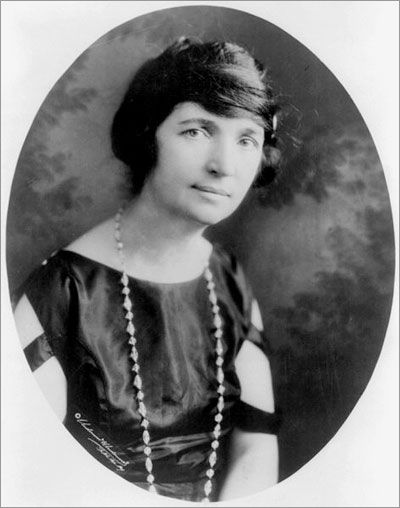 It was raided 9 days later by the police. She served 30 days in prison. An initial appeal was rejected but in 1918 an opinion written by Judge Frederick E. Crane of the New York Court of Appeals allowed doctors to prescribe contraception.
 On this day in 1815,
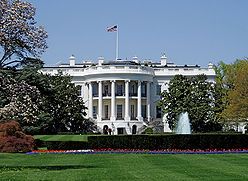
 The Bavarian royalty invited the citizens of Munich to attend the festivities, held on the fields in front of the city gates. These famous public fields were named Theresienwiese-“Therese’s fields”-in honor of the crown princess; although locals have since abbreviated the name simply to the “Wies’n.” Horse races in the presence of the royal family concluded the popular event, celebrated in varying forms all across Bavaria.
 The Mary Rose was a carrack-type warship of the English Tudor navy of King Henry VIII. After serving for 33 years in several wars against France, Scotland, and Brittany and after being substantially rebuilt in 1536, she saw her last action on 19 July 1545. While leading the attack on the galleys of a French invasion fleet, she sank in the Solent, the straits north of the Isle of Wight. The wreck of the Mary Rose was rediscovered in 1971 and salvaged in 1982 by the Mary Rose Trust in one of the most complex and expensive projects in the history of maritime archaeology. The surviving section of the ship and thousands of recovered artefacts are of immeasurable value as a Tudor-era time capsule.
Recent Comments