
One of the biggest drivers of health care costs to the patient is medication. Pharmaceutical companies who hold the patents often make minor changes in the drug to gain a new patent and applying for a new patent on essentially the same drug. This is called “evergreening.” A paper in PLOS examined the economic impact of this practice:
The researchers identified prescriptions of eight follow-on drugs issued by hospital and community pharmacists in Geneva between 2000 and 2008. To analyze the impact of evergreening strategies on healthcare spending, they calculated the market share score (an indicator of market competitiveness) for all prescriptions of the originally patented (brand) drug, the follow-on drug, and generic versions of the drug. The researchers then used hospital and community databases to analyze the costs of replacing brand and/or follow-on drugs with a corresponding generic drug (when available) under three scenarios (1) replacing all brand drug prescriptions, (2) replacing all follow-on drug prescriptions, and (3) replacing both follow-on and brand prescriptions. [..]
Using these methods, the researchers found that over the study period, the number of patients receiving either a brand or follow-on drug increased from 56,686 patients in 2001 to 131,193 patients in 2008. The total cost for all studied drugs was €171.5 million, of which €103.2 million was for brand drugs, €41.1 million was for follow-on drugs, and €27.2 million was for generic drugs. Based on scenario 1 (all brand drugs being replaced by generics) and scenario 2 (all follow-on drugs being replaced by generics), over the study period, the healthcare system could have saved €15.9 million and €14.4 million in extra costs, respectively. The researchers also found some evidence that hospital prescribing patterns (through a restrictive drug formulary [RDF]) influenced prescribing in the community: over the study period, the influence of hospital prescription patterns on the community resulted in an extra cost of €503,600 (mainly attributable to two drugs, esomeprazole and escitalopram). However, this influence also resulted in some savings because of a generic drug listed in the hospital formulary: use of the generic version of the drug cetirizine resulted in savings of €7,700.
(emphasis mine).
In a post at his blog, law professor Jonathan Turley explains how President Barack Obama has yielded to the pressures of the pharmaceutical industry and pushed to block access the inexpensive generic drugs, demanding India, one of the world’s largest suppliers of generic drugs, block production of the low cost medications:
Millions of Americans struggle on a daily basis to afford medicine in the United States which is the highest in the world. Many seek affordable drugs by driving to Canada or seeking medicine (as well as medical care) in India. Yet, one of the first things that President Obama did in the new health care law was to cave to a demand by the powerful pharmaceutical lobby to drop provisions guaranteeing cheaper medicine. The lobby then got Congress to block two measures to guarantee affordable medicine. With billions at stake, Congress and the White House again yielded to the demands of this industry, which is sapping the life savings away of millions of families. Given this history, many are concerned about a meeting planned between Obama and the Prime Minister of India. Public interest groups object that Obama is threatening retaliation against India in the hopes of blocking one of the major alternatives for families in acquiring affordable medicine. Congress has also again responded to industry demands for pressure in India to change its laws and, as a result, raise the cost of medicine. Doctors Without Borders, a highly respected medical group, has denounced the effort of the Obama Administration as threatening basic health care for its own citizens and those around the world.
From Doctors Without Boarders press release:
On the eve of a meeting between US president Barack Obama and Indian prime minister Manmohan Singh at the White House, the international medical humanitarian organization Doctors Without Borders/Médecins Sans Frontières (MSF) today warned that India faces retaliatory political pressure from the US government and pharmaceutical industry for its efforts to legally limit abusive patenting practices and to increase access to affordable generic medicines.
Pharmaceutical companies are aggressively lobbying congress and the Obama administration in a broad campaign to press India into changing its intellectual property laws. India is a critical producer of affordable medicines, and competition among generic drug manufacturers there has brought down the price of medicines for HIV, TB, and cancer by more than 90 percent. [..]
The pharmaceutical lobby, led by Pfizer, is currently engaged in a concerted effort to pressure India to change its intellectual property laws. In June, 170 members of US congress wrote a letter to President Obama urging him to send a “strong signal” to India’s high-level officials about its intellectual property policies, and numerous congressional hearings have been held in the past year designed in part to criticize India’s robust defense of public health. Several interest groups have been created to lobby the US government about India’s policies and in early September, US congressional trade leaders requested that the US International Trade Commission initiate an official investigation on India’s intellectual property laws. [..]
Earlier this year, Novartis lost a seven-year-battle to claim a patent on the salt form of the cancer drug imatinib, marketed as Gleevec. The Indian Supreme Court ruled that this new formulation did not meet the patentability requirement in Indian patent law, which limits the common pharmaceutical industry practice of “evergreening,” or extending drug patents on existing drugs in order to lengthen monopolies. [..]
These decisions by the Indian judiciary and government are compliant with all existing international law, including those rules outlined in the World Trade Organization Agreement on Trade Related Aspects of Intellectual Property (TRIPS) and the Doha Declaration on TRIPS and Public Health. Both defend access to existing medicines by allowing countries to use legal flexibilities such as patent oppositions and compulsory licenses to overcome intellectual property barriers. Nevertheless, some US pharmaceutical companies are crying foul, and wrongly accusing India’s patent system of not being consistent with TRIPS.
(all emphasis mine)
As Prof. Turley points out, India is forcing down the cost of drugs making life saving drugs available to millions. If Big Pharma is successful the impact will be life threatening to millions around the world.
 Thomas Young was one of the first to attempt decipherment of the Egyptian hieroglyphs, basing his own work on the investigations of Swedish diplomat Akerblad, who built up a demotic alphabet of 29 letters (15 turned out to be correct) and translated all personal names and other words in the Demotic part of the Rosetta Stone in 1802. Akerblad however, wrongly believed that demotic was entirely phonetic or alphabetic. Young thought the same, and by 1814 he had completely translated the enchorial (which Champollion labeled Demotic as it is called today) text of the Rosetta Stone (he had a list with 86 demotic words). Young then studied the hieroglyphic alphabet and made some progress but failed to recognise that demotic and hieroglyphic texts were paraphrases and not simple translations. In 1823 he published an Account of the Recent Discoveries in Hieroglyphic Literature and Egyptian Antiquities. Some of Young’s conclusions appeared in the famous article Egypt he wrote for the 1818 edition of the Encyclopædia Britannica.
 The first Congress of the United States approves 12 amendments to the U.S. Constitution, and sends them to the states for ratification. The amendments, known as the Bill of Rights, were designed to protect the basic rights of U.S. citizens, guaranteeing the freedom of speech, press, assembly, and exercise of religion; the right to fair legal procedure and to bear arms; and that powers not delegated to the federal government were reserved for the states and the people.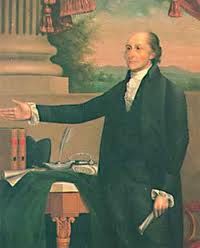
 . . . . Andre Malraux, the French minister of culture, commissioned him to design a new ceiling for the Paris Opera after seeing Chagall’s work in Daphnis et Chloe. Working with a surface of 560 square meters, Chagall divided the ceiling into color zones that he filled with landscapes and figures representing the luminaries of opera and ballet. The ceiling was unveiled on September 23, 1964, during a performance of the same Daphnis et Chloe. As usual, a few detractors condemned Chagall’s work as overly primitive, but this criticism was drowned out in the general acclaim for the work. In 1966, as a gift to the city that had sheltered him during World War II, he painted two vast murals for New York’s Metropolitan Opera House (1966).
 When the Civil War broke out in 1861, shortly after Lincoln’s inauguration as America’s 16th president, he maintained that the war was about restoring the Union and not about slavery. He avoided issuing an anti-slavery proclamation immediately, despite the urgings of abolitionists and radical Republicans, as well as his personal belief that slavery was morally repugnant. Instead, Lincoln chose to move cautiously until he could gain wide support from the public for such a measure.
Recent Comments