
This is your morning Open Thread. Pour your favorite beverage and review the past and comment on the future.
Find the past “On This Day in History” here.
November 6 is the 310th day of the year (311th in leap years) in the Gregorian calendar. There are 55 days remaining until the end of the year.
On this day in 1860, Abraham Lincoln is elected the 16th President of the United States over a deeply divided Democratic Party, becoming the first Republican to win the presidency. Lincoln received only 40 percent of the popular vote but handily defeated the three other candidates: Southern Democrat John C. Breckinridge, Constitutional Union candidate John Bell, and Northern Democrat Stephen Douglas, a U.S. senator for Illinois.
Lincoln received 1,866,452 votes, Douglas 1,376,957 votes, Breckinridge 849,781 votes, and Bell 588,789 votes. The electoral vote was decisive: Lincoln had 180 and his opponents added together had only 123. Turnout was 82.2%, with Lincoln winning the free Northern states. Douglas won Missouri, and split New Jersey with Lincoln. Bell won Virginia, Tennessee, and Kentucky, and Breckinridge won the rest of the South. There were fusion tickets in which all of Lincoln’s opponents combined to form one ticket in New York, New Jersey, and Rhode Island, but even if the anti-Lincoln vote had been combined in every state, Lincoln still would have won a majority in the electoral college.
As Lincoln’s election became evident, secessionists made clear their intent to leave the Union. On December 20, 1860, South Carolina took the lead; by February 1, 1861, Florida, Mississippi, Alabama, Georgia, Louisiana, and Texas followed. The seven states soon declared themselves to be a sovereign nation, the Confederate States of America. The upper South (Delaware, Maryland, Virginia, North Carolina, Tennessee, Kentucky, Missouri, and Arkansas) listened to, but initially rejected, the secessionist appeal. President Buchanan and President-elect Lincoln refused to recognize the Confederacy. There were attempts at compromise, such as the Crittenden Compromise, which would have extended the Missouri Compromise line of 1820, and which some Republicans even supported. Lincoln rejected the idea, saying, “I will suffer death before I consent…to any concession or compromise which looks like buying the privilege to take possession of this government to which we have a constitutional right.”
Lincoln, however, did support the Corwin Amendment to the Constitution, which had passed in Congress and protected slavery in those states where it already existed. A few weeks before the war, he went so far as to pen a letter to every governor asking for their support in ratifying the Corwin Amendment as a means to avoid secession.
 The British Egyptologist
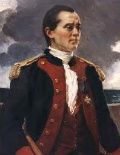 After departing Brest, Jones successfully executed raids on two forts in England’s Whitehaven Harbor, despite a disgruntled crew more interested in “gain than honor.” Jones then continued to his home territory of Kirkcudbright Bay, Scotland, where he intended to abduct the earl of Selkirk and then exchange him for American sailors held captive by Britain. Although he did not find the earl at home, Jones’ crew was able to steal all his silver, including his wife’s teapot, still containing her breakfast tea. From Scotland, Jones sailed across the Irish Sea to Carrickfergus, where the Ranger captured the HMS Drake after delivering fatal wounds to the British ship’s captain and lieutenant.
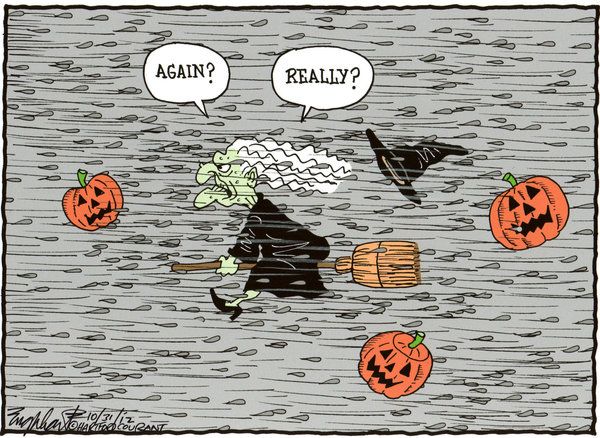 As you all must have noticed at this point ek hornbeck & I have been absent for the last few days. The good news is that we and our families are safe, sound & dry. That’s about it for the good news.
 Houdini was born Erik Weisz in Budapest in 1874, the son of a rabbi. At a young age, he immigrated with his family to Appleton, Wisconsin, and soon demonstrated a natural acrobatic ability and an extraordinary skill at picking locks.
 The eyewitnesses, students named Jacques Price and Sam Smilovitz (sometimes called Jack Price and Sam Smiley), proferred accounts of the incident that generally corroborated one another. The following is Price’s description of events:
Recent Comments