
Native American activist, Russell Means, 72, died early yesterday of advanced esophageal cancer at his ranch in Porcupine, S.D., on the Pine Ridge Indian Reservation. Mr. Means, an Oglala Sioux, was born in Pine Ridge and raised in the San Francisco bay area where his family relocated to escape the poverty of the reservation when he was three. He was a troubled youth, graduating high school but never finishing college. After his father’s death, he returned to living on reservations and found his niche in the American Indian Movement (AIM) in Minneapolis. In his 1995 autobiography, Where White Men Fear to Tread, Mr. Means recounts his journey from rage to healing.
He had become active for Native American rights in California where in 1964 he participated, along with his father, in the occupation of Alcatraz, reclaiming the abandoned island for the Sioux nation. He rose to national attention in 1970 with the occupation of the Mayflower II replica in Boston Harbor and a year later, he was one of the leaders of the take over of Mount Rushmore.
But it was in 1973, along with Dennis Banks and Charles Camp, that Mr. Means got the most national attention when he became the spokesman for the occupation of Wounded Knee S.D., site of the 1890 massacre of some 350 Lakota men, women and children in the last major conflict of the American Indian wars. The armed occupation by Native Americans and white sympathizers, lasted 71 days with thousands of shots fired, two deaths and a federal agent left paralyzed.
Mr. Means and his fellow protest leader Dennis Banks were charged with assault, larceny and conspiracy. But after a long federal trial in Minnesota in 1974, with the defense raising current and historic Indian grievances, the case was dismissed by a judge for prosecutorial misconduct.
Mr. Means was also an active politician, running for nomination of President of the United States under the Libertarian Party in 1987, losing to Ron Paul, whom he endorsed this year for president. He became involved in the international movement to protect the rights of indigenous people, working with the United Nations to establish the offices of the International Indian Treaty Council in 1977. In 1985 and 1986, he went to Nicaragua to support indigenous Miskito Indians whose autonomy was threatened by the leftist Sandinista government. He reported Sandinista atrocities against the Indians and urged the Reagan administration to aid the victims. Millions in aid went to some anti-Sandinista groups, but a leader of the Miskito Indian rebels, Brooklyn Rivera, said his followers had not received any of that aid.
Starting in 1992, Mr. Means, a ruggedly handsome man with a scarred face, dark eyes and raven braids that fell ti his waist, turned to acting. In his most famous roles, he played chief “Chingachgook” in The Last of the Mohicans, and in Natural Born Killers, among others for television and videos.
A few months before receiving his cancer diagnosis, in a gesture of what he called mourning for the Lakota nation, Mr. Means cut off his braids explaining “the hair holds memories, and mourners often cut it to release those memories, and the people in them, to the spirit world.”
Russell Means on Reservation Life and Dying Languages from WildHeart Vision on Vimeo.
Mr. Means was married five times; the first four marriages ended in divorce. He was married to his fifth wife, Pearl Means until his death. He had a total of ten children and adopted many others in the Lakota tradition.
In their statement announcing Mr. Means’ passage to the spirit world his family extended an invitation to honor his life:
October 22, 2012…Porcupine, SD USA
Honoring the Life of Russell Means
The family of Russell Means invites you to join us in “Honoring the Life of Russell Means”. The honoring will highlight his life, leadership and the eternal fire that he re-ignited throughout Indian Country.
October 24, 2012, begins at 10:00 a.m. to 10:00 p.m. MST, at Little Wound High School Gymnasium in Kyle, South Dakota USA, on the Pine Ridge Indian Reservation.
Russell Means, a self-described “Oglala Freedom Fighter”, began his journey to the spirit world at 4:44 am, with the Morning Star, at his home and ranch in Porcupine.
This Honoring will be the first of four opportunities for the people to honor his life. The next three Honorings are tentatively scheduled as follows: 2nd Honoring at Wounded Knee ’73 Occupation Memorial (Feb 2013); 3rd Honoring at Wind Cave State Park, SD (June 2013); 4th Honoring on Russell’s birthday (Nov 10, 2013) at location to be determined. [..]
Contributions of star quilts, blankets and food to feed the people will be appreciated, and may be brought on Wednesday, October 22, directly to Little Wound High School, Kyle, South Dakota.
Financial contributions to advance the visionary work of Russell Means can be sent to:
TREATY Total Immersion Educational Endowment Fund
Administrative Office
P.O. Box 110
San José, NM 87565Paypal contributions can be made at: www.treatyschool.org
 According to the official records of the Army Graves Registration Service deposited in the U.S. National Archives in Washington, four bodies were transported to Chalons from the cemeteries of Aisne-Marne, Somme, Meuse-Argonne and Saint-Mihiel. All were great battlegrounds, and the latter two regions were the sites of two offensive operations in which American troops took a leading role in the decisive summer and fall of 1918. As the service records stated, the identity of the bodies was completely unknown: “The original records showing the internment of these bodies were searched and the four bodies selected represented the remains of soldiers of which there was absolutely no indication as to name, rank, organization or date of death.”
 Bearing the inscription “An Unknown American who gave his life in the World War,” the chosen casket traveled to Paris and then to Le Havre, France, where it would board the cruiser Olympia for the voyage across the Atlantic. Once back in the United States, the Unknown Soldier was buried in Arlington National Cemetery, near Washington, D.C.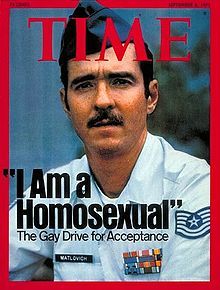
 On June 22, 1988, less than a month before his 45th birthday, Matlovich died of complications from HIV/AIDS beneath a large photo of Martin Luther King, Jr. His tombstone, meant to be a memorial to all gay veterans, does not bear his name. It reads, “When I was in the military, they gave me a medal for killing two men and a discharge for loving one.” Matlovich’s tombstone at Congressional Cemetery is on the same row as that of FBI Director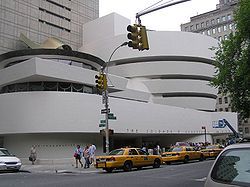
 In 1939, the Guggenheim Foundation’s first museum, “The Museum of Non-Objective Painting”, opened in rented quarters at 24 East Fifty-Fourth Street in New York and showcased art by early modernists such as
  Internally, the viewing gallery forms a gentle helical spiral from the main level up to the top of the building. Paintings are displayed along the walls of the spiral and also in exhibition space found at annex levels along the way.

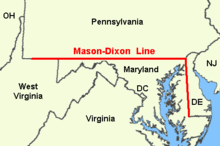 Charles Mason and Jeremiah Dixon complete their survey of the boundary between the colonies of Pennsylvania and Maryland as well as areas that would eventually become the states of Delaware and West Virginia. The Penn and Calvert families had hired Mason and Dixon, English surveyors, to settle their dispute over the boundary between their two proprietary colonies, Pennsylvania and Maryland.
 Congress, and a majority of the American public, had not been supportive of the Reagan administration’s efforts to topple the Sandinista government in Nicaragua. Reagan began a “secret war” to bring down the Nicaraguan government soon after taking office in 1981. Millions of dollars, training, and arms were funneled to the Contras (an armed force of Nicaraguan exiles intent on removing the leftist Nicaraguan regime) through the CIA. American involvement in the Contra movement soon became public, however, as did disturbing reports about the behavior of the Contra force. Charges were leveled in newspapers and in Congress that the Contras were little more than murderers and drug runners; rumors of corruption and payoffs were common. Congress steadily reduced U.S. assistance to the Contras, and in 1984 passed the second Boland Amendment prohibiting U.S. agencies from giving any aid to the group.
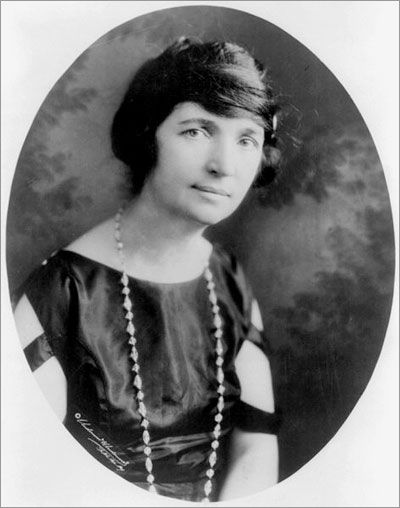 It was raided 9 days later by the police. She served 30 days in prison. An initial appeal was rejected but in 1918 an opinion written by Judge Frederick E. Crane of the New York Court of Appeals allowed doctors to prescribe contraception.
Recent Comments