
This is your morning Open Thread. Pour your favorite beverage and review the past and comment on the future.
Find the past “On This Day in History” here.
April 1 is the 91st day of the year (92nd in leap years) in the Gregorian calendar. There are 274 days remaining until the end of the year. April 1 is most notable in the Western world for being April Fools’ Day.
On this day in 1700, English pranksters begin popularizing the annual tradition of April Fools’ Day by playing practical jokes on each other.
Although the day, also called All Fools’ Day, has been celebrated for several centuries by different cultures, its exact origins remain a mystery. Some historians speculate that April Fools’ Day dates back to 1582, when France switched from the Julian calendar to the Gregorian calendar, as called for by the Council of Trent in 1563. People who were slow to get the news or failed to recognize that the start of the new year had moved to January 1 and continued to celebrate it during the last week of March through April 1 became the butt of jokes and hoaxes. These included having paper fish placed on their backs and being referred to as “poisson d’avril” (April fish), said to symbolize a young, easily caught fish and a gullible person.
Historians have also linked April Fools’ Day to ancient festivals such as Hilaria, which was celebrated in Rome at the end of March and involved people dressing up in disguises. There’s also speculation that April Fools’ Day was tied to the vernal equinox, or first day of spring in the Northern Hemisphere, when Mother Nature fooled people with changing, unpredictable weather.
April Fools’ Day is celebrated all around the world on the April 1 of every year. Sometimes referred to as All Fools’ Day, April 1 is not a national holiday, but is widely recognized and celebrated as a day where everyone plays all kind of joke and foolishness. The day is marked by the commission of good humoured or funny jokes, hoaxes, and other practical jokes of varying sophistication on friends, family members, teachers, neighbors, work associates, etc.
Traditionally, in some countries such as New Zealand, Ireland, the UK, Australia, and South Africa, the jokes only last until noon, and someone who plays a trick after noon is called an “April Fool”.
Elsewhere, such as in France, Italy, South Korea, Japan, Russia, The Netherlands, Germany, Brazil, Canada, and the U.S., the jokes last all day. The earliest recorded association between April 1 and foolishness can be found in Chaucer’s Canterbury Tales (1392). Many writers suggest that the restoration of the January 1 as New Year’s Day in the 16th century was responsible for the creation of the holiday, but this theory does not explain earlier references.
 On this day in 1776, future first lady
 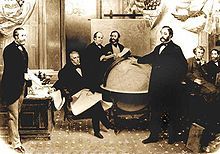 Russia was in a difficult financial position and feared losing Russian America without compensation in some future conflict, especially to the British, whom they had fought in the Crimean War (1853-1856). While Alaska attracted little interest at the time, the population of nearby British Columbia started to increase rapidly a few years after hostilities ended, with a large gold rush there prompting the creation of a crown colony on the mainland. The Russians therefore started to believe that in any future conflict with Britain, their hard-to-defend region might become a prime target, and would be easily captured. Therefore the Tsar decided to sell the territory. Perhaps in hopes of starting a bidding war, both the British and the Americans were approached, however the British expressed little interest in buying Alaska. The Russians in 1859 offered to sell the territory to the United States, hoping that its presence in the region would offset the plans of Russia’s greatest regional rival, Great Britain. However, no deal was brokered due to the American Civil War.
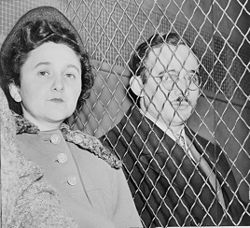 On this day in 1951,
 On this day in 1979,
  On this day in 1939,
Recent Comments