Vox Frustrati (Vol. 2): Blame

(2 PM – promoted by TheMomCat)


Welcome to the Vox Frustrati diary series.  Vox is a persona and this project is a collaboration by a group of people.

Vox Frustrati is here to give voice to our progressive concerns.  He welcomes correspondence from you at VoxFrustrati at gmail dot com.

If you have something to say, a rant, a comment or a question, Vox might decide to lend you his voice, either anonymously or with your byline. It is your choice.  Vox does reserve editorial rights.

Transcript


This is Vox Frustrati, a voice for progressives everywhere.

Vox thanks the many of you who wrote in with comments after his debut. Today we feature a piece sent in by a correspondent who wishes to remain anonymous. It is called: “The people are not to blame”.


COMMENT FROM ANONYMOUS CORRESPONDENT:

Much of the political drama that unfolds each day is nothing more than a carefully orchestrated distraction to hide the looming collapse of the American economy and the active theft of our national treasure.

Much of the political drama that unfolds each day is nothing more than a carefully orchestrated distraction to hide the looming collapse of the American economy and the active theft of our national treasure.

America’s future is defined by Gov-Co, the financial and defense monopolies that own and operate the Federal government of the United States. It serves their agenda to have the people to blame one another for their own hardships. As long as the people are divided and continue to hate one another, Gov-Co will continue to thrive. But, God help Gov-Co if the American people ever realize that:

The people are not at fault. The people are not to blame.

The events leading up to the US financial decline are a direct result of our system of government, which fosters the private ownership and exploitation of “public” resources along with unfettered capitalism, which consumes the productivity, quality of life, and health of Americans, returning to them an ever smaller share of the nation’s natural bounty. America is now, and has always been, a Colonial outpost, fully owned and operated by Corporations engaged in global trade. The US Government transforms constantly to meet the needs of its owner-corporations — first inviting immigrants in for cheap labor, infrastructure building, and natural resource exploitation — then sending them abroad to wage wars and to seize the resources of weaker nations for the benefit of the Corporations — finally letting the workers die of neglect when their labor is no longer required.

The people are not to blame.

All US presidents have endeavored to keep the American workers alive and have done reasonably well, all things considered. Political parties are only marginally meaningful in the unfolding of the Corporate agenda; existing largely to provide workers with the illusion that they are self-governing. We live within the walls of our “settled” constitution and our “permanent” system of Corporate government.

The people are not to blame.

For eight years we had a president who was a semi-conscious imbecile. For the next eight years we’ll have a president who possesses conscious intelligence. Neither of them have any control over our Corporate Overlords or the fate of the nation. They, in fact, are compelled to serve the Corporations while pretending otherwise and throwing scraps to the people to keep them mollified.

The people are not to blame.

So wrote our correspondent.

( SONG EXCERPT From “Sixteen Tons” by Merle Travis)


Some people say a man is made outta mud

A poor man’s made outta muscle and blood

Muscle and blood and skin and bones

A mind that’s a-weak and a back that’s strong

You load sixteen tons, what do you get

Another day older and deeper in debt

Saint Peter don’t you call me ’cause I can’t go

I owe my soul to the company store

So… do we have a powerless president predominated by a private plutocracy who have purloined the plenitude of our provinces , peculating our prosperity for personal profit ever proliferating their plundered pelf? A pernicious partnership of pestilential and poisonous plutocrats passionlessly pissing on the peasants?

Or do we have a complicit commander and Congress?

More on this anon.

Vox wants to know what you think.

© Vox Frustrati


Some various versions of “Sixteen Tons” by various artists:


Tennessee Ernie Ford

http://www.youtube.com/watch?v…


Stevie Wonder

http://www.youtube.com/watch?v…


Johnny Cash

http://www.youtube.com/watch?v…


Dennis Kucinich

http://www.youtube.com/watch?v…


We look forward to hearing from you.

Until next time,

Vox Frustrati

Ways to contact Vox Frustrati:

Kosmail: voxfrustrati

Email: voxfrustrati at gmail dot com

Twitter: voxfrustrati

© Vox Frustrati

On This Day In History June 13

This is your morning Open Thread. Pour your favorite beverage and review the past and comment on the future.

Find the past “On This Day in History” here.

June 13 is the 164th day of the year (165th in leap years) in the Gregorian calendar. There are 201 days remaining until the end of the year.

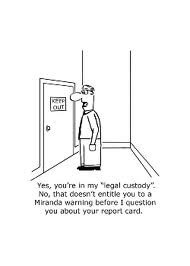
On this day in 1966, The Miranda rights are established.

The Supreme Court hands down its decision in Miranda v. Arizona, establishing the principle that all criminal suspects must be advised of their rights before interrogation. Now considered standard police procedure, “You have the right to remain silent. Anything you say can, and will, be used against you in court of law. You have the right to an attorney. If you cannot afford one, one will be appointed to you,” has been heard so many times in television and film dramas that it has become almost cliche.

Miranda v. Arizona 384 U.S. 436 (1966), was a landmark 5-4 decision of the United States Supreme Court. The Court held that both inculpatory and exculpatory statements made in response to interrogation by a defendant in police custody will be admissible at trial only if the prosecution can show that the defendant was informed of the right to consult with an attorney before and during questioning and of the right against self-incrimination prior to questioning by police, and that the defendant not only understood these rights, but voluntarily waived them. This had a significant impact on law enforcement in the United States, by making what became known as the Miranda rights part of routine police procedure to ensure that suspects were informed of their rights. The Supreme Court decided Miranda with three other consolidated cases: Westover v. United States, Vignera v. New York, and California v. Stewart.

The Miranda warning (often abbreviated to “Miranda”) is the name of the formal warning that is required to be given by police in the United States to criminal suspects in police custody (or in a custodial situation) before they are interrogated, in accordance with the Miranda ruling. Its purpose is to ensure the accused is aware of, and reminded of, these rights under the U.S. Constitution, and that they know they can invoke them at any time during the interview.

As of the U.S. Supreme Court decision Berghuis v. Thompkins(June 1, 2010), criminal suspects who are aware of their right to silence and to an attorney, but choose not to “unambiguously” invoke them, may find any subsequent voluntary statements treated as an implied waiver of their rights, and which may be used in evidence.

 1249 – Coronation of Alexander III as King of Scots.

1373 – Anglo-Portuguese Alliance between England (succeeded by the United Kingdom) and Portugal is the oldest alliance in the world which is still in force.

1525 – Martin Luther marries Katharina von Bora, against the celibacy rule decreed by the Roman Catholic Church for priests and nuns.

1625 – King Charles I marries Henrietta Maria of France, Princess of France

1774 – Rhode Island becomes the first of Britain’s North American colonies to ban the importation of slaves.

1777 – American Revolutionary War: Marquis de Lafayette lands near Charleston, South Carolina, in order to help the Continental Congress to train its army.

1798 – Mission San Luis Rey de Francia is founded.

1805 – Lewis and Clark Expedition: scouting ahead of the expedition, Meriwether Lewis and four companions sight the Great Falls of the Missouri River.

1871 – In Labrador, a hurricane kills 300 people.

1881 – The USS Jeannette is crushed in an Arctic Ocean ice pack.

1886 – A fire devastates much of Vancouver, British Columbia.

1886 – King Ludwig II of Bavaria is found dead in Lake Starnberg south of Munich at 11:30 PM.

1893 – Grover Cleveland undergoes secret, successful surgery to remove a large, cancerous portion of his jaw; operation not revealed to US public until 1917, nine years after the president’s death.

1898 – Yukon Territory is formed, with Dawson chosen as its capital.

1910 – The University of the Philippines College of Engineering is established. This unit of the university is said to be the largest degree granting unit in the Philippines.

1917 – World War I: the deadliest German air raid on London during World War I is carried out by Gotha G bombers and results in 162 deaths, including 46 children, and 432 injuries.

1927 – Aviator Charles Lindbergh receives a ticker-tape parade down 5th Avenue in New York City.

1934 – Adolf Hitler and Mussolini meet in Venice, Italy; Mussolini later describes the German dictator as “a silly little monkey”.

1944 – World War II: Germany launches a counter attack on Carentan.

1944 – World War II: Germany launches a V1 Flying Bomb attack on England. Only four of the eleven bombs actually hit their targets.

1952 – Catalina affair: a Swedish Douglas DC-3 is shot down by a Soviet MiG-15 fighter.

1955 – Mir Mine, the first diamond mine in the USSR, is discovered.

1966 – The United States Supreme Court rules in Miranda v. Arizona that the police must inform suspects of their rights before questioning them.

1967 – U.S. President Lyndon B. Johnson nominates Solicitor-General Thurgood Marshall to become the first black justice on the U.S. Supreme Court.

1969 – Governor of Texas Preston Smith signs a bill into law converting the former Southwest Center for Advanced Studies, originally founded as a research arm of Texas Instruments, into the University of Texas at Dallas.

1970 – “The Long and Winding Road” becomes the Beatles’ last Number 1 song.

1971 – Vietnam War: The New York Times begins publication of the Pentagon Papers.

1977 – Convicted Martin Luther King Jr. assassin James Earl Ray is recaptured after escaping from prison three days before.

1978 – Israeli Defense Forces withdraw from Lebanon.

1981 – At the Trooping the Colour ceremony in London, a teenager, Marcus Sarjeant, fires six blank shots at Queen Elizabeth II.

1982 – Fahd becomes King of Saudi Arabia upon the death of his brother, Khalid.

1983 – Pioneer 10 becomes the first man-made object to leave the solar system.

1994 – A jury in Anchorage, Alaska, blames recklessness by Exxon and Captain Joseph Hazelwood for the Exxon Valdez disaster, allowing victims of the oil spill to seek $15 billion in damages.

1995 – French president Jacques Chirac announces the resumption of nuclear tests in French Polynesia.

1996 – The Montana Freemen surrender after an 81-day standoff with FBI agents.

1997 – A jury sentences Timothy McVeigh to death for his part in the 1995 Oklahoma City bombing.

1997 – Uphaar cinema fire, in New Delhi, India, killed 59 people, and over 100 people injured.

1997 – American fugitive Ira Einhorn is arrested in France for the murder of Holly Maddux after 16 years on the run, though he would not return for another four years.

2000 – President Kim Dae Jung of South Korea meets Kim Jong-il, leader of North Korea, for the beginning of the first ever inter-Korea summit, in the northern capital of Pyongyang.

2000 – Italy pardons Mehmet Ali Agca, the Turkish gunman who tried to kill Pope John Paul II in 1981.

2002 – The United States of America withdraws from the Anti-Ballistic Missile Treaty.

2002 – Two 14-year-old South Korean girls are struck and killed by a United States Army armored vehicle, leading to months of public protests against the US.

2005 – A jury in Santa Maria, California acquits pop singer Michael Jackson of molesting 13-year-old Gavin Arvizo at his Neverland Ranch.

2007 – The Al Askari Mosque is bombed for a third time.

Holidays and observances

   * Christian Feast Day:

       * Anthony of Padua, Doctor of the Church

       * Blessed Thomas Woodhouse

       * Cetteus

       * Pope Leo III

       * June 13 (Eastern Orthodox liturgics)

   * Quinquatrus Minusculae, in honor of Minerva. (Roman Empire)

Six In The Morning

Missing Iraq money may have been stolen, auditors say

U.S. Defense officials still cannot say what happened to $6.6 billion, sent by the planeload in cash and intended for Iraq’s reconstruction after the start of the war.  

By Paul Richter, Los Angeles Times

June 13, 2011  


Reporting from Washington– After the U.S.-led invasion of Iraq in March 2003, the George W. Bush administration flooded the conquered country with so much cash to pay for reconstruction and other projects in the first year that a new unit of measurement was born.

Pentagon officials determined that one giant C-130 Hercules cargo plane could carry $2.4 billion in shrink-wrapped bricks of $100 bills. They sent an initial full planeload of cash, followed by 20 other flights to Iraq by May 2004 in a $12-billion haul that U.S. officials believe to be the biggest international cash airlift of all time.

This month, the Pentagon and the Iraqi government are finally closing the books on the program that handled all those Benjamins. But despite years of audits and investigations, U.S. Defense officials still cannot say what happened to $6.6 billion in cash – enough to run the Los Angeles Unified School District or the Chicago Public Schools for a year, among many other things.


Monday’s Headlines:

Egypt: Mohamed ElBaradei not sure to run for president

Refugees take flight as troops launch attacks on rebel stronghold

Dutch scientists claim breakthrough in combating E.coli

Libya govt says rebels’ victory claims ‘wishful reporting’

High level of strontium found at Fukushima plant

Egypt: Mohamed ElBaradei not sure to run for president

Man who inspired many protesters who forced Mubarak to step down in February gives televised interview

Associated Press

The Guardian, Monday 13 June 2011  

Egyptian pro-democracy campaigner Mohamed ElBaradei said in a televised interview aired on Sunday that he is not sure he will run for president, because there has not been not enough debate about the future of the country.

ElBaradei, the former head of the International Atomic Energy Agency, is a favorite of some leaders of the uprising that unseated Hosni Mubarak, but polls show he has little electoral support. He inspired many of the protesters who took part in the 18-day uprising that forced Mubarak to step down in February.

Refugees take flight as troops launch attacks on rebel stronghold


Kim Sengupta and Justin Vela report from the Turkish border

Monday, 13 June 2011

Syrian forces stormed a city yesterday which had become a symbol of militant opposition after an intense artillery and tank bombardment. But defiant protests, and the regime’s violent response to them, continued with helicopter gunships opening fire on demonstrators and troops setting homes on fire in a string of towns.

The spreading strife led to a fresh exodus of terrified families seeking sanctuary. More than 5,000 were in rapidly filling camps in neighbouring Turkey, including babies, the elderly and the ill.

Another 10,000 were stranded on the Syrian side of the border with little food and water and no shelter. Some who had been carried injured to the border, and with no access to medical treatment, did not survive. Funerals were held for a dozen of the dead in the “no man’s land” yesterday.

Dutch scientists claim breakthrough in combating E.coli

The Irish Times – Monday, June 13, 2011

 PETER CLUSKEY in Delft

DUTCH SCIENTISTS say they have made a “worldwide breakthrough” in combating antibiotic-resistant E.coli, including the bacterium EHEC, which has killed 29 people in Germany and left some 3,000 others across Europe and the US seriously ill.

The breakthrough was announced by the director of food and nutrition at the highly regarded TNO Research Institute in Delft, Dr Jan Pieter van der Lugt, who described it as “an international first in the war against life-threatening bacteria”.

Libya govt says rebels’ victory claims ‘wishful reporting’


HADEEL AL-SHALCHI AND MAGGIE MICHAEL MISRATA, LIBYA – Jun 13 2011  

Insurgents had reported fighting street by street to retake the Mediterranean port city of Zawiya, 30km west of Tripoli, a prize that would put them within striking distance of the capital and cut off one of Muammar Gaddafi’s last supply routes from Tunisia.

But government spokesperson Moussa Ibrahim said late on Sunday that Gaddafi forces had driven off the attackers, and reporters taken to Zawiya saw secure streets and the green national flag flying over a central square. The insurgents, for their part, claimed a high-ranking Gaddafi commander was badly wounded in the fighting.

High level of strontium found at Fukushima plant


Kyodo  Monday, June 13, 2011

Radioactive strontium up to 240 times the legal concentration limit has been detected in seawater samples collected near an intake at the crippled Fukushima Daiichi nuclear plant, Tokyo Electric Power Co. said Sunday.

The utility said the substance was also found in groundwater near the plant’s Nos. 1 and 2 reactors. The government’s Nuclear and Industrial Safety Agency said it is the first time that the substance has been found in groundwater.

The agency said it is necessary to carefully monitor the possible effects of the strontium on fishery products near the plant.

Pique the Geek 20110612: Boron, Essential and Uncommon

Boron, the chemical element with an atomic number (Z) = 5, is an uncommon element.  The reason is that there is no really easy way for stars to make it except through going supernova.  A more technical way of saying this is that stellar nucleosynthesis is not a viable pathway to produce boron.  As a matter of fact, it is the least common very light element except for lithium.

Tonight we shall look into some of the properties and uses of boron, as suggested by Kossack shrike Friday evening during comments on Popular Culture.  The interest that shrike has in some new medical uses for boron, and we shall go into some detail near the end of the piece.

You are likely to encounter boron in only a few ways in daily life.  Probably the most common daily life product is borax (sodium borate decahydrate), Na2B4O7.10 H2O.  It is an effective detergent booster, but does not do a very good job in overcoming hard water where it is not nearly as effective as phosphates.  However, it does not support algal blooms like phosphate does, so is permitted in parts of the country where phosphates are not allowed for laundry purposes.  Another use for borax is as a flux in hard soldering and brazing but lots more people wash clothes than solder and braze.

Another fairly common product is boric acid, H3BO3.  This is used in medicine as a mild antiseptic (mild enough to use in eye drops), but the major consumer use is as a relatively nontoxic insecticide.  It kills insects by two mechanisms:  one is a mechanical action whereby it gets into the joints of an insect’s exoskeleton and abrades the softer connective tissue, allowing water to be lost from the insect.  It is also directly toxic to insects when eaten.

A less common consumer use of boron is in the form sodium perborate, NaBO3·H2O.  (Sometimes there are three rather than one water molecules in the crystal lattice).  This is used as a bleach in some non chlorine preparations for laundry use and also in some teeth whitening preparations.

The last encounter that consumers are apt to have with boron is in borosilicate glass.  This was formerly marketed under the brand name Pyrex from the Corning Glass Company.  Sometime in the mid 1980s Corning sold the trademark Pyrex to another company for consumer cooking utensils only, keeping the trademark for its glass used in industrial (especially chemical) settings.  The company that bought the trademark soon quit using borosilicate glass for kitchen utensils, to any new Pyrex kitchenware is actually the much cheaper soda lime glass (the same used for drinking glasses, window glass, and other low cost items) that has been heat treated to resist the effects of thermal shock.

Borosilicate glass is resistant to thermal shock because it has a coefficient of thermal expansion of around 3 x 10⁻⁶ K-1 whilst soda lime glass has a value around three times that.  Since glass is by its nature brittle and also a poor heat conducter, when a hot piece is put in, say, cold water, the surface contracts much faster than the center, causing stresses that can lead to it breaking.  The surface gets smaller and just has no place to go because the center is still larger.  Thus, the glass breaks.  Many metals have comparable coefficients of thermal expansion, but most metals are not brittle and are good heat conductors so they do not break.  Obviously, for glass, the smaller the coefficient of thermal expansion the more resistant it is to thermal shock.  However, the champ is fused silica, with a coefficient of thermal expansion only a little over one tenth that of borosilicate glass.  Molten lead poured into a bowl of fused silica frozen into a block of ice will not break it!  However, it is extremely hard to fabricate, being a pure substance and thus with a sharp melting point.

One more thing about borosilicate glass:  it is stronger mechanically than soda lime glass and much more resistant to attack by bases, so it it the preferred material for laboratory glassware.  It is easy to fabricate and relatively inexpensive, but certainly not as cheap as soda lime glass.

Boron gets it name from the Farsi word burah, the word for borax which has been known for thousands of years.  It has been used in glazes for ceramics for a very long time, and as a flux for also a very long time.  However, pure boron is a recent achievement.  The brilliant English chemist, Sir Humphrey Davy (one of my personal heroes) first called it an element in 1808, and in 1824 the equally brilliant Swedish chemist Jöns Jakob Berzelius confirmed it.  Incidentally, my academic lineage can be traced to Berzelius.  What we would call relatively pure boron was not produced until probably 1909.

There are only a few uses for pure boron.  My personal experience with it is as a fuel in pyrotechnic delay trains from my days as a civilian working for the Army.  Boron is a good fuel, and when mixed with oxidizing agents in suitable proportions forms a relatively gasless delay train, and gasless is good.  That is beyond the scope of this piece, but it you are interested bring it up in the comments.

Boron is used to “dope” semiconductors for specific electrical properties, and boron fibers have high strength and are used in demanding environments for reinforcement that can tolerate high temperatures, such as aerospace applications.

That is about all of the uses for the pure material, but boron compounds are widely used.  First, we should take a look at where boron is found.  As stated earlier, pure boron does not occur naturally, but several different oxides are found in large deposits.  Currently, Turkey is the largest producer with the United States second.  These oxides are the remains of ancient seabeds that have dried and deposited the oxides.  For the most part they are found in arid regions, because boron oxides are extremely water soluble and would wash away in wet areas.  In the US, most boron oxides are mined in the Mojave Desert in California.  The trademark 20 Mule Team is a reminder of how boron oxides were transported in the old days.  Now the process is highly mechanized.

The crude oxides are pulverized and treated to produce, normally, either borax or boric acid, which can be further purified for either consumer use or to be converted into other boron compounds or to elemental boron.

One important use for borax is in the production of insulation grade glass fibers.  This is a different composition than borosilicate glass, but does have a considerable amount of boron in it to raise its melting point and to strengthen it.  Nearly three quarters of boron produced in the United States is used in one way or another in glass and ceramic applications.

Another important industrial use is for the production of hard materials for abrasives.  One of these, boron nitride, (BN), is truly amazing.  Do you remember when we discussed carbon a few weeks back?  Boron nitride is very much like carbon in a couple of ways.  Now, remember that boron (Z=5) has one fewer electron than has carbon (Z=6) and that nitrogen (Z=7) has one more electron per atom than has carbon.  This means that BN polymers have the same number of electrons that carbon polymers have.  This is called isoelectronic.

Sure enough, BN occurs both in a very hard cubic crystal lattice, just like diamond, and also a very soft hexagonal crystal lattice, just like graphite.  Remarkably, these materials are used in much the same way that diamond and graphite are, but are more stable to oxidation at high temperatures.  I find this fascinating.

Another important material is boron carbide, with an approximate formula of B4C.  Not only is this material hard, but it is also extremely tough.  There is a difference.  Hardness is the property of scratching other materials or being scratched by them.  Thus, glass is harder than aluminum (you can scratch a soda can with a broken piece of glass).  However, glass is not tough at all, and is actually quite brittle.  On the other hand, aluminum might not be as hard as glass, but it is much tougher.

Boron carbide is used to make the ceramic inserts in body armor.  It is also used in nuclear applications to absorb neutrons, since boron-10 is an efficient neutron “sponge” and does not become dangerously radioactive under conditions of neutron irradiation, and neither does carbon.  This, and with the high strength of the material, makes is uniquely suited for these applications.

Now let us look at biology a bit.  Boron is an essential ultra trace mineral for both plants and animals, but the biochemistry is poorly understood.  There is some evidence that nutritional supplements of very small amounts of boron are useful in treating osteoporosis, but the results are far from clear.

There is even an antibiotic, boromycin, that contains boron.  There is some fairly strong evidence that it is also useful as an antiviral agent against HIV.  At present the mechanism of action is poorly understood.

The topics that shrike was referring to, I am fairly sure, involve the use of boron compounds to treat disease.  One of these is boron neutron capture therapy (BNCT).  In this experimental therapy,  compounds enriched in B-10, the isotope that absorbs neutrons, are given that bind to tumor tissues much more strongly than to healthy tissue.  Then the patient is exposed to thermal (slow-moving) neutrons .  The B-10 absorbs the neutrons and immediately decompose to a Li-7 atom and and an alpha particle (a helium nucleus).  These particles are energetic, and damage cells by transferring this energy, causing them to die.  Since the starting material binds to tumor cells much more tightly than to healthy ones, and since the neutron beam can be aimed with accuracy, the risk of tissue damage to healthy tissue is minimized.  This is still experimental, but research continues.

Another use of boron in therapeutics is the new drug bortezomib, a drug that has been shown to be effective against multiple myeloma, a particularly nasty white blood cell cancer.  The drug binds to the 26S proteasome (proteasomes are involved with destruction of damaged or misfolded proteins in cells) and thus, but a mechanism that is not completely understood, deprives the tumor cells of the ability to replicate.  It it possible that the reduction in the ability for a tumor to develop a rich blood supply might be involved, but this is not clear yet.

Well, you have done it again!  You have wasted many einsteins of perfectly good photons reading this boring material.  And even though John Stossel quits whining when he reads me say it, I always learn much more writing this series than I could possibly hope to teach, so keep those questions, comments, corrections, and other feedback coming.  Tips and recs are welcome too.

Warmest regards,

Doc

Sunday Train: Fighting Economic Sabotage

(10 AM – promoted by TheMomCat)

Burning the Midnight Oil for Living Energy Independence

There was shocking news early this June about May economic performance: GDP growth in May was about the same as the average for the first quarter of 2011, and so employment growth was virtually stagnant, and indeed fell behind growth of the labor force.

What was shocking, of course, was that this was news to anybody. For anyone with the basics on how the economy works, it was obvious that economic growth would be sluggish.

Of course, the Republicans in Congress and the White House, both for their own reasons, completely missed the boat ~ the White House arguing if we ease off the accelerate and tap the brakes, but do it intelligently, that will eventually speed up the economy, and the Republicans insisting that, no, we have to slam on the brakes to fix things.

With such a broken political discussion, what can be done?

What Can’t Be Done

The Republicans, who were a substantial source of the sluggishness, argued that if we slam on the brakes, that will speed things up. But, no, slamming on the brakes will not accelerate the economy.

The White House, whose economic team are composed of people clever enough to have trained themselves to ignore the basics, tried to point to the one decent month this year to distract from the other four sluggish ones. Maybe they distracted some of the Village Idiots who run the mess media, but most of them are not clever enough to fall for the same nonsense that the administration economic team is clever enough to fall for …

… oh, no, most of the Village Idiots have instead fallen for the idea that slamming on the brakes will fix everything.

What is actually going on?

The story here is easy. Just look at the quarterly percentage growth rates of GDP and of contribution to that of the growth drivers in the GDP accounts:

  • Durable consumption
  • Non-residential fixed investment
  • Residential Investment
  • Exports
  • Federal Government Spending
  • State and Local Government Spending

These are available, in these terms, in automatic tables, at the Department of Commerce Bureau of Economic Analysis website. All that is required is to ignore the numbers that are mostly driven by GDP, to focus on the growth drivers. Total GDP growth will some small multiple of the sum of these growth drivers (it used to be a bigger multiple, when we made more of our own stuff and when took more of our taxes from things like capital gains tax rather than from consumption taxes):

Entry   2010Q1 2010Q2 2010Q3 2010Q4 2011Q1
Durable Cons.   0.62% 0.49% 0.54% 1.45% 0.66%
Non-Res. Inv.   0.71% 1.51% 0.93% 0.73% 0.33%
Residential Inv   (-0.32%) 0.55% (-0.75%) 0.07% (-0.07%)
Exports 1.30% 1.08% 0.82% 1.06% 1.16%
Fed. Gvt. 0.15% 0.72% 0.71% (-0.34%) (-1.07%)
S&L Gvt   (-0.48%) 0.08% 0.09% (-0.31%) (-0.39%)
Drivers 1.99% 4.43% 2.33% 2.97% 1.01%
GDP   3.7% 1.7% 2.6% 3.1% 1.8%

The White House spin that the weak GDP performance in the first three months of 2011 was some kind of speed bump on the road in an accelerating recovery is silly. Indeed, except for the inertia from growth drivers in the middle of 2010, it would have been worse than it was.

And the Republican clamor for spending cuts in the face of the damage that government spending cuts have already done so far in the past half a year amounts to Economic Sabotage. The only point at issue is whether its deliberate economic sabotage in hopes of getting a weak Republican Presidential candidate elected in 2012, or collateral damage of electing people willing to be ignorant about how the economy works in return for campaign contributions from wealthy corporations and individuals.

Our Economic Prognosis

With an administration economic team dominated by the indoctrinated clever idiocy of the likes of Geithner, unable to look up from their discredited models of economic reality to directly look at the simplest of economic realities available from their own Department of Commerce website, the White House will continue to pull for trying to speed up the economy by easing off the accelerator and ‘intelligently’ tapping on the brakes.

And the Republicans will of course continue to call for slamming on the brakes.

And what comes next is predictable. Residential fixed investment will continue to be mired in the aftermath of the Panic of 2008 and the 1980-2008 Geithneresque stupidity that permitted it to occur. Non-residential fixed investment will slow down as projects postponed for the recession are finished and many industries have little need for new capacity. The Stimulus II spending will continue to ebb with no Stimulus III spending to take its place. Sabotage of our unemployment benefits system and other balance wheel systems will continue. Rather than use increasing state revenues to restore state services, tea-party dominated states will hand out tax cuts to create further fiscal crises requiring spending cutbacks. And Federal spending will “intelligently” drop. The sluggish GDP growth and slack labor markets will then, sooner or later, cause a slowdown in growth in durable goods spending.

Without something unexpected like the US$ dropping to €0.33 and generating a big export boom, its hard to see how we get out of the doldrums.

Of course, this is stagnation by choice: if we could find a way to increase Government spending rather than letting it drop, we could have growth in the 2.5% to 3.5% range, and that would sustain ongoing durable goods consumption and would help keep non-residential investment ticking over, and we could kind of muddle through. We’d rather have some 4% to 5% growth for a few quarters to really bite into unemployment, but 2.5% to 3.5% would be better than the labor market stagnation we get at 1.5% to 2%, and far better than a double dip recession.

So, what CAN be done?

At this point, I am glad that I am looking at this from a citizen perspective rather than from a passive audience perspective.

From a passive audience perspective, this looks like a recipe for repeating what happened here in Ohio, except on a national scale. Billions in corporate funding go in to the Presidential race that ignores whatever weak Republican candidate is in the field and whatever nonsense they are peddling, and simply hammers the President for falling so far short of the jobs promises made in 2008. Its on every cable channel, on all the radio stations, repeated in letters to the editor and in the editorials pretending to be news stories written by the Village Idiots. And in a close fought contest that is a referendum on whether people like how things are going, a shockingly bad Republican nominee is President, and the looting on behalf of the corporations begins in earnest.

From a citizen perspective, however, rather than worrying about what is likely to happen, the focus is on what can shift the odds. Whether that is shifting the odds from no hope to a slender hope, or from a strong position to a lead pipe cinch is nowhere is not something to get hung up on when there is work to be done and a good fight to be fought.

In the past century, we’ve seen two Presidents elected with unemployment rates as bad or worse than they are going to be by November, 2012: FDR and Reagan. FDR did it by fighting for what he saw as improvement, winning some, losing some, and making the election a choice between making progress and going back to the failed policies of his predecessor.

And, waddya know, so did Reagan, even if what he saw as improvement was often be the opposite of what I would be hoping to see.

And in both cases while unemployment levels were bad, unemployment rates were heading in the right direction.

So those are the two pieces: some improvement and some clear fight with the opposition on the wrong side of the issue in the view of the public.

Of course, the Senate keeps putting out broad hoped-fors, then negotiating down to maybe can gets. We’ve got to start aiming at targeted wedge maybe can gets first, and then follow up with demands for more than the Republicans can give us, which will be the Republicans fault for why we can’t have nice things.

The White House came out this week with the idea of tax holiday on the employee side of payroll taxes. Across the board, this is mostly just handing SSI trust fund revenue to company profits, but as a new hiring bonus, encouraging new hires rather than overworking existing staff, it might do some modest good:

  • Start out with a targeted, maybe useful, version ~ a two year payroll tax holiday on net new employment by small business, 1% holiday based for each 1% unemployment is above 5%, scaling down one cent in the dollar for each 1% over the small business threshold.
  • And then “tax bads instead of goods” ~ propose a far heftier oil profit windfall tax than the Generous to Oil Party can possibly go far, with proceeds going directly to payroll tax rebates, equally divided between employer and employee.

We need new spending from the Transportation Bill, but there’s no realistic hope of getting a “good’ Transport Bill out of this House. So:

  • Just tackle the gas tax revenues, with all of the Highway Fund tax proceeds going to bringing funded highways in a state up to good repair, or on improvements that reduce existing road maintenance costs, before any can be spent on new roadworks can be funded;
  • And all of the Transit Fund tax proceeds going to per capita accounts by municipality, county, or reservation, with freedom to borrow up to ten years ahead on qualifying projects that reduce dependence on crude oil
  • And the general transportation bill with competitive grant funding, high speed rail, Steel Interstates and etcetera funded by cutting oil company subsidies and a financial transactions tax in the “this is what the Republicans won’t let you have” bill

And its not just at the Federal level that the fight must be fought. One major counter to the “referendum on Obama” in a number of states is the “referendum on Tea Party Governors”. But to work best, those of you living in the states that are not bogged down fighting aggressive corporate plundering need to be pushing on what your state can do. By putting the right Renewable Energy Portfolio Standard in place, your state can put a Feed-In tariff in place for renewable energy generation. The best opportunity for employment growth in some states may be consumer side feed-in tariffs for selling surpluses in domestic renewable power; the best opportunity for employment growth in others may be utility grade renewable power; and some states may be able to get substantial benefits from both.

But now that the FEC has ruled that the “avoided cost” for a state electricity tariff can include avoided costs as a means of compliance with a Renewable Energy Portfolio standard, a state can determine what Feed-In tariff will generate the best jobs growth and industrial development in its state, then work backwards to what Renewable Energy Portfolio Standard is required to support that Feed-In tariff.

At the same time, its also possible to set up Connie Mae financing of energy saving improvements at the state level, where the financial reduction in operating costs due to energy saving are channeled into helping to finance a more energy efficient version of a home improvement.

And of course, the local accounts allowing leverage on Transit Fund gas tax proceeds are of most use in boosting employment immediately in a state that is aggressive in helping its localities come up with qualifying projects.

All of these are just nibbling around the edges of a Brawny Recovery ~ but with so many states deliberately pursuing strategies of economic decline as a corporate predatory government, every little bit that can be done to boost the performance of states that are not entirely in thrall to the system provides additional support for the basic message:

  • TARA: There Are Real Alternatives

The gal that the other side swears by is Tina ~ There Is No Alternative. We’ve got to make sure sure that Tara has enough visibility to be seen. Cause she may be shy sometimes, and she’s regularly snubbed by the Village Idiots in the mess media, but once people meet her, they seem to find her attractive.

Midnight Oil ~ The Power and the Passion

Rant of the Week: Stephen Colbert

The Word: Hear no Evil

Stephen Colbert comments on Sen. Rand Paul’s proposal that anyone who hears a speech that might advocate the over throw of the US government be arrested.

“After all the Bill of Rights guarantees freedom of speech, not freedom of listen”

F1: Circuit Gilles Villeneuve

As they never quite got tired of pointing out during all 24 Hours of Le Mans, Sports Cars race harder, faster, and longer in a single day than Formula One does in a whole season.

Pedro de la Rosa gets a ride with Sauber today, coming from the McLaren reserves to replace Sergio Perez who is not yet recovered from his Monaco concussion.  bmaz reports on the Bahrain decision I covered Friday.

Scuderia Marlboro UPC did a little better in qualifying than I expected, but it doesn’t mean much for anyone as they are forcasting a 60% chance of rain.  To make things even more (ahem) interesting they’ve all dialed down the downforce because of the long straights and it’s not the kind of thing you’re allowed to adjust.  Virgin will start it’s second car despite missing the 107% cut off.

Hopefully during the boring parts I’ll find a source for the Le Mans results, it was actually much closer than I predicted, a mere 13 seconds after 24 hours that Audi won over Peugeot with their single remaining car.

Pretty tables below.

Starting Grid

Grid Driver Team Q-Time Q-Laps
1 Sebastian Vettel RBR-Renault 01:13.0 17
2 Fernando Alonso Ferrari 01:13.2 19
3 Felipe Massa Ferrari 01:13.2 20
4 Mark Webber RBR-Renault 01:13.4 22
5 Lewis Hamilton McLaren-Mercedes 01:13.6 18
6 Nico Rosberg Mercedes 01:13.8 14
7 Jenson Button McLaren-Mercedes 01:13.8 20
8 Michael Schumacher Mercedes 01:13.9 4
9 Nick Heidfeld Renault 01:14.1 27
10 Vitaly Petrov Renault 01:14.1 25
11 Paul di Resta Force India-Mercedes 01:14.8 19
12 Pastor Maldonado Williams-Cosworth 01:15.0 20
13 Kamui Kobayashi Sauber-Ferrari 01:15.3 21
14 Adrian Sutil Force India-Mercedes 001:15.3 21
15 Sebastien Buemi STR-Ferrari 01:15.3 18
16 Rubens Barrichello Williams-Cosworth 01:15.4 20
17 Pedro de la Rosa Sauber-Ferrari 01:15.6 21
18 Jaime Alguersuari STR-Ferrari 01:16.3 10
19 Jarno Trulli Lotus-Renault 01:16.7 12
20 Heikki Kovalainen Lotus-Renault 01:16.8 10
21 Vitantonio Liuzzi HRT-Cosworth 01:18.4 10
22 Timo Glock Virgin-Cosworth 01:18.5 12
23 Narain Karthikeyan HRT-Cosworth 01:18.6 11
24 Jerome d’Ambrosio Virgin-Cosworth 01:19.4 13

Driver Standings

Rank Driver Team Points
1 Sebastian Vettel RBR-Renault 143
2 Lewis Hamilton McLaren-Mercedes 85
3 Mark Webber RBR-Renault 79
4 Jenson Button McLaren-Mercedes 76
5 Fernando Alonso Ferrari 69
6 Nick Heidfeld Renault 29
7 Nico Rosberg Mercedes 26
8 Felipe Massa Ferrari 24
9 Vitaly Petrov Renault 21
10 Kamui Kobayashi Sauber-Ferrari 19
11 Michael Schumacher Mercedes 14
12 Adrian Suti Force India-Mercedes 8
13 Sebastien Buemi STR-Ferrari 7
14 Rubens Barrichello Williams-Cosworth 2
15 Sergio Perez Sauber-Ferrari 2
16 Paul di Resta Force India-Mercedes 2

Constructor Standings

Rank Team Points
1 RBR-Renault 222
2 McLaren-Mercedes 161
3 Ferrari 93
4 Renault 50
5 Mercedes 40
6 Sauber-Ferrari 21
7 Force India-Mercedes 10
8 STR-Ferrari 77
9 Williams-Cosworth 2
10 Lotus-Renault 0
11 Virgin-Cosworth 0
12 HRT-Cosworth 0

On This Day In History June 12

This is your morning Open Thread. Pour your favorite beverage and review the past and comment on the future.

Find the past “On This Day in History” here.

Click on image to enlarge

June 12 is the 163rd day of the year (164th in leap years) in the Gregorian calendar. There are 202 days remaining until the end of the year.

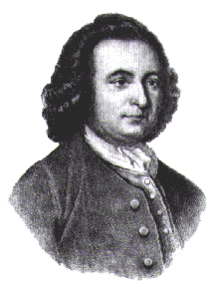
On this day in 1776, Virginia adopts George Mason’s Declaration of Rights

The assembled slaveholders of Virginia promised to “the good people of VIRGINIA and their posterity” the equal right to life, liberty and property, with the critical condition that the “people” were white men. These same white men were guaranteed that “all power” would be “vested in, and consequently derived from” them. Should a government fail to represent their common interest, a majority of the same held the right to “reform, alter or abolish” the government.

Drafting and adoption

The Declaration was adopted unanimously by the Fifth Virginia Convention at Williamsburg, Virginia on June 12, 1776 as a separate document from the Constitution of Virginia which was later adopted on June 29, 1776. In 1830, the Declaration of Rights was incorporated within the Virginia State Constitution as Article I, but even before that Virginia’s Declaration of Rights stated that it was ‘”the basis and foundation of government” in Virginia.  A slightly updated version may still be seen in Virginia’s Constitution, making it legally in effect to this day.

It was initially drafted by George Mason circa May 20, 1776; James Madison assisted him with the section on religious freedom. It was later amended by Thomas Ludwell Lee and the Convention to add a section on the right to uniform government (Section 14). Patrick Henry persuaded the Convention to delete a section that would have prohibited bills of attander, arguing that ordinary laws could be ineffective against some terrifying offenders.

Mason based his initial draft on the rights of citizens described in earlier works such as the English Bill of Rights (1689), and the Declaration can be considered the first modern Constitutional protection of individual rights for citizens of North America. It rejected the notion of privileged political classes or hereditary offices such as the members of Parliament and House of Lords described in the English Bill of Rights.

The Declaration consists of sixteen articles on the subject of which rights “pertain to [the people of Virginia]…as the basis and foundation of Government.” In addition to affirming the inherent nature of natural rights to life, liberty, and property, the Declaration both describes a view of Government as the servant of the people, and enumerates various restrictions on governmental power. Thus, the document is unusual in that it not only prescribes legal rights, but it also describes moral principles upon which a government should be run.

Influence

The Virginia Declaration of Rights heavily influenced later documents. Thomas Jefferson is thought to have drawn on it when he drafted the United States Declaration of Independence one month later (July 1776). James Madison was also influenced by the Declaration while drafting the Bill of Rights (completed September 1787, approved 1789), as was the Marquis de Lafayette in voting the French Revolution’s Declaration of the Rights of Man and of the Citizen (1789).

The importance of the Virginia Declaration of Rights is that it was the first constitutional protection of individual rights, rather than protecting just members of Parliament or consisting of simple laws that can be changed as easily as passed.

 1381 – Peasants’ Revolt: in England, rebels arrive at Blackheath.

1418 – An insurrection delivers Paris to the Burgundians.

1429 – Hundred Years’ War: Joan of Arc leads the French army in their capture of the city and the English commander, William de la Pole, 1st Duke of Suffolk in the second day of the Battle of Jargeau.

1560 – Battle of Okehazama: Oda Nobunaga defeats Imagawa Yoshimoto.

1653 – First Anglo-Dutch War: the Battle of the Gabbard begins and lasts until June 13.

1665 – England installs a municipal government in New York City (the former Dutch settlement of New Amsterdam).

1758 – French and Indian War: Siege of Louisbourg – James Wolfe’s attack at Louisbourg, Nova Scotia commences.

1775 – American Revolution: British general Thomas Gage declares martial law in Massachusetts. The British offer a pardon to all colonists who lay down their arms. There would be only two exceptions to the amnesty: Samuel Adams and John Hancock, if captured, were to be hanged.

1776 – The Virginia Declaration of Rights is adopted.

1798 – Irish Rebellion of 1798: Battle of Ballynahinch.

1830 – Beginning of the French colonization of Algeria: 34,000 French soldiers land 27 kilometers west of Algiers, at Sidi Ferruch.

1860 – The State Bank of the Russian Empire is established.

1864 – American Civil War, Overland Campaign: Battle of Cold Harbor – Ulysses S. Grant gives the Confederate forces under Robert E. Lee a victory when he pulls his Union troops from their positions at Cold Harbor, Virginia and moves south.

1889 – 78 are killed in the Armagh rail disaster near Armagh in what is now Northern Ireland.

1898 – Philippine Declaration of Independence: General Emilio Aguinaldo declares the Philippines’ independence from Spain.

1899 – New Richmond Tornado: the eighth deadliest tornado in U.S. history kills 117 people and injures around 200.

1922 – At Windsor Castle, King George V receives the colours of the six Irish regiments that are to be disbanded – the Royal Irish Regiment, the Connaught Rangers, the South Irish Horse, the Prince of Wales’s Leinster Regiment, the Royal Munster Fusiliers and the Royal Dublin Fusiliers.

1935 – Chaco War ends: a truce is called between Bolivia and Paraguay who had been fighting since 1932.

1939 – Shooting begins on Paramount Pictures’ Dr. Cyclops, the first horror film photographed in three-strip Technicolor.

1939 – The Baseball Hall of Fame opens in Cooperstown, New York.

1940 – World War II: 13,000 British and French troops surrender to Major General Erwin Rommel at Saint-Valery-en-Caux.

1942 – Holocaust: Anne Frank receives a diary for her thirteenth birthday.

1943 – Holocaust: Germany liquidates the Jewish Ghetto in Berezhany, western Ukraine. 1,180 Jews are led to the city’s old Jewish graveyard and shot.

1954 – Pope Pius XII canonises Dominic Savio, who was 14 years old at the time of his death, as a saint, making him the youngest non-martyr saint in the Roman Catholic Church.

1963 – Civil rights leader Medgar Evers is murdered in front of his home in Jackson, Mississippi by Ku Klux Klan member Byron De La Beckwith.

1964 – Anti-apartheid activist and ANC leader Nelson Mandela is sentenced to life in prison for sabotage in South Africa.

1967 – The United States Supreme Court in Loving v. Virginia declares all U.S. state laws which prohibit interracial marriage to be unconstitutional.

1967 – Venera program: Venera 4 is launched (it will become the first space probe to enter another planet’s atmosphere and successfully return data).

1978 – David Berkowitz, the “Son of Sam” killer in New York City, is sentenced to 365 years in prison for six killings.

1979 – Bryan Allen wins the second Kremer prize for a man powered flight across the English Channel in the Gossamer Albatross.

1987 – The Central African Republic’s former Emperor Jean-Bèdel Bokassa is sentenced to death for crimes he had committed during his 13-year rule.

1987 – Cold War: At the Brandenburg Gate U.S. President Ronald Reagan publicly challenges Mikhail Gorbachev to tear down the Berlin Wall.

1990 – Russia Day – the parliament of the Russian Federation formally declares its sovereignty.

1991 – Russians elect Boris Yeltsin as the president of the republic.

1994 – Nicole Brown Simpson and Ronald Goldman are murdered outside her home in Los Angeles, California. O.J. Simpson is later acquitted of the killings, but is held liable in wrongful death civil suit.

1994 – The Boeing 777, the world’s largest twinjet, makes its first flight.

1996 – In Philadelphia, Pennsylvania, a panel of federal judges blocks a law against indecency on the internet.

1997 – Queen Elizabeth II reopens the Globe Theatre in London.

1999 – Kosovo War: Operation Joint Guardian begins when a NATO-led United Nations peacekeeping force (KFor) enters the province of Kosovo in Federal Republic of Yugoslavia.

2009 – A disputed presidential election in Iran leads to wide ranging protests in Iran and around the world.

Holidays and observances

   * Chaco Armistice Day (Paraguay)

   * Christian Feast Day:

       * Basilides, Cyrinus, Nabor and Nazarius

       * Eskil

       * John of Sahagún

       * Onuphrius

       * Pope Leo III

       * Ternan

       * June 12 (Eastern Orthodox liturgics)

   * Dia dos Namorados (Brazil)

   * Independence Day, celebrates the independence of the Philippines from Spain in 1898.

   * June 12 Commemoration (Lagos State)

   * Loving Day (United States)

   * Russia Day (Russia)

   * World Day Against Child Labour (International)

Punting the Pundits: Sunday Preview Edition

“Punting the Pundits” is an Open Thread. It is a selection of editorials and opinions from around the news medium and the internet blogs. The intent is to provide a forum for your reactions and opinions, not just to the opinions presented, but to what ever you find important.

Thanks to ek hornbeck, click on the link and you can access all the past “Punting the Pundits”.

The Sunday Talking Heads:

This Week with Christiane Amanpour: This should be an interesting Economics forum with Sen. Richard “no” Shelby (R-AL), Former Clinton Labor Secretary Robert Reich, Chairman/CEO of MF Global Inc. Jon Corzine, who is also the former Democratic governor of New Jersey and former Chairman/CEO of Goldman Sachs and ABC News senior political correspondent Jonathan Karl.

Democratic strategist Donna Brazile, Peggy Noonan of The Wall Street Journal, ABC News senior White House Correspondent Jake Tapper and ABC News’ George Will discuss Gingrich’s “rats” jumping ship.

This should be a “winner” panel to discuss Weiner’s political suicide by Twitter:

ABC News’ Claire Shipman, co-author of “Womenomics,” former Assistant Pentagon Press Secretary Torie Clarke, and Cecilia Attias, former wife of French President Nicolas Sarkozy.

I just might watch to hear what Cecilia has to say.

Face the Nation with Bob Schieffer: Mr. Schieffer’s guest are House Democratic Whip Steny Hoyer (D-MD),  House Budget Committee Chairman Paul Ryan (R-WI) and Sen. Lindsey Graham (R-SC)

The Chris Matthews Show: This week’s guests are Andrea Mitchell, NBC News Chief Foreign Affairs Correspondent, David Ignatius, The Washington Post Columnist, Rana Foroohar, TIME Magazine Assistant Managing Editor and John Heilemann, New York Magazine National Political Correspondent. They will discuss:

Tough new signs America won’t recover soon: can President Obama still win?

Is talking to the Taliban the way out of Afghanistan?

Meet the Press with David Gregory: The first debate between the new DNC Chair, Debbie Wasserman Schultz, and RNC Chair Reince Priebus.

GOP presidential hopeful former Sen. Rick Santorum (R-PA) is interviewed. Don’t expect Gregory to be “harsh”.

The roundtable guests Atlanta Mayor Kasim Reed (D), GOP strategist Mike Murphy, MSNBC’s Richard Wolffe, and the Wall Street Journal’s Kim Strassel will discuss Obama, the economy, the budget and the GOP presidential field.

State of the Union with Candy Crowley: New Hampshire politics on the national stage, Candy talks to Sen. Kelly Ayotte and Rep. Charlie Bass.

Then, Candy sits down with two men who share a name well-known in the realm of New Hampshire politics. New Hampshire’s father and son pair, Fmr. Governor John Sununu and Fmr. Senator John Sununu, to give us their take on the GOP field shaping up for 2012.

Finally insights on Monday’s debate from Philip Rucker of The Washington Post and the Neil King of the Wall Street Journal.

Check out our Live Blog of the Le Mans finish and the Canadian Gran Prix.

Fareed Zakaris: GPS: Rountable guests are CNN’s “In the Arena”, Eliot Spitzer, conservative commentator Ann Coulter, Reuters Global Editor-at-Large Chrystia Freeland, and the British historian Andrew Roberts.

Coulter??? Really, Fareed, that is scraping bottom.

Former Secretary of State Henry Kissinger, the author of a new book On China discusses will discuss what, his war crimes?

Washington Post columnist David Ignatius will discuss spying and spies and his new novel Bloodmoney.

Robert Reich: The Stalled Recovery, Smoke and Mirrors, and the Carnage on the Street

The Dow ended the week below 12,000 for the first time since March. This is the sixth straight week of downs for the Dow. It’s almost as bad over at the Nasdaq. All the gains racked up in 2011 have now been erased.

What’s going on?

The real economy is catching up with the financial economy, as it always does eventually. Wall Street is built on smoke and mirrors, while the real economy is based on jobs and wages. Smoke and mirrors can only take you so far – as we learned so painfully three years ago.

Jobs and wages stink, if you haven’t noticed. They’ve been bad for months, even before this week’s data made it fairly clear the recovery has stalled.

Eileen Appelbaum: No Tax Holiday for Multinational Corporations

If you think that “double Irish” and “Dutch sandwich” are schoolyard jump rope games girls play, think again. These are the nefarious, but legal, games that hundreds of multinationals play to avoid paying their fair share of taxes. According to a report by Bloomberg, Google used these techniques to cut its tax rate to 2.4 percent and its taxes by $3.1 billion over the three years from 2007 through 2009. The company’s top two markets by revenue are the US, with a 35 percent corporate income tax rate, and the UK, with a 28 percent rate, yet Google – using practices widely employed by global companies – dramatically reduced its tax rate.

At the heart of this strategy is the transfer of rights to intellectual property developed in the US – often, as in Google’s case, with early research funded by US taxpayers through the National Science Foundation – to a subsidiary in a low-tax country. Foreign earnings based on the technology are then attributed to the subsidiary. Google transferred its search and advertising technology for much of the world to its Irish subsidiary at a price sanctioned in 2006 by the IRS. But even the much-vaunted low Irish taxes were not low enough for Google. That’s where the “double Irish” and the “Dutch sandwich” come in.

Michelle Alexander: Think Outside the Bars: Real Justice Means Fewer Prisons

A white woman with gray hair pulled neatly into a bun raises her hand. She keeps it up, unwavering and rigid, as she waits patiently for her turn to speak. Finally, the microphone is passed to the back of the room, and she leaps to her feet. With an air of desperation she blurts out, “You know white people suffer in this system, too, don’t you? It’s not just black and brown people destroyed by this drug war. My son, he’s been in the system. He’s an addict. He needs help. He needs treatment, but we don’t have money. He needs his family. But they keep givin’ him prison time. White people are hurting, too.” She is trembling and sits down.

There is an uncomfortable silence in the room, but I am in no hurry to respond. I let her question hang in the air. I want people to feel this discomfort, the tension created by her suffering. The audience is overwhelmingly African American, and a few of them are visibly agitated or annoyed by her question. I’ve spent the last forty minutes discussing my book, The New Jim Crow. The book argues that today, in the so-called era of colorblindness, and, yes-even in the age of Obama-racial caste is alive and well in America. The mass incarceration of poor people of color through a racially biased drug war has birthed a new caste system. It is the moral equivalent of Jim Crow.

Michael Winship: The Perils of Ignoring Science

A local NPR reporter was talking with Joseph Nicholson, CEO of Red Jacket Orchards in Geneva, New York, up in the neck of the upstate woods where I was born and raised. There’s been a lot more rain than usual, he said. Produce hasn’t been exposed to sufficient “heat units” — in other words, the sun.

“We’re going to be at least two weeks behind in harvest or ripening,” he said, and if the skies don’t brighten up soon, yields could be down 30 to 35 percent. That’s a lot of lost apples — and cherries, peaches and plums (although the rhubarb is doing just fine, thanks for asking).

As upstate kids we were told — apocryphally — that the only part of the world more overcast than us was Poland, so the idea that all these years later it’s cloudier than ever is startling. Is this part of manmade climate change?

Nicholas D. Kristof: When Food Kills

The deaths of 31 people in Europe from a little-known strain of E. coli have raised alarms worldwide, but we shouldn’t be surprised. Our food often betrays us.

Just a few days ago, a 2-year-old girl in Dryden, Va., died in a hospital after suffering bloody diarrhea linked to another strain of E. coli. Her brother was also hospitalized but survived.

Every year in the United States, 325,000 people are hospitalized because of food-borne illnesses and 5,000 die, according to the Centers for Disease Control and Prevention. That’s right: food kills one person every two hours.

Yet while the terrorist attacks of 2001 led us to transform the way we approach national security, the deaths of almost twice as many people annually have still not generated basic food-safety initiatives. We have an industrial farming system that is a marvel for producing cheap food, but its lobbyists block initiatives to make food safer.

Six In The Morning

Syrian unrest: Troops move into Jisr al-Shughour

Syrian government forces have advanced into the northern town of Jisr al-Shughour, state media say, as part of a widespread government crackdown.

The BBC  12 June 2011

Witnesses reported an attack using tanks and helicopter gunships, after an early-morning bombardment.

The government says it is trying to restore order after it claimed 120 security personnel had been killed.

But residents say the dead were killed after a mutiny and fighting between the security forces.

The government advance sent more people fleeing towards the Turkish border, to join more than 4,000 who have already crossed.


Sunday’s Headlines:

Misrata: One day in Libya’s rebel stronghold where calm gives way to chaos

After 10 years, no security unit is fit to take over from coalition in Afghanistan

Our family ripped apart by Europe’s last dictator says Iryna Khalip, wife of jailed Andrei Sannikov in Belarus

Zim summit charts course toward elections

Mexico peace tour: Final stop in Ciudad Juárez, Mexico’s ‘epicenter of pain’

Misrata: One day in Libya’s rebel stronghold where calm gives way to chaos

The battered Libyan port is coming back to life as a vibrant trading centre with an eye for a deal. But on its outskirts, frontline fighters struggle against Gaddafi’s professional army

Chris Stephen

The Observer, Sunday 12 June 2011

The sun is shining in Misrata on Friday morning, and in Tripoli Street they’re selling souvenirs. On a trestle table, little flags, buttons and hats emblazoned in the Libyan tricolour – red, black and green – provide an island of brightness in the blasted grey landscape of pulverised buildings and wrecked tanks that is now downtown Misrata. “We’re a business-minded city,” says Ali, a slim young trader in a long brown robe.

Indeed they are. With the enemy now pushed back beyond artillery range, this battered city is shaking itself back to life. Squads of boys too young to fight are out tidying the streets, painting white lines along the highways and manufacturing souvenirs

After 10 years, no security unit is fit to take over from coalition in Afghanistan

The 2014 troop exit is threatened by the poor state of local police and army

By Jonathan Owen Sunday, 12 June 2011

Not a single Afghan police or army unit is capable of maintaining law and order in the war-torn country without the support of coalition forces, The Independent on Sunday can reveal. Almost a decade after international troops were sent in to overthrow the Taliban and help to establish a functioning democracy in Afghanistan, a combination of poor training, lack of numbers, corruption and illiteracy has left the country unable to protect its own people.

The grim official assessment of the capabilities of the Afghan National Security Forces (ANSF) is a major blow to the hopes of a troop withdrawal by 2014, a timescale that assumes the ANSF will be able to start taking the lead in fighting the Taliban from next month.

 Our family ripped apart by Europe’s last dictator says Iryna Khalip, wife of jailed Andrei Sannikov in Belarus

Iryna Khalip, wife of Andrei Sannikov, the jailed opposition leader of Belarus, has described how her husband only ‘confessed’ after threats to kill her and her son.

 By Andrew Osborn, in Minsk8:00AM BST 12 Jun 2011

Drawing nervously on a cigarette in a café in Minsk, the capital of a country often dubbed Europe’s last dictatorship, Iryna Khalip dreams of the day when her life no longer reads like something out of George Orwell’s novel 1984.

Wife of the country’s leading opposition figure, a courageous journalist, and mother to a young son, she always knew that Belarus’s neo-Soviet regime was vicious. But she had not expected it to target her family for destruction in even her worst nightmares.

Zim summit charts course toward elections


JOSHUA HOWAT BERGER JOHANNESBURG, SOUTH AFRICA – Jun 12 2011  

Mugabe (87) has ruled Zimbabwe since independence in 1980, but inconclusive elections three years ago forced him into a unity government with Morgan Tsvangirai, his main rival, who is now prime minister.

Their shaky alliance was meant as a transitional government to oversee the drafting of a more democratic constitution, paving the way to new elections that regional leaders hope would avoid a repeat of the violent 2008 vote.

Mexico peace tour: Final stop in Ciudad Juárez, Mexico’s ‘epicenter of pain’

Renowned poet Javier Sicilia concluded the week-long Peace Caravan Thursday night in Mexico’s most violent city. Our correspondent is in the caravan, talking to residents along the way.

By Irene Caselli, Correspondent  

Ciudad Juárez, Mexico

The cry is clear and strong in the Villas de Salvarcar stadium in Ciudad Juárez, the Peace Caravan’s final stop in its week-long journey across the north of Mexico.

The crowd is shouting one word: justice.

Hundreds of people have gathered in this brand new stadium to welcome Javier Sicilia, the poet who called for the 1,500-mile journey to reach what he has called “the epicenter of pain.”

This city of 1.3 million inhabitants has taken the brunt of the war on drugs declared by President Felipe Calderón in 2006. Of the more than 35,000 victims of violence in the past four years, 8,000 were in Juárez.

Load more