
Burning the Midnight Oil for Living Energy Independent
 There has recently been a flurry of activism regarding regulatory approval of the “XL Pipeline” in support of bitumen production from Canadian Tar Sands. This is an issue that has attracted substantial attention from a variety of bloggers ~ the XL Pipeline tag alone at dkos has 64 entries ~ and since Tar Sands are billed as a Crude Oil substitute, and about 70% of US Petroleum consumption goes to transport, I thought it was time for the Sunday Train to look at the issue.
As the proponents of bitumen production from Tar Sands are selling it as a Crude Oil Substitute, I thought that what I would do would be to see what alternatives there are out there.
But the XL Pipeline itself is a bit small of a target to aim at, so the question I am looking at is, what alternatives would there be to entire potential output of Canadian Tar Sands bitumen? Hence, four transport alternatives to Canadian Tar Sands.
Note: this is a slightly modified version of the essay, after a commentator at Daily Kos pointed out that I had misread the source on the Tar Sands Energy Return on Investment
 Yonah Freemark at his site
 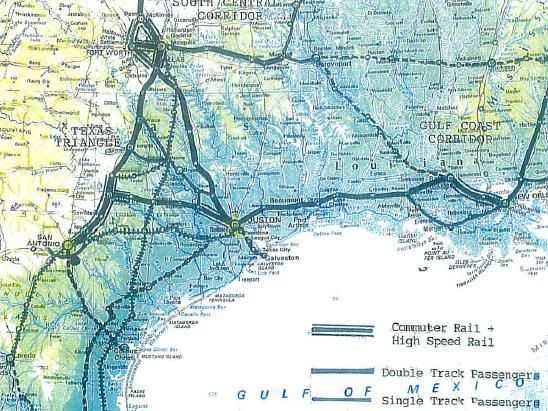 Back in the 90’s, Texas tried to get an Express HSR system off the ground (that is, a bullet train system somewhere in the 125mph to 220mph range) with the “Texas Triangle” project.
 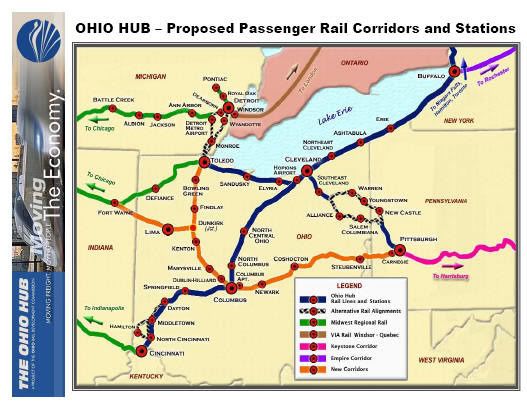 OK, now, thanks to John Kasich, we are not going to get started on that Rapid Rail HSR network before 2015. Indeed, Democrats would probably have to take back one of the two Chambers of the State Legislature to be able to hit the ground running on getting that Rapid Rail HSR network going in 2015.
 Two stories over the last week underlined the determination of the radical right wing that dominates the Republican Party to sabotage America’s future and betray our national security and the interests of our children and grandchildren:
  Chairman Mica
 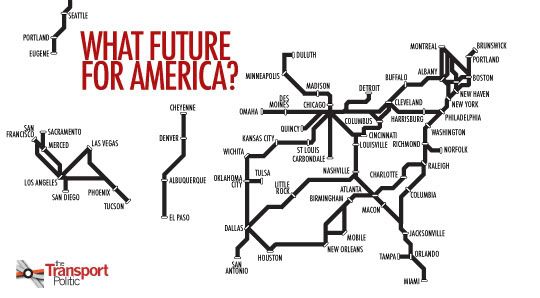 Way back before the Super Bowl, the White House had a series of exciting announcements, covered at
 There was shocking news early this June about May economic performance: GDP growth in May was about the same as the average for the first quarter of 2011, and so employment growth was virtually stagnant, and indeed fell behind growth of the labor force.
Recent Comments