New Deadline For Debt Ceiling Bill: July 22

(2 pm. – promoted by ek hornbeck)

The White House is now saying that Congress must pass a bill by July 22 in order for the government not to default on its debt.

The Obama administration believes congressional leaders must agree to a deficit-reduction deal by July 22 in order to raise the government’s borrowing limit in time to avoid a default in early August, according to Democratic officials with knowledge of the negotiations.

The government needs a week or two to write and pass the necessary legislation and take the steps necessary to avoid missing a payment. “We’re down to the wire,” one official said.

Brain Beutler of Talking Points Memo reports Sen. Charles Schhumer (D-NY), in an telephone interview with reporters, said that while the Constitutional option is worth exploring, he thinks “it needs a little more exploration and study. It’s probably not right to pursue at this point and you wouldn’t want to go ahead and issue the debt and then have the courts reverse it.”

Legal scholars and other Democratic Senators have been taking a very close look at the 14th Amendment clause that forbids Congress from defaulting on US debt.

Republican economist Bruce Bartlett, who believes that the Republicans are playing with “the financial equivalent of nuclear weapons”, argues that Section 4 renders the debt ceiling unconstitutional, and obligates the President to consider the debt ceiling null and void.

If the Congress fails to raise the debt ceiling and the government stops paying its obligations, the first people who should not get paid is Congress.

Punting the Pundits

“Punting the Pundits” is an Open Thread. It is a selection of editorials and opinions from around the news medium and the internet blogs. The intent is to provide a forum for your reactions and opinions, not just to the opinions presented, but to what ever you find important.

Thanks to ek hornbeck, click on the link and you can access all the past “Punting the Pundits”.

Paul Krugman: To the Limit

In about a month, if nothing is done, the federal government will hit its legal debt limit. There will be dire consequences if this limit isn’t raised. At best, we’ll suffer an economic slowdown; at worst we’ll plunge back into the depths of the 2008-9 financial crisis.

So is a failure to raise the debt ceiling unthinkable? Not at all.

Many commentators remain complacent about the debt ceiling; the very gravity of the consequences if the ceiling isn’t raised, they say, ensures that in the end politicians will do what must be done. But this complacency misses two important facts about the situation: the extremism of the modern G.O.P., and the urgent need for President Obama to draw a line in the sand against further extortion.

Eugene Robinson: Our Robotic Assassins

The skies over at least six countries are patrolled by robotic aircraft, operated by the U.S. military or the CIA, that fire missiles to carry out targeted assassinations. I am convinced that this method of waging war is cost-effective but not that it is moral.

There has been virtually no public debate about the expanding use of unmanned drone aircraft as killing machines-not domestically, at least. In the places where drone attacks are taking place, there has understandably been great uproar. And in the rest of the world, questions are being raised about the legal and ethical basis for these antiseptic missile strikes.

New York Times EDitorial: Ethics, Politics and the Law

The ethical judgments of the Supreme Court justices became an important issue in the just completed term. The court cannot maintain its legitimacy as guardian of the rule of law when justices behave like politicians. Yet, in several instances, justices acted in ways that weakened the court’s reputation for being independent and impartial.

Justices Antonin Scalia and Samuel Alito Jr., for example, appeared at political events. That kind of activity makes it less likely that the court’s decisions will be accepted as nonpartisan judgments. Part of the problem is that the justices are not bound by an ethics code. At the very least, the court should make itself subject to the code of conduct that applies to the rest of the federal judiciary.

E. J. Dionne, Jr.: Defending the Supremely Powerful

The United States Supreme Court now sees its central task as comforting the already comfortable and afflicting those already afflicted.

If you are a large corporation or a political candidate backed by lots of private money, be assured that the court’s conservative majority will be there for you, solicitous of your needs and ready to swat away those pesky little people who dare to contest your power.

This court has created rules that will have the effect of declaring some corporations too big to be challenged through class actions, as AT&T consumers and female employees at Wal-Mart discovered.

David Sirota: Shining the Spotlight on the Corporate Pay Gap

We’ve long known that executive pay has skyrocketed during the last 40 years-and especially during the last 20. As the Economic Policy Institute has reported, the average CEO makes roughly 300 times the average worker-up from 100 times the average in the early 1990s and 40 times the average in the 1970s. In this new Gilded Age, we are inundated with stories about how executives-even in taxpayer-subsidized industries like banking-are paying themselves record salaries. This is nothing new-in fact, it’s lately been a bragging point for firms in their efforts to attract talent.

So, then, why is Corporate America suddenly so shy about compensation rates?

Joe Conason: Four Trillion for War-and Rising

Anyone paying attention to the costs of U.S. military action in Iraq and Afghanistan must have known that the president badly underestimated those numbers on June 22, when he told the nation that we have spent “a trillion dollars” waging war over the past decade. For well over two years, we have known that the total monetary cost of those wars will eventually amount to well over $2 trillion, and might well rise higher, according to Nobel economist Joseph Stiglitz and his associate Linda Bilmes.

What we didn’t know until this week is that the expense in constant dollars-leaving aside the horrific price paid by the dead, wounded, displaced and ruined in every country-will likely reach well over $4.4 trillion.

This Week In The Dream Antilles

(midnight. – promoted by ek hornbeck)

Greetings from Bahia Soliman, just north of Tulum, Quintana Roo, Mexico.  If your Bloguero sent postcards, he would send you one like this:

Photobucket

On the back it would say, in your Bloguero’s miserable chicken scratch, “Having a great time.  Weather slightly problematic. No matter.”  You could take the postcard and stick it to the door of your refrigerator.  A small window into a distant place.  Maybe you could feel the heat and humidity and smell the salt on the breeze and hear the clacking of the cocos.  Maybe you could feel the warm water of the bay on your face and imagine yourself sitting in clear water up to your neck with the sun on your face.  Maybe you could hear the bird calls and the frog choir in the mangrove.

On the zero-to-ten scale of mellowness, what your Bloguero refers to as the “Donovan Mellow Yellow Index,” your Bloguero is hovering at about 7.6.  He would be at 8.7 or so if it were not for his friends at Verizon and their shenanigans.  Your Bloguero is not telling the tale here, because it is still ongoing.  Suffice it to say, that the world record for annoyance while on hold might belong to Verizon.  No, it’s not the sound of Kenny G playing in a lavatory somewhere.  It’s commercials for handheld devices and is a bumper crop of techno-speak.  Like your Bloguero almost cares what kind of processor this thing has and how it will make him into a worldwide badass communications machine.  Your Bloguero don’t want to be no machine, gracias.  He is trying hard to be a person, the dehumanization of hours on hold with Verizon notwithstanding.  A question: is it mandatory that employees of Verizon who answer your Bloguero’s calls have to listen to the advertisements for altead ½ hour per week? It should be.  Call the Public Utilities Commission.

A Short Walk With Michel Peissel recounts that explorer’s trek down the coast of Quintana Roo, right through Bahia Soliman, and your Bloguero’s following the same path.

No Warnings explains that although the precursor to what is now called Tropical Storm Arlene ran right over your Bloguero’s house earlier in the week, there was no word of warning from la Autoridad.  All is well, nonetheless, but it would be nice not to be the last to know about these events.   Not all ignorance is bliss.

A Haiku Pas De Deux marvels at a series of Haiku written in Spanish by Nobel Laureate Octavio Paz and translated into English by Eliot Weinberger.  Your Bloguero loves to call to your attention such wonderful work.  Aplauso!

A Love Letter is about your Bloguero’s house, that was built in what he calls “Estilo Robinson Crusoe” in the 1990’s.  Your Bloguero lives in what has now become a museum of sorts, but he is still fully in love with the house.

The State of the Union recounts your Bloguero’s recent conversation with Manuel Acero, a fictional character, who is making trouble for your Bloguero and apparently trying to seize the means of literary production.  The struggle may continues, but your Bloguero is hopeful that a collective agreement will be made.  Your Bloguero is not yet wearing the prescribed t-shirt.

Being What They Aren’t worries that distraction has now made boredom virtually extinct.  And soon, your Bloguero laments, all of the delicious fruits of boredom may also be gone.  The loss of boredome is not a good thing.

This Week In The Dream Antilles is a weekly digest. Sometimes it isn’t actually a digest of essays posted in the past week. Sometimes, like now, it is.  Your Bloguero solicits your support.  No, not your money.  Just leave a comment so that your Bloguero will not feel that he is speaking to himself on the stage of a cavernous, but quite empty concert hall.  Your Bloguero does not want to feel like Prof. Irwin Corey.  Or, easier, just click the “Encouragement jar” (if there is one).

Obama’s DOJ Still Covering Up War Crimes

(10 am. – promoted by ek hornbeck)

Last week during his confirmation hearings before the Senate Intelligence Committee, Gen. David Petraeus held that the US should keep the door open for torture. This week the Obama Justice Department determined that only two detainee deaths under investigation by specially appointed prosecutor, John H. Durham would warrant any further action:

The Justice Department announced Thursday that it was opening a full criminal investigation into the deaths of two terrorism suspects in C.I.A. custody overseas, but it was closing inquiries into the treatment of nearly 100 other detainees over the last decade.

Attorney General Eric H. Holder Jr. said that a two-year review by a specially appointed prosecutor, John H. Durham, had determined that any further investigation into that large group of cases “is not warranted.” The inquiry into the two deaths, though, could result in criminal charges against Central Intelligence Agency officers or contractors.

Intelligence officials saw the announcement as a vindication of sorts.

The stench of hypocrisy of President Obama is hard to ignore. His “looking forward” stand does not wash in the International courts nor does making flowery statements on International Torture Day when he is covering up the Bush regime and CIA war crimes:

As we mark the anniversary of the United Nations’ Convention Against Torture, I join people around the world in honoring the victims of torture, paying tribute to all those who are courageously working to eradicate these inhuman practices from our world, and reaffirming the commitment of the United States to achieving this important goal. . . . .

As a nation that played a leading role in the effort to bring this treaty into force, the United States will remain a leader in the effort to end torture around the world and to address the needs of torture victims.

That’s not just hypocrisy, it an outrageous lie. Since his election, Obama has made it clear that he would cover any and all crimes committed by the previous administration and since his inauguration has embraced and expanded some of those very same policies.

From Glenn Greenwald, it is now official, “torture crimes are now officially covered up”:

In August, 2009, Attorney General Eric Holder — under continuous, aggressive prodding by the Obama White House —announced that three categories of individuals responsible for Bush-era torture crimes would be fully immunized from any form of criminal investigation and prosecution:  (1) Bush officials who ordered the torture (Bush, Cheney, Rice, Powell, Ashcroft, Rumsfeld); (2) Bush lawyers who legally approved it (Yoo, Bybee, Levin), and (3) those in the CIA and the military who tortured within the confines of the permission slips they were given by those officials and lawyers (i.e., “good-faith” torturers).  The one exception to this sweeping immunity was that low-level CIA agents and servicemembers who went so far beyond the torture permission slips as to basically commit brutal, unauthorized murder would be subject to a “preliminary review” to determine if a full investigation was warranted — in other words, the Abu Ghraib model of justice was being applied, where only low-ranking scapegoats would be subject to possible punishment while high-level officials would be protected.

It is very clear that those who ordered the use of torture will not be held accountable and with the appointment of Gen. Petraeus as director of the CIA, it will most likely continue under the Obama administration. Under the Nuremberg Principles and the UN Convention Against Torture, Mr. Obama could be prosecuted for war crimes and crmes against humanity.

On This Day In History July 1

This is your morning Open Thread. Pour your favorite beverage and review the past and comment on the future.

Find the past “On This Day in History” here.

Click on images to enlarge.

July 1 is the 182nd day of the year (183rd in leap years) in the Gregorian calendar. There are 183 days remaining until the end of the year. The end of this day marks the halfway point of a leap year. It also falls on the same day of the week as New Year’s Day in a leap year.
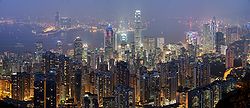
On this day in 1997, Hong Kong returned to China.

At midnight on July 1, 1997, Hong Kong reverts back to Chinese rule in a ceremony attended by British Prime Minister Tony Blair, Prince Charles of Wales, Chinese President Jiang Zemin, and U.S. Secretary of State Madeleine Albright. A few thousand Hong Kongers protested the turnover, which was otherwise celebratory and peaceful.

Hong Kong is one of two special administrative regions (SARs) of the People’s Republic of China (PRC), the other being Macau. A city-state situated on China’s south coast and enclosed by the Pearl River Delta and South China Sea, it is renowned for its expansive skyline and deep natural harbour. With a land mass of 1,104 km2 (426 sq mi) and a population of seven million people, Hong Kong is one of the most densely populated areas in the world. Hong Kong’s population is 95 percent ethnic Chinese and 5 percent from other groups. Hong Kong’s Han Chinese majority originate mainly from the cities of Guangzhou and Taishan in the neighbouring Guangdong province.

Hong Kong became a colony of the British Empire after the First Opium War (1839-42). Originally confined to Hong Kong Island, the colony’s boundaries were extended in stages to the Kowloon Peninsula and the New Territories by 1898. It was occupied by Japan during the Pacific War, after which the British resumed control until 1997, when the PRC acquired sovereignty. The region espoused minimum government intervention under the ethos of positive non-interventionism during the colonial era. The time period greatly influenced the current culture of Hong Kong, often described as “East meets West”, and the educational system, which used to loosely follow the system in England until reforms implemented in 2009.

Under the principle of “one country, two systems”, Hong Kong has a different political system from mainland China. Hong Kong’s independent judiciary functions under the common law framework. The Basic Law of Hong Kong, its constitutional document, which stipulates that Hong Kong shall have a “high degree of autonomy” in all matters except foreign relations and military defence, governs its political system. Although it has a burgeoning multi-party system, a small-circle electorate controls half of its legislature. An 800-person Election Committee selects the Chief Executive of Hong Kong, the head of government.

As one of the world’s leading international financial centres, Hong Kong has a major capitalist service economy characterised by low taxation and free trade, and the currency, Hong Kong dollar, is the ninth most traded currency in the world. The lack of space caused demand for denser constructions, which developed the city to a centre for modern architecture and the world’s most vertical city. The dense space also led to a highly developed transportation network with public transport travelling rate exceeding 90 percent, the highest in the world. Hong Kong has numerous high international rankings in various aspects. For instance, its economic freedom, financial and economic competitiveness, quality of life, corruption perception, Human Development Index, etc., are all ranked highly.

 69 – Tiberius Julius Alexander orders his Roman legions in Alexandria to swear allegiance to Vespasian as Emperor.

1569 – Union of Lublin: the Kingdom of Poland and the Great Duchy of Lithuania confirm a real union; the united country is called the Polish-Lithuanian Commonwealth or the Republic of Both Nations.

1770 – Lexell’s Comet passed closer to the Earth than any other comet in recorded history, approaching to a distance of 0.0146 a.u.

1855 – Signing of the Quinault Treaty: the Quinault and the Quileute cede their land to the United States.

1858 – Joint reading of Charles Darwin and Alfred Russel Wallace’s papers on evolution to the Linnean Society.

1862 – American Civil War: the Battle of Malvern Hill takes place. It is the final battle in the Seven Days Campaign, part of the George B. McClellan’s Peninsula Campaign.

1863 – Keti Koti (Emancipation Day) in Suriname, marking the abolition of slavery by the Netherlands.

1863 – American Civil War: the Battle of Gettysburg begins.

1867 – The British North America Act of 1867 takes effect as the Constitution of Canada, creating the Canadian Confederation and the federal dominion of Canada; Sir John A. Macdonald is sworn in as the first Prime Minister of Canada.

1870 – The United States Department of Justice formally comes into existence.

1873 – Prince Edward Island joins the Canadian Confederation.

1874 – The Sholes and Glidden typewriter, the first commercially successful typewriter, goes on sale.

1878 – Canada joins the Universal Postal Union.

1879 – Charles Taze Russell publishes the first edition of the religious magazine The Watchtower.

1881 – The world’s first international telephone call is made between St. Stephen, New Brunswick, Canada, and Calais, Maine, United States.

1881 – General Order 70, the culmination of the Cardwell and Childers reforms of the British Army, comes into effect.

1885 – The United States terminates reciprocity and fishery agreement with Canada.

1890 – Canada and Bermuda are linked by telegraph cable.

1898 – Spanish-American War: the Battle of San Juan Hill is fought in Santiago de Cuba.

1908 – SOS is adopted as the international distress signal.

1915 – Lieutenant Kurt Wintgens achieves the first known aerial victory with a synchronized gun-equipped fighter plane, the Fokker M.5K/MG Eindecker.

1916 – World War I: First day on the Somme – On the first day of the Battle of the Somme 19,000 soldiers of the British Army are killed and 40,000 wounded.

1921 – The Communist Party of China is founded.

1923 – The Canadian Parliament suspends all Chinese immigration.

1931 – United Airlines begins service (as Boeing Air Transport).

1935 – Grant Park Music Festival begins its tradition of free summer symphonic music concert series in Chicago’s Grant Park, which continues as the United States’ only annual free outdoor classical music concert series.

1942 – World War II: first Battle of El Alamein.

1942 – The Australian Federal Government becomes the sole collector of Income Tax in Australia as the State Income Tax is abolished.

1943 – Tokyo City merges with Tokyo Prefecture and is dissolved. Since then, no city in Japan has had the name “Tokyo” (present-day Tokyo is not officially a city).

1947 – The Philippine Air Force is established.

1948 – Muhammad Ali Jinnah (Quaid-i-Azam) inaugurates Pakistan’s central bank, the State Bank of Pakistan.

1949 – The merger of two princely states of India, Cochin and Travancore, into the state of Thiru-Kochi (later re-organized as Kerala) in the Indian Union ends more than 1,000 years of princely rule by the Cochin Royal Family.

1957 – The International Geophysical Year begins.

1958 – The Canadian Broadcasting Corporation links television broadcasting across Canada via microwave.

1958 – Flooding of Canada’s St. Lawrence Seaway begins.

1959 – The Party of the African Federation holds its constitutive conference.

1959 – Specific values for the international yard, avoirdupois pound and derived units (e.g. inch, mile and ounce) are adopted after agreement between the U.S.A., the United Kingdom and other Commonwealth countries.

1960 – Independence of Somalia.

1960 – Ghana becomes a Republic and Kwame Nkrumah becomes its first President as Queen Elizabeth II of the United Kingdom ceases to be its Head of state.

1962 – Independence of Rwanda.

1962 – Independence of Burundi.

1963 – ZIP Codes are introduced for United States mail.

1963 – The British Government admits that former diplomat Kim Philby had worked as a Soviet agent.

1966 – The first color television transmission in Canada takes place from Toronto.

1967 – The European Community is formally created out of a merger with the Common Market, the European Coal and Steel Community, and the European Atomic Energy Commission.

1967 – Canada celebrates the 100th anniversary of the British North America Act, 1867, which officially made Canada its own federal dominion.

1968 – The CIA’s Phoenix Program is officially established.

1968 – The Nuclear non-proliferation treaty is signed in Washington, D.C., London and Moscow by sixty-two countries.

1968 – Formal separation of the United Auto Workers from the AFL-CIO.

1970 – President General Yahya Khan abolishes One-Unit of West Pakistan restoring the provinces.

1972 – The first Gay Pride march in England takes place.

1976 – Portugal grants autonomy to Madeira.

1978 – The Northern Territory in Australia is granted Self-Government.

1979 – Sony introduces the Walkman.

1980 – O Canada officially becomes the national anthem of Canada.

1987 – The American radio station WFAN in New York City is launched as the world’s first all-sports radio station.

1990 – German re-unification: East Germany accepts the Deutsche Mark as its currency, thus uniting the economies of East and West Germany.

1991 – The Warsaw Pact is officially dissolved at a meeting in Prague.

1997 – The People’s Republic of China resumes sovereignty over the city-state of Hong Kong, ending 156 years of British colonial rule.

1999 – The Scottish Parliament is officially opened by Queen Elizabeth on the day that legislative powers are officially transferred from the old Scottish Office in London to the new devolved Scottish Executive in Edinburgh.

2002 – The International Criminal Court is established to prosecute individuals for genocide, crimes against humanity, war crimes, and the crime of aggression.

2004 – Saturn orbit insertion of Cassini-Huygens begins at 01:12 UTC and ends at 02:48 UTC.

2006 – The first operation of Qinghai-Tibet Railway in the People’s Republic of China.

2007 – Smoking in England is banned in all public indoor spaces.

2008 – Rioting erupted in Mongolia in response to allegations of fraud surrounding the 2008 legislative elections.

Holidays and observances

   * Canada Day, formerly Dominion Day. (Canada)

   * Christian Feast Day:

       * Aaron (Syriac Christianity)

       * Feast of the Most Precious Blood

       * Blessed Fray Junípero Serra

       * Julius and Aaron

       * Leontius of Autun

       * Servanus

       * July 1 (Eastern Orthodox liturgics)

   * Doctors’ Day (India)

   * Earliest day on which St Pauls Carnival can fall, while July 7 is the latest; celebrated on the first Saturday in July. (Bristol)

   * Emancipation Day (Netherlands Antilles)

   * Emancipation Day or Keti Koti (Suriname)

   * Hong Kong SAR Establishment Day (Hong Kong)

   * Independence Day, celebrates the independence of Burundi from Belgium in 1962.

   * Independence Day, celebrates the independence of Rwanda from Belgium in 1962.

   * International Tartan Day (Australia and New Zealand)

   * July Morning tradition (Bulgaria)

   * Madeira Day (Madeira)

   * Memorial Day (Newfoundland and Labrador)

   * Moving Day (Quebec)

   * Republic Day (Ghana)

   * Republic Day, celebrates the independence of Somalia from Italy and the unification of British Somaliland and Italian Somaliland to form Somali Republic. (Somalia)

   * Sir Seretse Khama Day (Botswana)

Six In The Morning

Revealed: British government’s plan to play down Fukushima

Internal emails seen by Guardian show PR campaign was launched to protect UK nuclear plans after tsunami in Japan

Rob Edwards

guardian.co.uk,  

British government officials approached nuclear companies to draw up a co-ordinated public relations strategy to play down the Fukushima nuclear accident just two days after the earthquake and tsunami in Japan and before the extent of the radiation leak was known.

Internal emails seen by the Guardian show how the business and energy departments worked closely behind the scenes with the multinational companies EDF Energy, Areva and Westinghouse to try to ensure the accident did not derail their plans for a new generation of nuclear stations in the UK.

Read The Emails Here


Friday’s Headlines:

Extreme weather link ‘can no longer be ignored’

Damascus vibrations ripple in Baghdad

Hu warns Chinese Communist Party

Germany Approves End to the Nuclear Era

Reluctance to engage in hotel battle raises questions of Afghan preparedness

Extreme weather link ‘can no longer be ignored’

Scientists to end 20-year reluctance with study into global warming and exceptional weather events

By Steve Connor, Science Editor Friday, 1 July 2011

Scientists are to end their 20-year reluctance to link climate change with extreme weather – the heavy storms, floods and droughts which often fill news bulletins – as part of a radical departure from a previous equivocal position that many now see as increasingly untenable.

Climate researchers from Britain, the United States and other parts of the world have formed a new international alliance that aims to investigate exceptional weather events to see whether they can be attributable to global warming caused by

Damascus vibrations ripple in Baghdad  


By Sami Moubayed  

DAMASCUS – For a variety of overlapping reasons, the situation in Syria is very alarming to Iraqis from every end of the political spectrum.

For starters, approximately 1 million Iraqis currently live in Syria, all of whom fled the mayhem in their country in 2003. They are worried that if security breaks down in Syria, or if the state can no longer accommodate them, they would have to unwillingly return home – where a very uncertain future awaits them.

A country that now has refugees on the border with Turkey will have a hard time absorbing refugees on its own territories – and certainly not Iraqi refugees.

Hu warns Chinese Communist Party

Chinese President Hu Jintao has warned members of the ruling Communist Party that corruption could cost them the support and trust of the people.

Mr Hu made the comments in an address in the Great Hall of the People in the capital, Beijing, marking the 90th anniversary of founding of the party.

He praised its achievements since taking power in 1949, but said members had to be more disciplined than ever.

The party is the biggest in the world, with 80 million members.

In the months leading up to the anniversary, the authorities launched their biggest crackdown against dissidents in almost 20 years.

Germany Approves End to the Nuclear Era  

A Revolution for Renewables  


Germany’s federal parliament, the Bundestag, passed a historic package of laws Thursday that commits the nation — once and for all — to a phase-out of nuclear power by 2022. The step is unprecedented in Europe, and it marks the final act in a decades-long political drama that began with a grassroots anti-nuclear movement in the 1970s, which gave rise to the German Green Party.

Chancellor Angela Merkel has led the charge against nuclear power only since March, but the Bundestag this morning voted overwhelmingly to close Germany’s remaining nine active plants according to a fixed, 11-year schedule. The vote was 513:79, with eight abstentions. Many of the “no” votes came from the Left Party, which argued for a swifter timeline.

Reluctance to engage in hotel battle raises questions of Afghan preparedness


Alissa Rubin

July 1, 2011  


KABUL: Nazir Amini, an Afghan visiting from his home in Germany, had just come back from the buffet with a bowl of ice-cream when he saw two men armed with an AK-47 rifle and a machinegun emerge and start shooting at guests seated around the pool at the Intercontinental Hotel, one of the capital’s most fortified buildings.

Women and their children screamed. Chairs tipped backwards. Food slid onto the lawn as people started to run. Mr Amini said he saw police officers running, too, gripping their AK-47s as they raced from the gunmen.

DocuDharma Digest

Regular Features-

Featured Essays for June 30, 2011-

DocuDharma

Countdown with Keith Olbermann

If you do not get Current TV you can watch Keith here:

Watch live video from CURRENT TV LIVE Countdown Olbermann on www.justin.tv

Evening Edition

Evening Edition is an Open Thread

From Yahoo News Top Stories

1 Police battle rioters as Greece adopts austerity

By Roddy Thomson, AFP

18 hrs ago

Greek lawmakers backed a stinging new austerity plan demanded by international creditors, sparking frenzied battles between masked rioters and police firing tear gas late into the night.

Lawmakers voted 155 to 138 for the hotly-disputed package on Wednesday to slash 28.4 billion euros ($40 billion) from the balance of government spending by 2015, a plan aimed at unlocking emergency finance from the EU and the IMF.

An estimated 500 to 600 hardcore youths hurled missiles, according to police, who responded with volleys of tear gas that blanketed Syntagma Square in front of the parliament and reached high floors in surrounding buildings.

2 Birmingham City owner charged with money-laundering

By Peter Brieger, AFP

19 hrs ago

Birmingham City owner Carson Yeung, a one-time hairdresser turned football tycoon, appeared in court in Hong Kong Thursday charged with money-laundering, a day after being arrested by police.

A sombre-looking Yeung, 51, declined to comment as he pushed his way through a scrum of reporters to a waiting minivan after being released on HK$7 million ($900,000) bail following a brief appearance at the magistrates court.

The millionaire, whose club was relegated from the Premier League last month, was required to surrender his passport and report regularly to police as part of his bail conditions.

3 Hundreds of thousands strike in UK pensions row

By Alice Ritchie, AFP

1 hr 0 mins ago

Hundreds of thousands of British public sector workers went on strike Thursday to defend their pensions, causing widespread disruption to schools and state-run services.

A third of English schools were closed and another third were affected, officials said, as up to 350,000 teachers, lecturers and education staff took action against plans to make them work longer and pay more into their pensions.

Tax offices, museums and job centres were also brought to a standstill as a further 100,000 civil servants walked out on the first nationwide day of strike action since the coalition government took office last year.

4 UK public sector workers strike in pensions row

By Alice Ritchie, AFP

Thu, Jun 30, 2011

Hundreds of thousands of public sector workers went on strike in Britain on Thursday in protest at pension reforms, planning to disrupt schools and airports in a major challenge to the year-old government.

Four education and civil service unions have called out about 600,000 members in response to reforms they say will force workers to pay more and work longer to receive a reduced pension.

Prime Minister David Cameron has said the strike is premature as the changes were still being negotiated, and warned there was no alternative to reform because “the pension system is in danger of going broke”.

5 20 civilians killed in Afghan mine bus blast: police

AFP

33 mins ago

Twenty Afghan civilians including women and children were killed in a volatile southwestern province Thursday when a landmine exploded under a bus they were travelling in, police said.

“An IED (improvised explosive device) struck a bus, 20 civilians were killed,” said senior police figure Haji Mosa Rasooli, accusing the Taliban of being responsible for the blast.

The Islamist militants, who have been waging a near decade long insurgency against the Afghan government and foreign forces, were not immediately available for comment.

6 US Fed’s QE2 stimulus ends with a fizzle

By Alexander Osipovich, AFP

1 hr 47 mins ago

The US Federal Reserve wound up its $600-billion “QE2” program to boost the ailing economy with easy liquidity on Thursday, having generated more controversy than jobs and growth.

Without fanfare the US central bank’s New York branch paid banks $4.9 billion for US Treasury bonds in the program’s last step Thursday morning, as economists and bankers continued to argue its effect.

Critics of the Fed’s second “quantitative easing” program — hence QE2 — say it fueled surging food and fuel prices, pumped up asset bubbles in emerging economies like China and Brazil, and devalued the dollar.

7 UN peacekeepers brought cholera to Haiti: study

By Hector Retamal, AFP

1 hr 49 mins ago

UN peacekeepers from Nepal brought the strain of cholera to Haiti responsible for an epidemic that has killed 5,500 people, according to a study published by the US Centers for Disease Control and Prevention.

The study is the first to establish a direct link between the arrival of the Nepalese UN battalion near the small town of Mirebalais and the cholera epidemic that erupted in mid-October 2010.

On Thursday in New York, UN acting deputy spokesman Farhan Haq said the agency was “aware of the report and as with other prior reports, we will study its findings diligently.”

8 US Senate scraps vacation amid debt deadlock

By Olivier Knox, AFP

36 mins ago

The US Senate on Thursday scrapped its annual weeklong July 4 break as the White House warned that deadlocked talks on raising the government’s ability to borrow money had breached a “danger zone.”

As still-sour jobless claims cast fresh doubt on prospects for a US recovery, senior White House adviser David Plouffe warned that failure to raise the congressionally set US debt ceiling would have “catastrophic consequences.”

“We are in the danger zone now,” Plouffe told NBC television, amid seemingly dwindling hopes that talks between President Barack Obama and his Republican foes would yield a plan to cut the deficit while green-lighting more borrowing.

9 Cold War era scandal haunts Tchaikovsky competition

AFP

2 hrs 4 mins ago

The International Tchaikovsky Competition was due Thursday to announce winners of the world’s most prestigious classical music event amid scandal typical of its storied Cold War era past.

The quadrennial Moscow Conservatory event was plunged into scandal on its inauguration in 1958 when the grand prize went to the young US pianist Van Cliburn — a decision so stunning it had to be approved personally by Soviet leader Nikita Khrushchev.

The Soviet Union’s perception of its cultural supremacy was restored at subsequent competitions and most of the prizes have since gone to local stars.

10 Pond insect ‘loudest animal on Earth’

By Carl de Souza, AFP

Thu, Jun 30, 2011

A tiny ‘water boatman’ insect is the world’s loudest animal relative to its body size, according to a new study.

Males of the Micronecta scholtzi species serenade their sweethearts with a three-part song made by rubbing their genitalia against their abdomens, but it remains a mystery how or why the creatures make such a loud mating call.

“This insect is a few millimetres in length yet can produce sound audible from the riverside,” says the study by scientists from France and Scotland, published by the PLoS ONE scientific organisation.

11 Italian cabinet heads for hot budget cuts

By Mathieu Gorse, AFP

Thu, Jun 30, 2011

The Italian government was due to adopt an austerity programme amid high political tension and market turbulence Thursday to save about 47 billion euros ($68 billion) and reassure investors.

The plan, which still needs to be approved by parliament, is expected to include a 0.15-percent tax on financial transactions, a cut in ministers’ pay and an extension of the current freeze on public sector salaries and hiring.

Markets are keeping a close eye on the proposals amid fears of contagion to other parts of the eurozone from the sovereign debt crisis in Greece.

12 Beijing-Shanghai high-speed train makes debut

By Allison Jackson, AFP

4 hrs ago

High-speed trains linking Beijing and Shanghai made their passenger debut Thursday on a $33 billion track China hopes will help ease its overloaded transport system.

Premier Wen Jiabao declared the link “in operation” at Beijing South rail station before boarding the first sleek-nosed white train that took passengers to Shanghai, the country’s commercial hub, in less than five hours.

He said the high-speed line — launched on the eve of celebrations to mark the 90th birthday of China’s Communist party — would be key to “improving the modern transport system… and satisfying people’s travelling needs”.

13 Syria’s Aleppo braces for anti-regime protests

AFP

Thu, Jun 30, 2011

Syria’s second city Aleppo braced for a mass rally on Thursday, after a call for anti-regime protesters to “light the spark of the revolution,” as pro-democracy dissidents joined ranks at home and abroad.

Protests have been largely muted in Aleppo but a Facebook group that has been a motor of the uprising urged Syrians to march on the country’s commercial beacon to demand the ouster of President Bashar al-Assad.

The Syrian Revolution 2011 group also called on people to rally after weekly Muslim prayers on Friday, branding July 1 “the Friday of departure” and saying in a message to Assad: “We don’t love you… Go away, you and your party.”

14 Tents pitched in Cairo’s Tahrir Square

By Jailan Zayan, AFP

6 hrs ag

Pro-democracy activists have pitched their tents once again in Cairo’s Tahrir Square on Thursday to push for political reforms and to demand that officials found guilty of abuse be brought to justice.

After violent clashes in central Cairo that left over 1,000 people injured, a few dozen activists spent a calm night in the square which was the epicentre of protests that toppled president Hosni Mubarak in February.

“We will stay in the square until guilty police officers are tried,” Mossaad Shahrur told AFP.

15 Morocco heads for vote on curbing king’s powers

By Michael Mainville, AFP

10 hrs ago

Moroccan authorities pushed for a “yes” vote Thursday on the eve of a referendum on curbing the near absolute powers of King Mohammed VI, who has offered reforms in the wake of uprisings in the Arab world.

“Morrocans tomorrow have a date with history,” L’Opinion, the newspaper of Prime Minister Abbas El Fassi’s conservative Istiqlal party, wrote in a front-page editorial.

“Participate and vote tomorrow for the new constitution,” it wrote.

16 Tunisia judges’ strike postpones Ben Ali trial to July 4

By Kaouther Larbi and Mohammed Haddad, AFP

9 hrs ago

Striking judges on Thursday postponed a second trial of Tunisia’s ousted president Thursday until July 4, amid growing concern about the value of legal proceedings against him in his absence.

Judge Touhami Hafi announced the postponement of the trial against the exiled Zine el Abidine Ben Ali, on charges of illegal possessions of arms and drugs, in a statement to the court in Tunis.

Hosni Beji, one of the lawyers appointed to defend Ben Ali, told AFP he would himself have asked for the postponement to July 4.

17 Solved puzzle reveals fabled Cambodian temple

By Suy Se, AFP

Thu, Jun 30, 2011

It has taken half a century, but archaeologists in Cambodia have finally completed the renovation of an ancient Angkor temple described as the world’s largest three dimensional puzzle.

The restoration of the 11th-century Baphuon ruin is the result of decades of painstaking work, hampered by tropical rains and civil war, to take apart hundreds of thousands of sandstone blocks and piece them back together again.

“When I first saw how devastated the monument was, I never thought we would be able to put it back together,” said Cambodian restorer Ieng Te, who joined the project as a young student in 1960 and was tasked with numbering stones.

18 Japan sweats out summer in shadow of nuclear crisis

By David Watkins, AFP

12 hrs ago

Air conditioning has been switched off, office hallways are darkened and escalators have ground to a halt as a government decree to reduce power usage forces Tokyo to sweat out a hot summer.

On Friday, government-imposed limits take effect aiming to cut electricity consumption by 15 percent in the Tokyo and Tohoku regions, three months after a tsunami sent nuclear reactors into meltdown at the Fukushima Daiichi plant.

The power-saving drive, which for many began shortly after the huge March 11 quake and tsunami but which becomes official Friday, will last through the peak summer months to September to cut blackout risks after the loss of capacity.

19 Asia boom attracts cutting-edge architects

By Marianne Barriaux, AFP

14 hrs ago

China and other rapidly developing Asian nations are attracting cutting-edge international architects as their increasingly futuristic skylines offer the chance to push design boundaries.

French architect Paul Andreu was handed what he calls a once-in-a-lifetime opportunity when Chinese authorities picked him to design an ultra-modern opera house in the centre of Beijing.

“I’m grateful towards China,” said Andreu, whose 300-million-euro ($430 million) opera house — a rounded titanium and glass structure — rises from a man-made moat next to the Forbidden City and Tiananmen Square.

20 End of the line for historic Singapore station

By Simin Wang, AFP

14 hrs ago

A historic train service from downtown Singapore to Malaysia faces its final run Thursday as part of a multibillion-dollar territorial settlement between the two neighbours.

The last train to Kuala Lumpur from Tanjong Pagar station in Singapore’s port district is set to leave before Malaysia formally cedes ownership of the facility at midnight (1600 GMT), with railway buffs and tourists on board to mark the journey.

The closure resolves a gripe among Singaporeans over Malaysia’s ownership of the station and a swathe of railway land running deep into the city-state’s territory well after the two countries separated in 1965.

21 US nominee concerned over Myanmar ASEAN chair

By Shaun Tandon, AFP

17 hrs ago

The nominee to be US pointman on Myanmar said he would seek greater global coordination to push for democracy and voiced concern that the ASEAN bloc was considering the regime as its head.

Derek Mitchell, a veteran policymaker on Asia, was nominated to be the first US coordinator for policy on Myanmar as President Barack Obama’s administration pursues an engagement drive with the country also known as Burma.

In his Senate confirmation hearing, Mitchell said he would seek “direct and candid” dialogue with Myanmar’s leaders and that the United States should “respond flexibly and with agility to opportunities as they arise.”

22 China cracking down on rights lawyers: Amnesty

By Mike Clarke, AFP

17 hrs ago

Beijing has unleashed an “uncompromising” assault on China’s legal profession, targeting human rights lawyers in an effort to head off social unrest, Amnesty International said Thursday.

The move was a bid to control rights lawyers who take on sensitive cases as fears mount that uprisings in the Middle East and North Africa could take root in the world’s most populous nation, the rights group said in a new report.

“Human rights lawyers are subject to escalating silencing tactics — from suspension or revoking of licences, to harassment, enforced disappearance or even torture,” said Catherine Baber, Amnesty’s Asia Pacific deputy director.

23 New Lloyds bank boss set to axe more jobs

By Adrian Dennis, AFP

17 hrs ago

The new boss of Britain’s state-rescued Lloyds Banking Group is due Thursday to axe thousands more jobs in a bid to transform its fortunes and save £1.0 billion ($1.6 billion, 1.1 billion euros) a year.

Chief executive Antonio Horta-Osorio, who was parachuted into the job in March after being poached from Santander UK, is due to present a strategic review and could unveil another 15,000 jobs cuts, according to media reports.

Lloyds Banking Group (LBG), which is 41-percent state-owned after a huge bailout at the height of the global financial crisis, has already slashed 27,500 jobs since 2009, as it looks to guide its way back to health.

24 France gives Libya rebels arms but Britain balks

By Patrick Baz, AFP

Wed, Jun 29, 2011

France has acknowledged dropping arms to rebels in Libya, while NATO ally Britain is declining to follow suit over concerns about UN Security Council authorization.

The French ambassador to the United Nations Gerard Araud said Wednesday that his country’s delivery of arms to the rebels was not in breach of a Security Council resolution that established an arms embargo to Libya.

“We decided to provide self-defence weapons to the civilian populations because we considered these populations were under threat,” he told reporters.

25 Chongqing — China’s inland business capital

By Sebastien Blanc, AFP

17 hrs ago

After just a few years of explosive growth, China’s mega-city of Chongqing has emerged as a major industrial hub, thanks in part to a “Go West” policy to open up China’s less-developed inland.

The southwestern municipality, home to more than 32 million people, has been transformed by rapid urbanisation and a construction boom, with ultra-modern factories and skyscrapers galore.

The province-sized city is also becoming a major transport centre at the border of China’s prosperous East and poorer West, luring major multinationals keen to expand.

26 Cash-strapped Libya rebels call for loans

By Andrew Beatty, AFP

17 hrs ago

Libya’s cash-strapped rebels, facing a long and uncertain fight to recover assets frozen abroad, have called on foreign donors to back new loans using the blocked cash as collateral.

With no money to pay for salaries or imports, Mazen Ramadan, an economic advisor to the National Transitional Council (NTC), said a solution must be found to tap cash abroad, including the more than $30 billion frozen in the United States alone.

“This whole asset unfreezing thing is going to take a while,” he told AFP from his office in Benghazi. “We are working with a lot of people but it seems like a time consuming process, and we need the money.”

27 US refocuses on home-grown terror threat

By Mathieu Rabechault, AFP

22 hrs ago

The United States vowed Wednesday to pursue the “utter destruction” of Al-Qaeda, while refocusing its counter-terrorism strategy to combat the threat of home-grown terror.

The new strategy comes on the 10th year of the US-led “war on terror,” launched by former president George W. Bush after the deadly September 11 attacks on the United States.

It is a “pragmatic, not ideological” approach to counterterrorism that “formalizes” the administration’s approach since January 2009, said John Brennan, President Barack Obama’s top counterterrorism advisor.

28 BoA sets aside $14 billion to settle mortgage mess

By Emmanuel Dunand, AFP

Wed, Jun 29, 2011

Bank of America said Wednesday it would set aside $14 billion to settle claims from angry investors for losses on dodgy mortgage-backed securities whose collapse triggered the 2008 financial crisis.

Hoping to put its disastrous 2008 purchase of mortgage lender Countrywide Financial behind it, Bank of America said it would pay a record $8.5 billion to a group of 22 large private investment groups who invested in securities which held poorly documented or substandard home loans from Countrywide.

The other $5.5 billion was for pending liabilities to other investors not included in the settlement.

29 Moody’s warns of spillover if US downgraded

By Saul Loeb, AFP

20 hrs ago

Moody’s said Wednesday that the ratings of US government-related firms, municipal bond issuers and even private firms could be hit if the Washington defaults on debt payments in August.

The agency reiterated that if the country’s $14.29 trillion debt ceiling is not raised by August 2, the government could default on debt payments and would see its top grade Aaa debt rating erode, either with a negative warning or an outright downgrade.

It said that, in that case, government-controlled debt issuers like mortgage backers Fannie Mae and Freddie Mac would see their ratings equally downgraded.

30 Wiggins eyes Tour de France podium place

By Justin Davis, AFP

5 hrs ago

Olympic pursuit champion Bradley Wiggins refuses to speculate on his chances of a podium place on the Tour de France, but admits he has done everything possible to make it happen.

The Englishman produced a sensational performance while racing with the American team Garmin in 2009, only missing the podium after a final burst from seven-time champion Lance Armstrong.

Having joined the all new Team Sky, big things were expected of Wiggins in 2010 only for him to finish a humbling 24th overall. As a result, he said that his 2009 result had been a “fluke”.

31 Threat of losing 2011 crown ‘ridiculous’: Contador

By Justin Davis, AFP

19 hrs ago

Tour de France champion Alberto Contador said Thursday he would find it “ridiculous” if he were to win this year’s race then be stripped of the title by the authorities.

Contador is bidding to win a fourth yellow jersey after being cleared of any wrongdoing by the Spanish cycling authorities in February despite a positive test for clenbuterol on the second rest day of last year’s race.

The Spaniard’s claim that he ingested the banned substance while eating a contaminated steak was not, however, accepted by the International Cycling Union (UCI) or the World Anti-Doping Agency (WADA).

32 Tour chief applauds fight to beat the cheats

By Justin Davis, AFP

Wed, Jun 29, 2011

Tour de France chief Christian Prudhomme has applauded efforts to weed out the cheats, even if it means unsavoury doping revelations leave a black mark on the race.

Even before this year’s Tour de France gets underway Saturday, the controversy of Alberto Contador’s positive test for clenbuterol last year is still hanging over the race.

The Spaniard, who claims he ingested the banned substance after eating a contaminated steak, has been cleared to race pending a final ruling from the Court of Arbitration for Sport (CAS) in August.

33 Cycling star Gilbert angered by ‘doping’ delivery links to team

By Peter Deconinck, AFP

21 hrs ago

Belgian cycling star Philippe Gilbert has moved to divert any suspicion of doping from within the Omega-Pharma team after a former teammate was accused of importing doping products.

Retired professional Wim Vansevenant was accused of the crime on Wednesday after it was revealed he had received a package from overseas containing thousands of dollars (euros) worth of doping products.

Vansevenant, known primarily for finishing the Tour de France as the ‘lanterne rouge’ (last place) on several occasions, was set to drive an Omega-Pharma VIP bus around the race this year.

34 ICC bans government meddling

By Frankie Taggart, AFP

Thu, Jun 30, 2011

Cricket’s governing body on Thursday banned countries from appointing politicians to national boards, vowing to free the sport from undue government influence.

The International Cricket Council, meeting in Hong Kong, said it had made the decision to uphold “the important principle of free elections and the independence” of the sport.

“It was agreed that all member boards must implement the provisions before annual conference June 2012 and a further 12 months — to June 2013 — would be allowed before any sanctions be considered,” the ICC said in a statement.

Barack Obama is a Dick!

HarlequinNarrowYou know I’m kind of ashamed at myself for even addressing a topic so jejune and banal.  There was a time when I was an avid consumer of traditional media lies and hypocrisy and let them make me feel angry and betrayed as when Chris Matthews (and I watched every night, often 2 or 3 times) passed off the now notorious Republican shill master Frank Luntz as a neutral pollster for years and years.

I’d direct those interested in charting the decline at least as far back as Murphy Brown which thoroughly documented that the only thing of importance is the names in your Rolodex and truth an inconvenient virtue rarely found.

My family is now divided about the value of viewing.  I contend that watching at all makes you measureably stupider and they insisting that it’s at least an indicator of conventional wisdom.

What wisdom is that?  These people are constantly, consistently wrong.  They’re wrong about science and economics and politics and political science and history.  They are beyond stopped clock wrong and can’t be relied on to tell the truth even twice a day.  They have proven themselves as incapable as drowning turkeys in a thunderstorm of discerning whether someone’s pissing on their leg or if it’s really raining even with the aid of a window and a Maine Weather Stick (you put the stick outside your window, if it’s wet, it’s raining).

I wish I could work up a sense of righteous outrage at Mark Halperin but he is part and parcel of the Versailles Village system that through the sheer weight of it’s own ignorance and arrogance is moving us closer to July 14th every day.

“I like irony except I find that if you just toss your clothes in the dryer for a few minutes you hardly ever have to use it.”- ek hornbeck

“Barack Obama is a Dick!”, is the truest thing Halperin has said in years.

Load more