
Burning the Midnight Oil for Living Energy Independence
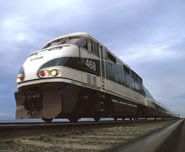 Express HSR is sexy. Indeed, its sexy enough that when Big Oil propagandizes against it, they have to paint it as too expensive or something that America is too incompetent to handle, since the idea of sitting in an actually comfortable rail seat, watching a movie on a laptop or snacking on a sandwich while flying along at two to three times highway speeds, “just like in France or Japan or Spain”, that’s too appealing to convince a big majority of people that it would be anything but nice to have. So they have to con people into thinking of it as an unrealistic pipe dream that the US can do what Spain has been doing for a decade, France for three decades, and Japan for half a century.
Rapid Rail is not as sexy as Express HSR, but at least it is as fast as driving for most drivers on most corridors, and appreciably faster than driving on the corridor with the “best bones”, like either Cleveland / Columbus or Davenport / Des Moines / Iowa wold be at 110mph top passenger speed. And it is much cheaper than Express HSR, with lots of potential corridors that local residents will start lobbying for once the first of the Rapid Passenger Rail services come into service.
But conventional long haul rail? Surely plodding along at 50mph to as slow as 30mph on heavy freight rail corridors is an obsolete holdover from an earlier time?
Well, no. Conventional long haul rail has a 21st century role to play, if the United States should declare Economic Independence and start working to regain the economic freedom that we surrendered to the Big Oil and the oil exporting regions in the 70’s and 80’s.
And so, in this evening’s Sunday Train, we look at the “PRIIA Section 210” plans that Amtrak has developed for the five weakest of its fifteen long distance corridors: the California Zephyr, the Capitol Limited, the Cardinal, the Sunset Limited, and the Texas Eagle.
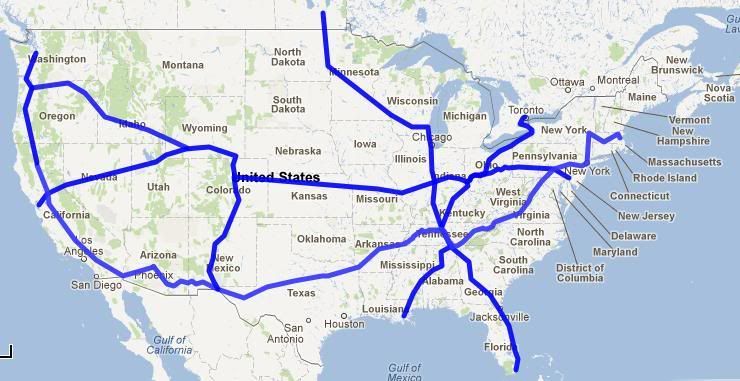 Steel Interstate (noun): A Network of Electrified Heavy and Rapid Rail corridors that will allow the United States to remain a sovereign national economy.
 This week’s Sunday Train is a trio of shorter topics. The first is a research development project to develop a modern steam train to run on biocoal. The target is a sustainable steam train that, as a headline grabber, will attempt to run at 130mph and break the world steam train speed record. There’s much to like about this research development project … but I am going to argue that biocoal to operate trains is not it.
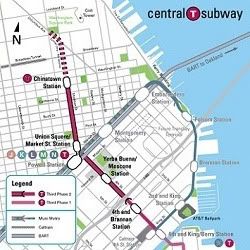 Second, SF’s MUNI transport agency is one of the ten agencies slated to split $760m in Prop1a(2008) bond funds improvements to systems interconnecting with the planned High Speed Rail system. The balance of the $950m goes to the three existing Amtrak California intercity rail services, the Capitol Corridor, the San Joaquin, and the Surfliner.
 And third, a speculative look at an alternative technology that SF MUNI might deploy that money on, that actually would connect with the HSR system at the Transbay Terminal, as well as connecting to BART, the MUNI light rail network, the existing (and proposed alternative) Caltrain terminus at 4th and King, and provide express transit service along Geary Blvd.
 Back in the 29 Nov 2009 Sunday Train,
  The Iowa Department of Transport has just completed the Chicago to Omaha Regional Passenger Rail System Planning Study, to select its preferred alignment for a detailed Environmental Impact Report.
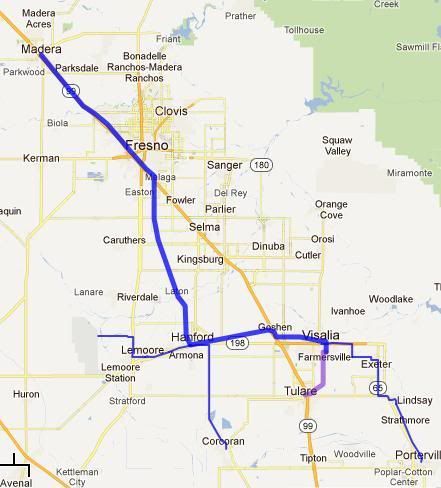 Kings County officials have been
  One element of the recent California HSR “revised” draft 2012 Business Plan (which we shall call the Other, Other Plan) involves looking to one particular means of finance in addition to general fund bond finance and Federal transport grant funding:
  I saw this story a couple of weeks ago, but between the happenings in California and some unanswered questions I had, I haven’t mentioned it yet.
  As I mentioned in last week’s Sunday Train, the California HSR Authority came out with a revised draft Business Plan.
Recent Comments